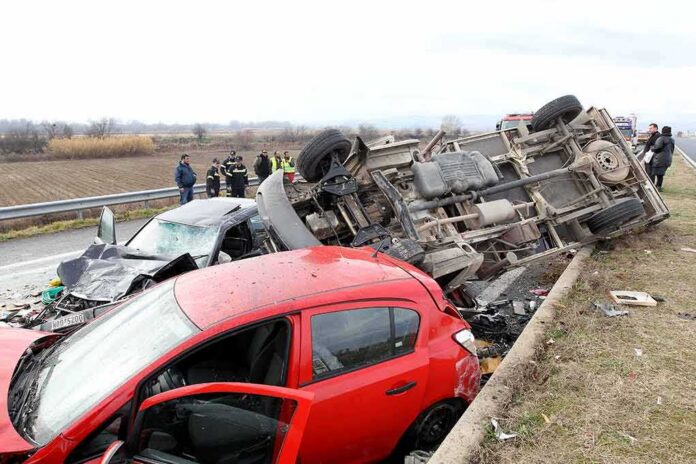
A wrong-way pickup slammed head-on into Ryan O’Shea’s car on I-91, and a campus lost its heartbeat overnight.
Story Snapshot
- Connecticut State Police reported a wrong-way pickup hit Ryan O’Shea’s Honda head-on on I-91 South late Oct. 16, 2026.
- The University of New Haven confirmed O’Shea, 21, died from the crash; the campus is in mourning.
- The state medical examiner listed blunt impact injuries as the cause of death.
- The crash sequence involved multiple impacts after the initial head-on strike.
A Deadly Sequence On A Divided Highway
Connecticut State Police said a pickup truck traveled north in the southbound lanes of Interstate 91 in North Haven close to 11:45 p.m. on Oct. 16. The truck struck Ryan O’Shea’s Honda Accord head-on. The impact pushed the Honda into the left-center lane, where an SUV hit it. The car then moved into the right lane and shoulder, where another SUV struck it again. The wrong-way crash left O’Shea fatally injured at the scene, police said.
The University of New Haven told students and staff that O’Shea, a senior and assistant captain of the men’s club hockey team, died after the wrong-way collision. The school praised his leadership, grit, and spirit. Teammates and friends gathered to grieve and to share stories that showed how he lifted others. The university’s message captured the shock of losing a 21-year-old who had plans, purpose, and a team that counted on him every day.
What Authorities Have Confirmed So Far
The Connecticut Office of the Chief Medical Examiner attributed O’Shea’s death to blunt impact injuries to the head, neck, torso, and limbs. That matches what a head-on crash at highway speed does to a human body. The core facts line up across police accounts, medical findings, and the university’s notice. People magazine also reported the collision remained under investigation, a standard step after a complex, multi-vehicle crash.
Road investigators typically gather black box data, phone records, and toxicology screens in cases like this. Police often pull video from nearby ramps and interchanges to track a wrong-way entry point. Officials also check license status, prior crashes, and possible impairment. That work can take weeks. Families and friends live in a pause while lab results and reconstructions come back. The public rarely sees those details until a final report or charges appear.
Why Wrong-Way Crashes Kill So Many People
Wrong-way crashes are rare but brutal because they stack frontal energy at highway speeds. The American Automobile Association Foundation found 4,164 fatal wrong-way crashes and 5,730 deaths on divided highways from 2014 to 2023. The annual count nearly doubled over that span. Studies tie wrong-way risk most often to alcohol, older drivers, invalid licenses, darkness, and road design gaps. Those factors explain why these events feel random yet keep repeating nationwide.
RT @WTNH: The man who was driving the wrong way on I-91 South in North Haven earlier this month, resulting in a crash that killed a University of New Haven student, was in the country illegally, federal officials confirmed Friday.https://t.co/dy5jI5du5Z pic.twitter.com/6ldiQHXWKV
— So says, The 70 y.o. Colored Lady…#TeamTrump (@PareshaPraying) October 31, 2026
States are adding countermeasures that meet drivers where they fail. Extra “Do Not Enter” and “Wrong Way” signs sit lower in the sightline. Reflective markers flip red against wrong-way travel. Thermal cameras and radar trip alerts to dispatchers. Ramp gates and lane separators force a second thought at the turn. The most effective fix remains human: sober driving, working headlights, and a license that reflects skill and health. Simple, boring, proven.
O’Shea’s Life, And The Hole He Leaves
Friends described O’Shea as steady, kind, and hungry to serve beyond the rink. The hockey community framed his leadership in shifts and in silence. Coaches recalled a senior who did extra work and brought the room with him. The University of New Haven organized memorials and tributes, and the hockey team moved to honor him in the way athletes do: with a number, a patch, a promise to play with his edge and heart when the legs feel heavy late in the third.
Public safety does not live in abstracts. It lives in the space where a parent waits for the text that never comes. It lives in the school email that makes hands shake, and in the rink where one locker sits too clean. The facts here are clear and hard: a wrong-way pickup hit a young man head-on; a campus and a family will carry that price. Policy debates will continue, as they should, but the first duty is honest facts and safer roads that keep people alive.
Sources:
pjmedia.com, newhaven.edu, nhregister.com, wtnh.com, wfsb.com
© partiallypolitics.com 2026. All rights reserved.