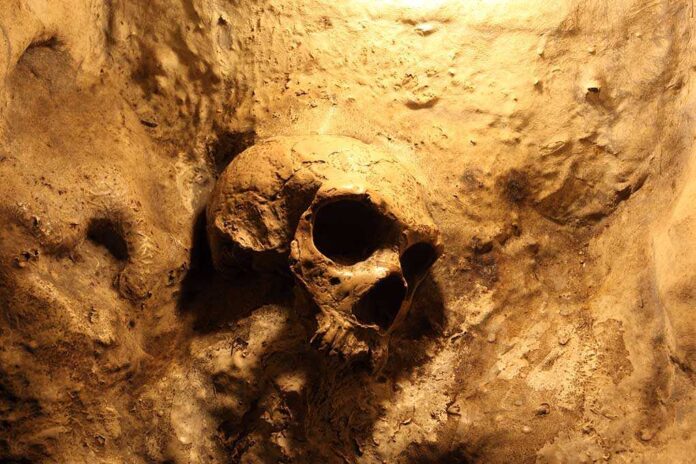
Over 100 human skulls found in a Pennsylvania man’s home paint a chilling portrait of a macabre network trafficking body parts.
Story Snapshot
- Over 100 human skulls and other remains discovered in a Pennsylvania home.
- Man accused of trafficking human remains linked to a Harvard Medical School scandal.
- Investigation reveals grave robbing and gaps in cemetery oversight.
- Case highlights a dark subculture trading in human bones.
The Chilling Discovery
In a startling revelation, police uncovered over 100 human skulls in the home of a Pennsylvania man tied to a disturbing network trafficking in human remains. The macabre find, which included various bones and preserved body parts, has shocked communities and ignited a broader investigation into grave robbing and body part trafficking. The suspect allegedly participated in a black market linked to Harvard Medical School, raising alarms about the integrity of body donation programs.
The investigation began when law enforcement received tips about the man’s activities, leading to a search warrant that uncovered the grisly collection. The suspect is accused of not only purchasing stolen body parts but also desecrating cemeteries to obtain remains. This case has exposed significant gaps in the oversight of cemeteries and body donation programs, highlighting vulnerabilities that criminals exploit.
Unraveling a Multi-State Network
The Pennsylvania case is a part of a larger, multi-state network involving individuals in Massachusetts, Arkansas, and other states. These individuals allegedly stole and sold cadavers from funeral homes and medical institutions. The suspect in Pennsylvania reportedly acquired numerous skulls and body parts through these channels, sometimes using online platforms to connect with sellers.
This network’s ties to Harvard Medical School’s Anatomical Gift Program have intensified public scrutiny. The program, intended to facilitate medical education and research, was allegedly compromised by insiders who diverted donated bodies for profit. The scandal has prompted Harvard to reevaluate its procedures and assure donors and their families of the program’s integrity.
Legal and Ethical Implications
The legal ramifications for those involved are severe. The Pennsylvania man faces multiple charges, including abuse of a corpse, receiving stolen property, and institutional vandalism. These charges reflect the serious nature of the crimes, which not only violate legal statutes but also deeply offend public morals and the sanctity of burial practices.
From a regulatory standpoint, this case underscores the need for stronger oversight and security measures within both cemetery management and medical school donation programs. Legislators and advocacy groups are calling for reforms to prevent similar abuses in the future, emphasizing the importance of safeguarding human dignity.
The Dark Subculture of Human Bone Trading
This case has shed light on a niche but persistent market for human bones and remains, often operating in the shadows of the internet. Collectors and enthusiasts sometimes seek these macabre items for study or display, driving demand that fuels illegal activities. Online marketplaces and private groups facilitate these transactions, exploiting legal gray areas and weak enforcement.
The exposure of this underground trade has led some platforms to tighten regulations or ban sales of human remains altogether. However, the persistence of such markets indicates a complex issue that extends beyond simple legal prohibitions. Addressing it requires a multifaceted approach involving law enforcement, legislative action, and public awareness.
Sources:
RGSG Law: Pennsylvania Vandalism Laws
Rural PA: Human Remains Report
Pittsburgh Criminal Attorney: Institutional Vandalism