
The Trump administration’s sweeping immigration restrictions on 75 countries, including Somalia, mark a pivotal expansion of its immigration policy, leaving many questioning the implications.
Story Snapshot
- Immigration freeze affects 75 countries, including major economies like Russia and Brazil.
- Policy stems from security concerns and aims to reassess visa processing.
- Somalia’s designation as a “terrorist safe haven” raises humanitarian and security debates.
- Short-term displacements and long-term policy shifts are anticipated.
Trump’s Immigration Agenda Expansion
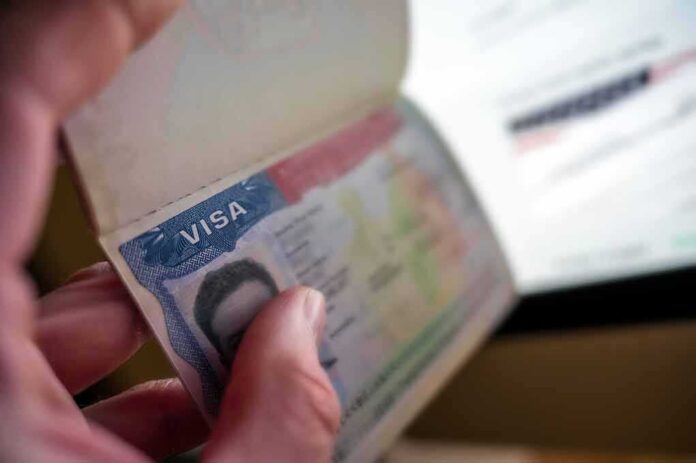
The Trump administration announced a significant expansion of its immigration agenda by indefinitely freezing visa processing for 75 countries, including Somalia, Russia, and Brazil. The decision, effective January 21, 2026, reflects concerns over security risks and the need for a comprehensive State Department reassessment. This move extends beyond previous travel bans, impacting both immigrant and nonimmigrant visa processing. The policy also includes restrictions on Palestinian Authority-issued travel documents.
Trump’s rhetoric has fueled controversy, particularly his derogatory remarks about Somali immigrants. Describing Somalia as a “terrorist safe haven,” the administration justifies the decision on security grounds. However, critics argue that the policy exacerbates existing humanitarian crises and unfairly targets countries based on broad characterizations, rather than nuanced security assessments.
Somalia’s Complex Conditions
Somalia, located in the Horn of Africa, remains one of the world’s poorest nations, plagued by ongoing armed conflict, severe food insecurity, and natural disasters. The federal government struggles against the terrorist group Al-Shabaab, with fatalities from insurgencies doubling since 2020. Despite these conditions, Homeland Security Secretary Kristi Noem claims improvements justify ending Temporary Protected Status (TPS) for Somali nationals.
Experts challenge this assessment, citing continued “insecurity and ongoing armed conflict” as reasons for TPS extensions over decades. The decision’s timing, coinciding with Trump’s broader deportation agenda, has intensified scrutiny over the administration’s motives and the policy’s humanitarian implications.
Impact on Somali Immigrant Communities
The policy profoundly affects Somali immigrant communities, particularly in Minneapolis, where street protests have intensified. Approximately 705 to 2,400 Somali TPS holders face forced departure by March 17, 2026, unless court interventions occur. The community’s established roots face upheaval, with potential family separations and community fragmentation looming.
Moreover, the visa freeze’s broader implications disrupt visa applicants from 75 countries, affecting international relations and sectors reliant on immigrant labor. The indefinite nature of the freeze leaves affected communities and businesses in limbo, awaiting clarity on future immigration policies.
Broader Immigration Policy Implications
The immigration freeze signals a fundamental shift in U.S. humanitarian immigration protections, potentially setting a precedent for future restrictions. The policy’s diplomatic ramifications, particularly with countries like Russia and Iran, could impact global geopolitical dynamics. Additionally, the removal of TPS holders may strain sectors dependent on immigrant labor, highlighting the interconnectedness of immigration policy and the U.S. labor market.
Critics argue the policy fulfills Trump’s campaign promises at the expense of nuanced, humanitarian considerations. The expansion of travel restrictions to new countries establishes a model for future immigration policies, prompting debates over the balance between national security and humanitarian obligations.
Sources:
Council on Foreign Relations (CFR)