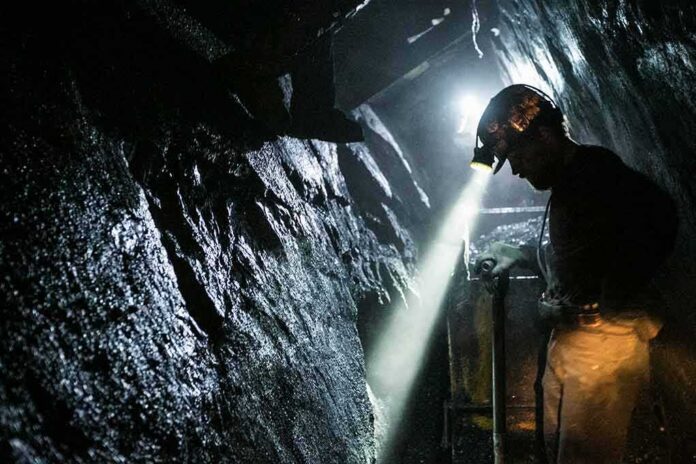
partiallypolitics.com — The deadliest part of the Shanxi coal mine blast may not be the explosion itself, but how quickly it exposed the limits of early certainty.
Quick Take
- State-linked reports say a gas explosion hit the Liushenyu coal mine in Shanxi province while 247 workers were underground.
- The official response focused on rescue, evacuation, and a formal investigation, not an immediate explanation of cause.
- A carbon monoxide alarm reportedly sounded before the blast, which raises hard questions about warning systems and response time.
- Casualty figures changed rapidly across reports, showing how chaotic the first hours of a major mining disaster can be.
The First Story Was Rescue, Not Resolution
Chinese state media reported that at least 82 people died after a gas explosion at a coal mine in Shanxi province, and that rescue operations continued as officials searched for survivors [3]. Reports also said 247 workers were underground when the blast hit, which makes the scale of the emergency obvious before any technical explanation even begins [1]. The immediate public message was clear: save who can be saved, then investigate.
That sequence matters. In mining disasters, the first hours often produce more uncertainty than facts, and this case fit that pattern exactly. Officials ordered an all-out rescue effort and promised accountability, which sounds responsible on its face and does reflect a basic conservative principle: when lives are at risk, the first duty is action, not spin. But rescue language does not answer the harder question of whether the warning signs were handled properly.
A Carbon Monoxide Alarm Changes the Meaning of the Blast
Reports say a carbon monoxide sensor triggered an alarm before the explosion, indicating elevated gas levels underground [1]. That detail does not prove negligence, but it does narrow the field of possibility. A mine that detects dangerous gas has some safety infrastructure in place; a mine that still suffers a catastrophic blast after that alert invites scrutiny about whether workers evacuated fast enough, whether ventilation worked, and whether managers treated the warning as serious.
The cause remained under investigation in the reporting available here [3]. That is the responsible position, because the facts do not yet establish ignition source, equipment failure, or exactly how the gas event unfolded. Still, common sense says a warning system only matters if people act on it. A sensor that sounds and a disaster that follows can point to either a system failure or a human failure, and those are not the same thing.
Why the Casualty Count Moved So Fast
Early death tolls in disasters often shift because rescuers are still reaching trapped workers, hospitals are still counting the injured, and officials are still reconciling reports from the shaft [1]. That is not unique to China, but China’s coal sector carries a heavier burden of public skepticism because the country has lived through repeated mine tragedies. Broadly speaking, that history makes every new incident arrive under a cloud of suspicion before the evidence is fully in.
A gas explosion at a coal mine in China’s northern Shanxi province killed at least 90 people, state media said on Saturday. It was the country’s deadliest mining accident in recent years.
Read more: https://t.co/zaepkC2VkM
📷: Cao Yang, Xinhua via AP pic.twitter.com/VwmsJKyNSy
— KSL 5 TV (@KSL5TV) May 23, 2026
Some reports also describe confusion over the mine’s name and location, which does not help public confidence [1]. When a story begins with changing casualty figures and inconsistent place names, people naturally wonder what else remains unstable. That skepticism is healthy. A government or company earns trust by publishing clear facts quickly, not by expecting the public to accept an “ongoing investigation” as a substitute for evidence.
What Conservatives Should Care About
This disaster touches a core conservative concern: institutions should protect ordinary workers, enforce rules consistently, and tell the truth when things go wrong. Heavy industry cannot run on slogans. It runs on maintenance, supervision, training, and accountability. If the mine’s warning systems worked, the next question is whether leadership responded. If they did not work, the next question is who let that happen. Either way, responsibility should not dissolve into bureaucratic fog.
The reporting here does not prove a cover-up, and it does not prove criminal negligence. It does show a severe accident with a troubling warning signal, a large underground workforce, and an official response that still leaves the public waiting for technical facts [1][3]. That is where the story stands: not at certainty, but at the fault line between emergency response and accountability. The final answer will come from logs, inspections, and the investigation itself.
Sources:
[1] Web – 2026 Liushenyu coal mine explosion – Wikipedia
[3] YouTube – China Coal Mine Explosion: 80+ Killed, Many Feared Trapped
© partiallypolitics.com 2026. All rights reserved.