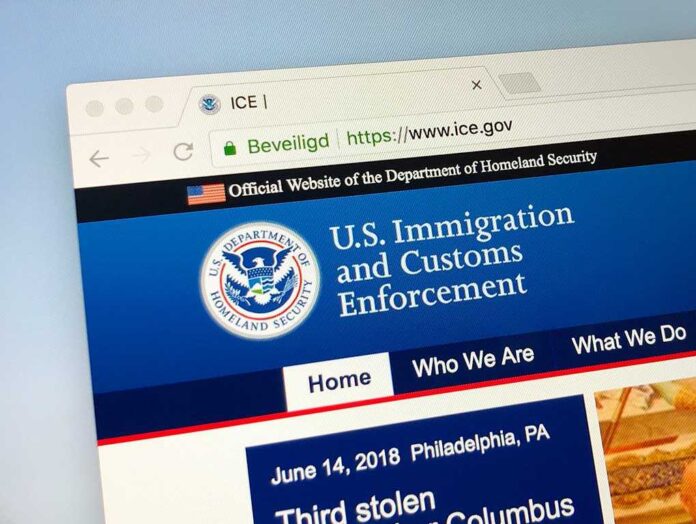
Democratic-led states are bypassing federal authority to shield their communities from ICE operations, marking the most aggressive challenge to immigration enforcement since the agency’s creation in 2003.
Story Snapshot
- New Jersey passed three bills limiting state cooperation with ICE after fatal shooting of Renee Nicole Good in Minneapolis
- Congressional Progressive Caucus threatens to block $75 billion DHS funding unless ICE reforms are implemented
- Representative Shri Thanedar introduces federal legislation to completely abolish ICE by January 30, 2026
- Polls show 46% of Americans support abolishing ICE, with 94% of Democrats disapproving of current operations
Fatal Shooting Triggers Legislative Response
The death of Renee Nicole Good at the hands of ICE agents in Minneapolis became the catalyst for unprecedented state-level resistance to federal immigration enforcement. Democratic lawmakers seized on this incident, combined with reports of unmarked federal agents detaining protesters in Portland, to frame ICE as an out-of-control agency operating with impunity. The timing could not be more politically charged, occurring just weeks before the January 30 appropriations deadline.
These Democrat States Are Declaring War on ICE https://t.co/zd3SNYorIN
— 🌺🌿kam🌿🌺 (@pjkate) January 16, 2026
Representative Ilhan Omar declared the agency had escalated violence beyond acceptable limits, while Senate Democrats called ICE operations tantamount to secret police tactics. These aren’t empty political gestures – they represent a fundamental shift in how blue states view their relationship with federal immigration enforcement.
States Take Direct Action Against Federal Authority
New Jersey Governor Phil Murphy signed legislation that dramatically restricts his state’s cooperation with ICE operations, setting a template other Democratic states are rushing to follow. California and Georgia Democrats have introduced similar measures, creating a patchwork of state-level resistance that could cripple federal immigration enforcement capabilities. These bills go far beyond symbolic gestures, establishing legal barriers that could force ICE to operate without local support.
The Federation for American Immigration Reform warns these state actions endanger ICE officers who already face increasing assaults while performing their duties. Yet Democratic state leaders argue they cannot stand by while federal agents operate with what California Senator Scott Wiener calls complete lack of accountability. This represents a dangerous precedent where states pick and choose which federal laws to support.
Congressional Democrats Weaponize Budget Process
The Congressional Progressive Caucus has turned the January 30 funding deadline into leverage against ICE, threatening to block the entire $75 billion Department of Homeland Security budget unless substantial reforms are implemented. Representative Pete Aguilar accused ICE of terrorizing American streets, while Senator Jeff Merkley demanded the removal of DHS Secretary Kristi Noem. This coordinated opposition could trigger a partial government shutdown if negotiations fail.
Representative Shri Thanedar escalated the confrontation by announcing legislation to completely abolish ICE, calling the agency beyond reform and out of control. Democratic leadership faces pressure from two directions – progressive activists demanding abolition and moderate voters who may balk at eliminating immigration enforcement entirely. The political calculus becomes even more complex with polls showing 84% of Republicans still approve of ICE operations.
Electoral Politics Drive Immigration Showdown
Democratic strategists view anti-ICE messaging as their pathway to victory in 2026 midterm elections, particularly given polling that shows widespread disapproval of current immigration enforcement tactics. The Economist/YouGov survey revealing 46% support for abolishing ICE represents a significant shift in public opinion that Democrats believe they can exploit. However, this strategy carries substantial risks in swing districts where voters may view such positions as extreme.
The broader implications extend beyond electoral politics to fundamental questions about federal authority and state resistance. If Democratic states successfully limit ICE operations through legislative barriers, it establishes precedent for states to selectively enforce federal law based on political preferences. This could fundamentally alter the balance between state and federal power in ways that extend far beyond immigration policy.
Sources:
How to Stop ICE – The American Prospect
Democratic leaders resist call of voters to abolish ICE – Salon
Democrats’ dilemma: Progressive push to abolish ICE sparks fresh divide in party – Fox News
Abolish ICE polls Democrats midterms 2026 – MS NOW
Democrats ICE funding appropriations – Politico
Democrats propose state laws to limit ICE after Minneapolis – ABC News
States endanger ICE officers mask prohibition – FAIR