The most dangerous sound in Havana isn’t gunfire—it’s the steady, metallic clatter of pots and pans, because it means ordinary people have stopped whispering.
Quick Take
- Cuba’s recent protest waves tie directly to blackouts, shortages, and a breaking-point loss of fear, not to any verified Trump-directed “leadership shake-up.”
- July 2021 set the modern template: mass street protests, explicit anti-communist slogans, and a swift security crackdown.
- From 2024 to 2026, protests often reappear as localized “cacerolazos” during blackouts, then spread through neighborhoods faster than officials can contain the story.
- International pressure is real but fragmented: U.S. lawmakers, Cuban exile groups, and parts of Europe push harder, while global communist parties blame U.S. policy and defend Havana.
The headline doesn’t match the reality, but the reality is bigger
The phrase “Trump eyes a shake-up in Cuban leadership” reads like a clean storyline, but the documented record doesn’t support a current, operational Trump role in altering Cuba’s leadership. What does hold up under scrutiny is the core event: anti-government, explicitly anti-communist protests have surged at multiple points, including the landmark July 2021 uprising and an ongoing 2024–2026 wave driven by shortages, inflation, and blackouts. That tension—real revolt, fuzzy framing—is the first clue to what’s actually happening.
Americans should treat that mismatch as a warning label. Cuba’s crisis doesn’t need a U.S. political celebrity to ignite; it already has the classic accelerants: a one-party state, a centrally controlled economy that can’t reliably deliver basics, and a security apparatus built to punish public disobedience. When you hear “down with communism” shouted in the streets, that isn’t a think-tank talking point. It’s a blunt verdict from people who have tried patience, coping, and quiet exit—and are running out of options.
July 2021: the moment the regime learned the internet can’t be arrested
July 11–12, 2021 became the hinge year because it fused economic pain with political language. Thousands marched in Havana and across the island, chanting for freedom and denouncing communism, and clashes followed. Police used force, protesters threw stones and overturned vehicles, and the state moved rapidly to reassert control. The lasting impact wasn’t just the images; it was the precedent. Cuba’s rulers saw how quickly localized anger could become national defiance once people believed they weren’t alone.
For readers who grew up during the Cold War, the most striking detail is how unromantic these protests are. This isn’t Che posters and grand speeches; it’s medicine shortages, empty shelves, and electricity that vanishes for hours. That grim practicality matters, because it makes the movement harder to dismiss as “political theater.” When a mother bangs a pot during a blackout, she isn’t auditioning for a revolution. She’s announcing the state has failed at the most basic promise: keeping life livable.
2024–2026: blackouts turn into flash-mob politics
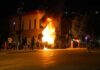
The 2024–2026 protest wave reflects a country stuck in rolling emergencies. Blackouts and scarcity create a predictable pattern: night falls, power dies, the banging starts, neighbors spill into streets, and officials scramble to isolate the incident before it becomes a contagion. Reports highlight a major cacerolazo in Havana’s Arroyo Naranjo district during a February 2026 blackout, a reminder that “small” protests can be massive in a tightly controlled society where public assembly itself is the red line.
Economic mismanagement also shows up as political theater inside the regime. The dismissal of Economy Minister Alejandro Gil Fernández for alleged corruption and mismanagement preceded a burst of unrest tied to shortages. That matters because it signals internal panic: when governments sacrifice senior officials, they’re trying to prove they still steer the ship. Cubans have heard that promise before. At some point, personnel changes look less like reform and more like a shell game—same system, new face, same shortages.
The prison story is the one Havana can’t spin away
Nothing radicalizes a population like the belief that the state will not only arrest you, but let you die unseen. Reports in early 2026 described political prisoners dying in custody after unrest tied to prison conditions and the death of a young inmate. Even without perfect information—common in closed systems—the political consequence is clear: fear changes shape. People may still fear arrest, but they start fearing silence more, especially when families conclude that quiet compliance offers no protection.
From a conservative, common-sense American perspective, the human-rights dimension matters because it clarifies the moral stakes without requiring ideological romance. A government that monopolizes power and criminalizes dissent has fewer, not more, incentives to fix itself. That doesn’t automatically justify every external policy idea, but it does refute the comfortable myth that authoritarian systems naturally “evolve” into freedom if outsiders simply stop criticizing them. Rights don’t emerge by accident; they emerge when demanded.
External pressure is real; the Trump “shake-up” storyline is not
Outside Cuba, pressure comes from multiple directions. U.S. lawmakers and Cuban-American communities frame the protests as proof that communism failed and argue for stronger support for Cuba’s pro-democracy forces. European politics also enter the picture through debate over engagement and financing, with critics warning that funds can prop up state institutions rather than citizens. Meanwhile, international communist parties push the counter-narrative: blame U.S. sanctions, condemn “imperialist aggression,” and defend Havana’s sovereignty.
Trump’s name fits into this environment mostly as rhetoric and memory. As president, he tightened Cuba policy and reversed parts of earlier openings. Today, with no verified official mechanism in his hands, “Trump eyes a shake-up” reads as a political projection, not a documented plan. Americans can believe communism is collapsing on its own terms—many Cubans clearly do—without pretending one U.S. figure can reshuffle a foreign regime like a corporate org chart.
What to watch next: the next blackout, the next crowd, the next excuse
The next chapter likely won’t start with a grand march; it will start with another neighborhood losing power, another cacerolazo, and another wave of cellphone footage the state can’t fully suppress. The regime will keep blaming outsiders, because admitting domestic failure invites more domestic defiance. Protesters will keep testing the line between fear and necessity. The open question is whether persistent, localized eruptions can mature into organized, durable civic power in a system designed to prevent it.
Anti-Communist Protests Erupt in Havana As Trump Eyes Shake-Up in Cuban Leadership https://t.co/6ormdFp0bx
— Richard Lowe (@RPL29) March 7, 2026
Americans looking in should keep two truths in mind at once. First: Cubans protesting “down with communism” are making a direct, personal judgment about the system they live under, and that deserves respect. Second: sloppy narratives about a U.S.-driven “leadership shake-up” distract from the real driver—Cuba’s internal crisis of legitimacy. Freedom movements don’t need imported scripts. They need endurance, clarity, and a world that refuses to look away when repression answers hunger.
Sources:
Cubans Protest EU Financing of Havana Regime Amid Rising Tensions
Pressure on Havana is mounting. What comes next for Cuba matters.
More than 100 Communist and Workers’ Parties say: Stop the escalation of aggression against Cuba!
SWP call to action: US hands off Cuba! End Washington’s economic blockade!