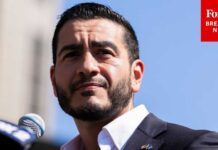
Jay Clayton walked into his Senate hearing hoping to talk intelligence, but walked out branded by both parties over nine words: “Joe Biden was fairly and duly elected under our process.”
Story Snapshot
- Clayton confirmed Biden was certified, received the most electoral votes, and was “fairly and duly elected.”
- He refused to say the simple phrase “Joe Biden won,” sparking fierce clashes with Democrats.
- He insisted he is “not an election denier,” trying to balance facts with Trump-world politics.
- Conservatives split: some say he caved to Democrats, others see classic confirmation theater.
A nominee trapped between math, media, and MAGA
Senators asked Jay Clayton a yes-or-no question that almost no Trump nominee seems able to answer cleanly: who won the 2020 election. Clayton did not argue about ballots, voting machines, or suitcases in Atlanta. Instead, he went straight to the official record, saying Joe Biden “was certified as the president of the United States” and “received the most electoral votes.” Then he added the line that set off a firestorm: Biden was “fairly and duly elected under our process.”
Clayton’s words matter because they did not come from a pundit panel or a podcast. They came from a man asking to run America’s intelligence community, an office that touches classified election security and foreign interference every day. For conservatives, the Director of National Intelligence must be someone who respects the law, protects the vote from foreign enemies, and does not echo the talking points of the permanent Washington class. Clayton tried to thread that needle and got pricked from both sides.
The hearing exchange that lit the fuse
Democratic Senator Jon Ossoff turned the hearing into a cross-exam focused on one thing: the words “Joe Biden won.” Over and over, he pressed Clayton: “Who won the 2020 election?” Clayton stuck to his earlier answer, that Biden was certified and had the most electoral votes, but refused to repeat or expand it into the plain-language soundbite Ossoff demanded. When Ossoff kept pushing, Clayton finally said he was “not going to do this” and called the back-and-forth “theater,” signaling he saw the line of questioning as political, not substantive.
Ossoff then attacked the dodge itself, saying it was “humiliating” that a nominee for such a critical post could not answer a “basic question” about who won a presidential election. That clip raced through cable and social media, and many outlets framed Clayton as evasive or weak under pressure. From a common-sense conservative view, Ossoff’s performance looked less like a search for truth and more like a loyalty test to the narrative he prefers. Clayton’s reluctance to give him a slogan on demand underscored how much modern hearings reward theatrics over serious oversight.
“Not an election denier” but still under suspicion
Senator Mark Warner pushed Clayton directly on whether he considered himself an “election denier.” Clayton’s reply was clear: “I’m not an election denier.” He affirmed Biden was president and, in later questioning, agreed that Biden was “fairly and duly elected under our process.” That phrase tracks with the reality that courts, state officials, and Congress certified the 2020 results, and no credible evidence of widespread voter fraud has been found. By the standards of the law, Biden’s election stands.
The establishment is scrambling because the truth is finally taking center stage
At yesterday's Senate Intelligence hearing, DNI nominee Jay Clayton refused to play the media’s narrative games, repeatedly stating that Joe Biden was "certified" but pointing directly to the…
— Unite4Freedom (@Unite4Freedom) July 16, 2026
Yet Clayton still refused to say there was “no voter fraud” at all. When Senator Angus King asked if there was voter fraud, Clayton answered, “I don’t think we can say definitively,” even as he noted the official certification and judicial rulings. That answer fits a cautious legal mindset. Small-scale fraud has existed in American elections for generations, even if it does not change national results. From a conservative perspective, his caution about absolute claims makes sense, but the way he framed it handed ammunition to those eager to paint him as slippery rather than serious.
Why conservatives are split on Clayton’s stance
Right-leaning media and grassroots voices reacted in two very different ways. Some blasted Clayton as “cowering to Democrats,” furious that a Trump nominee would call Biden “fairly elected” at all. In their view, any acceptance of the 2020 outcome is betrayal, regardless of what courts and state legislatures have done. Others saw the hearing as standard confirmation theater, a ritual where Democrats try to force nominees into viral clips and Republicans try to survive without triggering a meltdown from either the base or the Beltway.
From a common-sense, rule-of-law conservative lens, Clayton’s position is conflicted but telling. He affirmed the legal outcome and certification, which is what the Director of National Intelligence must work with in reality. He refused to play along with demands for simplistic slogans, correctly labeling some of the questioning as theater. At the same time, he dodged direct language about Biden “winning” and hesitated on fraud questions, which fuels doubts about whether he will speak hard truths plainly when politics bite.
What this hearing really reveals about Washington
The fight over Clayton’s nine words says less about ballot boxes in 2020 and more about how broken the confirmation process has become. Analyses of recent hearings show they increasingly focus on culture war flashpoints and loyalty tests rather than the actual duties of the job. For intelligence roles, senators now treat election questions as a litmus test on Trump, not as a serious discussion about defending our system from foreign attacks. That shift should worry any conservative who cares about strong national security and limited political meddling in independent agencies.
Clayton’s testimony put that problem in sharp relief. He signaled he would not let the intelligence office “manipulate the outcome of any American election” and stressed that the role is to stop foreign interference, not pick winners. Yet his entire public image now hangs on whether he did or did not utter a three-word phrase demanded by partisan senators. For readers who value truth, law, and American sovereignty, the deeper lesson is clear: the next battles over intelligence and elections will be waged not just in classified briefings, but in televised hearings designed to score points instead of fix problems.
Sources:
thegatewaypundit.com, theguardian.com, youtube.com, fox5atlanta.com, theepochtimes.com, rollcall.com, politico.com, pbs.org, reuters.com, cnn.com, signalscv.com, washingtonpost.com, democracydocket.com, ballotpedia.org, heritage.org, presidentialtransition.org, regulatorystudies.columbian.gwu.edu
© partiallypolitics.com 2026. All rights reserved.