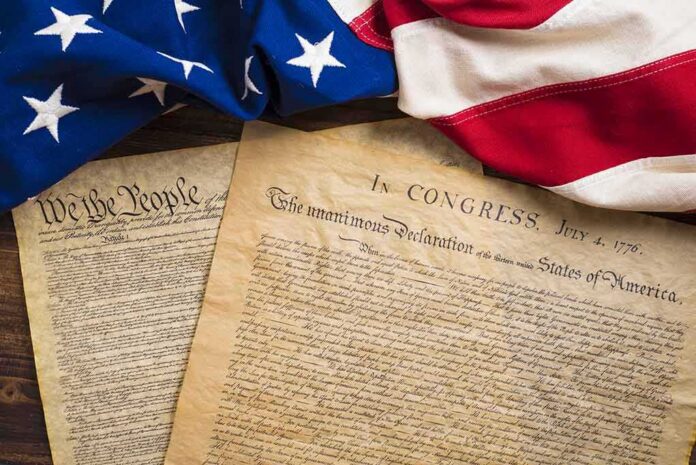
A national progressive coalition is openly campaigning to replace the Declaration of Independence with a new “Declaration of Interdependence.”
Story Snapshot
- Next250 leaders propose a new founding text to guide America’s next 250 years.
- The draft agenda centers on living wage, climate policy, gun laws, voting rights, and reproductive rights.
- Supporters frame it as inclusive renewal; critics call it a globalist rewrite of America.
- The push fits a long American pattern of fights over how to update founding ideals.
Progressive Leaders Launch a “Declaration of Interdependence” Campaign
Next250, a coalition led by Linda Sarsour, Aimee Allison, Saru Jayaraman, Valarie Kaur, and Carmen Perez, is using the nation’s 250th anniversary to rally support for a new “Declaration of Interdependence.” The group says the document would reflect modern values and a diverse set of voices. Organizers describe it as a guide for the country’s next two and a half centuries, anchored in shared responsibility and unity across communities.
Coalition messaging highlights five core planks. These include a living wage, climate justice, health care and reproductive rights, “common sense” gun reforms, and voting rights. The group says these pillars rose from a public process that surfaced what participants view as essential goals for the future. Backers present the document as a moral north star rather than a legal charter, though critics argue the rhetoric aims to displace the founding creed.
DSA Activist Linda Sarsour Wants to Replace the Declaration of Independence With Something That Reflects the Values of the Radical Left (VIDEO) https://t.co/x5lvBHRgy2 #gatewaypundit via @gatewaypundit
— DJ (@DJ87112331) July 19, 2026
Public Rollouts, Street Actions, and Cultural Framing
Advocates have staged unveilings and rallies near the White House and across states to frame the proposal as a cultural milestone. Their events blend protest, art, and speeches that press for a new national story. One report described large crowds and a visible effort to rebrand the semiquincentennial around this message of “interdependence,” rather than a traditional celebration of 1776. The campaign uses media, town halls, and social platforms to expand reach.
Supporters describe the project as “pro-democracy” and say it aims to gather broad support for reforms. Their communications argue that progress on wages, climate, and access to the ballot demands a clear, shared statement. They often pair “interdependence” with themes of community care and mutual obligation. The branding signals a values reset, not just a policy slate. That choice has triggered tough questions about sovereignty, individual rights, and the role of the state in daily life.
Conservative Backlash Frames It as an Attack on the Founding
Conservative writers and outlets portray the move as an attempt to scrap the founding creed and swap it for globalist aims. One commentary argued that trading “independence” for “interdependence” reveals a shift away from national sovereignty and toward transnational priorities. Another piece attacked Linda Sarsour by name and cast the program as a far-left plan to dismantle core American ideals. That critique ties the platform to a broader push to reject Western traditions.
The strength of the criticism rests on a core concern: rights come from the Creator and exist prior to the state. If a new civic text treats rights as state-managed benefits, conservatives see a red flag. From that lens, “living wage,” “climate justice,” and “common sense” gun limits can look like open-ended claims on others’ labor, property, and liberty. That runs against limited government, ordered liberty, and local control, which anchor American conservative values and common sense.
This Fight Mirrors Old American Debates Over Renewal
Scholars note that fights over updating America’s creed are not new. Arguments over how to read the Declaration, the Constitution, and the Bill of Rights have marked every era of social change. Some movements push to reinterpret core texts to suit present needs. Others insist that principles are fixed and only their application can change. This push and pull has a long record in American life and law.
History also shows that new statements often emerge alongside, not instead of, older texts. Reformers have drafted manifestos that speak to their moment without legal force. The present campaign says it offers a narrative for the next 250 years. Whether it stays a symbolic charter or seeks authority inside schools, agencies, or courts will decide how fierce the fight becomes. That line is where rhetoric turns into rules—and where both sides dig in.
Sources:
townhall.com, bioneers.org, ctpublic.org, morningstar.com, dissenter.com, glohbe.de, commondreams.org, youtube.com
© partiallypolitics.com 2026. All rights reserved.