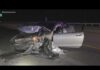
Three federal employees sat down for Korean BBQ in Lynwood, California, and walked out under armed escort through a jeering mob that had them confused with immigration agents—a case of mistaken identity that exposes how inflamed rhetoric can turn ordinary Americans into targets.
Story Snapshot
- TSA air marshals dining at Ten-Raku restaurant mistaken for ICE agents, surrounded by dozens of protesters on January 28, 2026
- Los Angeles County Sheriff’s Department formed skirmish line to escort federal employees to safety; no arrests or injuries
- DHS condemned incident as “frenzied mob” incited by anti-enforcement politicians; TSA spokesman blamed violent rhetoric
- Pattern emerges: Minneapolis software engineers similarly harassed after misidentification via Signal chat alerts
- Protester organizer admitted they “potentially” thought TSA were ICE, confronted media inside restaurant
When Dinner Becomes a Federal Incident
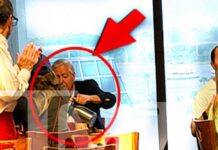
The evening of January 28 started routinely for three TSA air marshals settling into their booth at Ten-Raku, a Korean barbecue spot in Plaza Mexico shopping center. Within minutes, a rumor ricocheted through social media channels—possibly Signal chat groups monitoring federal agent movements—that ICE operatives were dining inside. Protesters descended on the restaurant armed with horns, whistles, and fury. They surrounded the building, hurling profanity-laced insults and mockingly parroting “We’re TSA” as the trapped employees called for backup. The air marshals, whose day job involves quietly protecting aircraft passengers from threats, suddenly found themselves needing protection from Americans who confused their aviation security mission with immigration enforcement.
Dozens of Los Angeles County Sheriff’s Department deputies responded, forming a defensive perimeter to separate the crowd from the restaurant entrance. The operation culminated in a coordinated escort: a skirmish line of uniforms shepherding the three federal workers to the sidewalk, where an unmarked van whisked them away. The protesters dispersed without arrests or injuries, leaving behind a disrupted restaurant and a deepening question about where legitimate dissent ends and mob intimidation begins. The scene unfolded in Lynwood’s heavily Hispanic Plaza Mexico district, where sensitivity to federal presence runs high under the Trump administration’s renewed deportation push led by DHS Secretary Noem.
The Minneapolis Echo and Signal Chat Surveillance
This wasn’t an isolated flare-up. Days or weeks earlier in Minneapolis, anti-ICE activists weaponized the same Signal alert system against white male software engineers eating at Clancey’s Deli. Protesters swarmed them with chants of “bootlicker” and demands they leave the neighborhood, only to discover later that one victim actively opposed ICE policies himself. The pattern reveals a troubling dynamic: real-time surveillance apps designed to track immigration agents now fuel hair-trigger confrontations where any plainclothes federal worker—or anyone vaguely resembling one—becomes fair game. TSA air marshals operate undercover by design, blending into civilian settings to counter hijacking threats. That anonymity, vital for aviation security, now paints targets on their backs in cities where immigration tensions boil over.
Political Gasoline on Community Fires
Department of Homeland Security officials didn’t mince words in their post-incident statement, blaming “left-wing politicians” for inciting agitators who refuse to distinguish between DHS divisions. TSA spokesman Nick Dyer escalated further, declaring that violent rhetoric against immigration enforcement has metastasized into tacit endorsement of harassment against all federal employees under the DHS umbrella—from border agents to aviation security to disaster response. The accusation holds weight when protesters’ own organizer admitted on camera she “potentially” mistook the diners for ICE before instructing restaurant staff in Spanish not to cooperate with media. That blend of ideological certainty and factual sloppiness creates chaos, as witnessed when LASD had to deploy significant resources to extract three people whose only crime was ordering bulgogi.
Local witness Osbaldo Bretado, dining at the restaurant after the confrontation, captured the emotional dissonance perfectly: protesters made an understandable mistake in their zeal to oppose what they see as indiscriminate deportations, yet the mistake mirrored the very problem they protest—broad enforcement sweeping up the wrong people. His observation underscores a bitter irony: activists decrying ICE for allegedly targeting non-criminals just targeted non-ICE personnel. The Sheriff’s Department, careful to emphasize it plays no role in immigration enforcement, framed the response as routine public safety work. But routine it wasn’t—skirmish lines and unmarked vans signal how volatile these encounters have become in communities where every unfamiliar face in business casual triggers alarm bells.
The Cost of Misplaced Outrage
Short-term fallout extends beyond one ruined dinner. Federal employees now face a chilling calculation: can they safely eat, shop, or exist in public in immigrant-heavy neighborhoods while off-duty? TSA morale takes a hit when air marshals trained to confront terrorists aboard aircraft must flee restaurant patrons. Long-term, the incident hands ammunition to enforcement hawks who argue that anti-ICE activism has slipped its rational moorings, justifying crackdowns on protest networks and expanded protections for federal workers. The political divide deepens, with conservatives pointing to Lynwood as proof that leftist rhetoric breeds lawlessness, while immigration advocates risk losing public sympathy when their proxies harass the wrong targets. Plaza Mexico’s Ten-Raku likely lost business that night, but the broader loss—community trust in crowdsourced alerts, activists’ credibility, basic civic discernment—cuts deeper across America’s immigration battlefield.
MISTAKEN IDENTITY: Protesters swarmed a California restaurant Wednesday after mistaking two TSA officers inside for ICE agents. https://t.co/CsRKSanEDx
— Fox News (@FoxNews) January 29, 2026
No injuries were reported, no arrests made, no laws technically broken beyond disturbing the peace of three people trying to eat Korean barbecue. Yet the Lynwood incident crystallizes a dangerous trend: when political passion overwhelms basic fact-checking, when Signal chats replace sound judgment, and when elected officials’ heated immigration rhetoric filters down to street-level vigilantes with air horns, the result is chaos that serves nobody’s interests. The TSA air marshals returned to their mission of keeping flights safe. The protesters moved on to the next alert. And somewhere in between, common sense remained conspicuously absent from the table.
Sources:
LA protesters swarm restaurant after TSA officers reportedly misidentified ICE agents – Fox News
TSA workers mistaken for ICE agents, prompting protest in Lynwood – Fox LA
Federal air marshals mistaken for ICE agents causing chaos at LA restaurant – KATV