An Orleans Parish grand jury just indicted Louisiana’s top law enforcement officer for sending letters — and the judge who appointed the prosecutor has 38 active cases tied to the same attorney general she’s now charging.
Story Snapshot
- An Orleans Parish grand jury indicted Louisiana Attorney General Liz Murrill on July 2, 2026, returning 16 felony counts — 8 for malfeasance in office and 8 for intimidation and retaliation.
- The charges stem from letters Murrill sent on May 13, 2026, warning New Orleans officials they could be removed from office if they moved forward with a special election for a merged clerk of court position.
- The Louisiana Supreme Court sided with Murrill on the underlying clerk dispute, staying a lower court injunction and later granting her request to transfer authority over the Orleans Parish Clerk of Court.
- The special prosecutor charging Murrill is currently represented by Murrill in a civil case, and the judge who appointed her oversees 38 cases prosecuted by Murrill’s office — neither conflict has been resolved.
A Fight Over Court Mergers Turned Into a Criminal Case
The backstory matters here. Louisiana passed legislation to merge two Orleans Parish clerk of court positions into one. New Orleans city officials wanted to hold a special election to fill that merged seat. Murrill said that move was illegal. On May 13, 2026, she sent letters to Mayor Helena Moreno, five city council members, and District Attorney Jason Williams. The letters warned that pushing ahead with the special election could trigger Louisiana’s usurper laws — statutes that allow removal of officials who unlawfully hold public office.
Mayor Moreno called the letters a threat and said publicly she would not be intimidated. The city council members echoed that view. But Murrill’s position was not fringe legal opinion. The Louisiana Supreme Court stayed a lower court injunction related to the clerk dispute and later granted Murrill’s request to transfer authority over the Orleans Parish Clerk of Court entirely. That ruling came from the state’s highest court — the same court that sits above every judge involved in this fight.
The Grand Jury Moved on Its Own — That Almost Never Happens
District Attorney Jason Williams recused himself from the case. That left a void. Rather than wait, the grand jury launched its own investigation — a rare move under Louisiana law. Judge Leon Rocher then appointed former criminal court judge Laurie White as special prosecutor. White announced the 16-count indictment on July 2, 2026, and set a $400,000 bond for Murrill. White acknowledged during the press conference that intimidation charges typically involve physical threats, not written letters — a candid admission that raises real questions about whether the statute fits the facts.
The Conflicts of Interest Here Are Impossible to Ignore
Two serious conflict problems hang over this case. First, special prosecutor Laurie White is currently represented by Murrill’s office in a civil sexual harassment case. Second, Judge Rocher — who appointed White — oversees 38 active cases being prosecuted by Murrill’s office. These are not minor procedural footnotes. They go to the heart of whether this prosecution can be seen as impartial. Any honest legal observer has to acknowledge these conflicts deserve scrutiny before the case goes further.
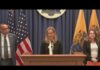
Former Criminal District Court Judge Laurie White says AG Liz Murrill faces a $400,000 bond in the 16-count indictment and the case is "now a criminal matter."
White was brought on as a special prosecutor. pic.twitter.com/GkTL3G3JEg
— WWL-TV (@WWLTV) July 2, 2026
Murrill also said she received no official notification of the grand jury investigation until reporters called her. That is a strange way to learn you are about to be indicted. Her response was direct: she stands behind the letters, her role is defined by law and the state constitution, and she will fight the charges. Governor Jeff Landry called the proceedings a “kangaroo court” and pledged to pardon Murrill if she is convicted. Whether you agree with Landry’s framing or not, the procedural problems in this case give that characterization more traction than it would otherwise deserve.
What the Law Actually Says Versus What This Case Is Really About
The core legal question is narrow: did Murrill’s letters cross from lawful warning into criminal intimidation? The special prosecutor herself flagged the gap — intimidation law is typically built around physical threats, not official correspondence citing state statutes. Murrill cited usurper laws by name. The Louisiana Supreme Court later validated her position on the underlying dispute. That does not automatically make the letters lawful, but it does mean she had a credible legal foundation — not a rogue threat designed to bully local officials into silence.
What this case is really about is an old and bitter fight between New Orleans city government and state authority in Baton Rouge. That tension is real, documented, and acknowledged even by the prosecutors involved. When a grand jury self-initiates, a special prosecutor has a conflict with the defendant, the appointing judge has his own conflict, and the state’s highest court has already ruled in the defendant’s favor on the underlying issue — the indictment becomes very hard to read as a clean exercise of justice. Murrill may still face a trial. But the road from here to a conviction runs through a minefield of procedural problems that her defense team did not create.
Sources:
washingtontimes.com, facebook.com, aglizmurrill.com
© partiallypolitics.com 2026. All rights reserved.