A single bad decision with a steering wheel turned a New Year celebration into a mass-casualty scene in seconds.
Story Snapshot
- A vehicle struck parade-goers at the Louisiana Lao New Year Festival near New Iberia on April 4, 2026, sending 13 to 18 people to hospitals.
- Authorities arrested 57-year-old Todd Landry of Jeanerette at the scene and said the incident did not appear intentional.
- Investigators reported signs of impairment and a breath test of 0.137% BAC, along with open containers in the vehicle.
- Organizers canceled festival music and weighed limiting the next day’s events to religious services depending on security.
The crash site tells you why parades stay vulnerable
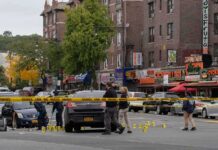
The collision happened around 2:30 p.m. at Savannakhet Street and Melancon Road, near Lanxang Village and the Wat Thammarattanaram Buddhist temple grounds in Iberia Parish. That setting matters: tight roads, dense foot traffic, and a parade energy that pulls people close to moving vehicles. Reports said the car struck pedestrians and a golf cart, and at least one person ended up trapped underneath.
Emergency response escalated fast because it had to. The Iberia Parish Sheriff’s Office pulled in Louisiana State Police, and victims were transported to area hospitals, including larger facilities in Lafayette. Early counts shifted as responders sorted chaos into triage categories, which is why public numbers moved between 13, 15, and 18 injuries. That fluctuation reads like confusion, but it usually reflects a grim reality: new victims get discovered, reassessed, and reclassified.
What police charged, and what that signals about accountability
Police arrested the driver, identified as Todd Landry, 57, of Jeanerette. Authorities said he showed signs of impairment, a breathalyzer recorded 0.137% BAC, and investigators found open containers. Charges reported included DWI, careless operation, open container, and 18 counts of first-degree negligent injury. Those counts matter because they treat each injured person as a separate harm, not a single “accident,” which is how justice stays specific.
Officials also said the crash did not appear intentional, and that distinction deserves attention. Americans have watched too many vehicle-into-crowd attacks to ignore the possibility, but law enforcement drew a line: impairment, not terrorism. Common sense agrees with the principle behind that call—follow evidence, not panic. When prosecutors anchor a case in impairment and negligence, they still pursue serious penalties without inflaming community fear.
A cultural festival absorbs the shock differently than a typical street event
The Louisiana Lao New Year Festival is a three-day cultural and religious gathering rooted around the temple and the Acadiana-area Lao community. That context changes the emotional math. This wasn’t a generic city parade; it was a community homecoming with elders, families, and faith leaders on familiar ground. Organizers canceled music for the evening and kept vendors operating into the night, a practical compromise between safety and the reality that livelihoods depend on festival weekends.
Sunday planning reportedly shifted toward religious services only, contingent on security availability. That detail reveals the hidden cost of public disorder: small communities do not have limitless deputies, troopers, or barricades to redeploy. When law enforcement must pivot from “traffic and crowd control” to “active casualty response,” everything else gets thinner, including the ability to keep a peaceful event running safely the next day.
The open loop every parade faces: cars and crowds share space by habit
Parades work because people trust boundaries that often consist of little more than a painted line, a few cones, and the assumption that drivers will behave. That assumption becomes dangerous when alcohol enters the picture. Reports included an eyewitness account describing revving and a vehicle pushing into people; authorities still emphasized non-intent. Both can be true: reckless acceleration under impairment can look deliberate to anyone watching bodies fly.
The conservative lesson here isn’t about blaming a culture or banning festivals; it’s about insisting on predictable standards. If a driver chooses to drink and drive, consequences should land hard and clean. If an event puts vehicles near dense crowds, barriers and enforcement must match the risk, even in rural settings. Liberty includes celebration; order is what keeps celebration from becoming tragedy.
What happens next: court dates, medical recoveries, and policy questions
Landry was booked into jail as the investigation continued, and victim conditions were still being tracked as reports evolved. That lag is typical: hospitals stabilize first, media updates later, and families live in the gap. The case will likely hinge on straightforward facts—BAC level, observed impairment, scene evidence, and injury documentation—rather than complex motive arguments. Prosecutors rarely need theatrics when the numbers speak for themselves.
Long-term, the most likely change won’t be dramatic new law, but sharper local practice: more hard barricades, clearer vehicle separation, and less tolerance for “it’s a small road, we’ll be fine.” The most sobering part is also the simplest. One impaired driver can fracture a community’s trust in public gatherings for years, and rebuilding that trust takes more than prayers and press releases. It takes visible, repeatable safety discipline.
Sources:
More than a dozen injured after vehicle hits parade-goers during Louisiana celebration