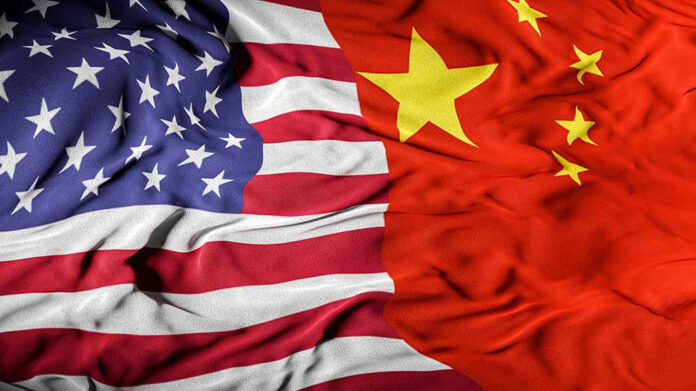
China has turned America’s favorite trade war weapon—export controls—against the U.S., testing who really holds the cards when the world’s supply of rare earths is on the line.
Story Snapshot
- China mirrored U.S. trade tactics by imposing export controls on rare earths and strategic materials
- The move exposed U.S. dependence on Chinese supply chains, especially in advanced manufacturing
- A brief truce lowered tariffs, but China’s new export controls remained, granting it lasting leverage
- This escalation signaled a shift in global power dynamics as both nations weaponize economic interdependence
China’s Retaliatory Play: Export Controls as Economic Leverage
American policymakers once believed tariffs and export controls gave them the upper hand in any trade dispute. That illusion cracked in April, when China responded to American tariff hikes—some reaching 145%, aimed at Chinese imports—by rolling out its own set of export controls. Unlike the blunt instrument of tariffs, China’s move hit a nerve: it targeted rare earths and other critical materials, commodities for which China is the world’s dominant supplier. These minerals power everything from smartphones and electric vehicles to advanced military hardware, making them the Achilles’ heel of high-tech economies.
Within days, the American administration realized the cost of escalation. U.S. manufacturers, already struggling with inflation and global supply chain instability, faced the prospect of shortages in materials essential to their products. This wasn’t just about higher prices at the checkout; it was about whether factories could keep running at all. When China signaled it would maintain export controls and issue permits only selectively, Washington blinked. Officials began to walk back the harshest tariffs, admitting that a protracted supply squeeze could inflict more pain on America than on China.
Strategic Symmetry: From Defensive to Assertive Trade Policy
For years, China’s approach to trade disputes was largely reactive—raising tariffs here, adding bureaucratic friction there. The 2025 confrontation marked a distinct shift. By weaponizing its rare earth monopoly, Beijing not only mirrored America’s own export control playbook but demonstrated a newfound confidence in playing offense. The move wasn’t limited to rare earths. China expanded restrictions to cover lithium-ion batteries, graphite anodes, and synthetic diamonds—each one a pressure point for U.S. industry.
Industry analysts called China’s export controls a masterstroke. The U.S. had spent years trying to isolate China from advanced semiconductors and critical tech, but this time, China showed it could just as easily cut off the flow of vital materials. The message was clear: as long as America depends on Chinese supply chains, economic warfare is a two-way street. The temporary truce that followed—the U.S. lowering some tariffs, China granting conditional export permits—was less a resolution than a test of resolve. China’s controls stayed in place, and global markets took note.
Winners, Losers, and the New Age of Supply Chain Power Plays
Manufacturers in the U.S. and around the world felt the impact almost immediately. Electronics producers scrambled for alternatives. Auto and defense companies lobbied for domestic mining projects and recycling initiatives. Consumers braced for higher prices, especially on goods reliant on advanced materials.
The longer-term consequences are just beginning to play out. U.S. policymakers are investing in domestic rare earth production and searching for suppliers outside China, but building resilient supply chains is a years-long project. In the meantime, China’s willingness to use export controls as a bargaining chip signals a more sophisticated, assertive approach to global economic competition. The world’s interdependence—once a source of stability—has become a battlefield where leverage is measured in grams and gigawatts, not just dollars and tariffs.
Expert Analysis: Risks, Realities, and the Road Ahead
Trade experts warn that both powers now risk overplaying their hands. If China pushes too hard, it could accelerate the West’s efforts to diversify away from its materials. If the U.S. doubles down on tariffs and tech restrictions, it could invite more supply shocks and global economic fragmentation. The current truce is fragile, with export controls and conditional permits lingering as constant reminders of how quickly mutual pain can be inflicted.
Behind the headlines, a deeper shift is underway. For the first time, China is matching U.S. economic statecraft measure for measure, exposing vulnerabilities that go beyond trade balances. The message to the world’s manufacturers, investors, and policymakers is unambiguous: in the new era of economic warfare, control over critical materials is as potent as any weapon in the arsenal. Whether this leads to a new equilibrium—or a relentless cycle of escalation—remains the question looming over boardrooms and capitals alike.
Sources:
America Could Win This Trade War — Noah Smith