partiallypolitics.com — The deadliest detail in the Papua blast is not that an old bomb may have exploded; it is that the public record still treats the cause as suspicion, not certainty.
Quick Take
- Police said a shell left over from World War II was strongly suspected in the explosion that killed five people and injured nearly 20.[1]
- The blast destroyed nine homes and ripped through a fishing village in Indonesia’s Papua region, turning a domestic space into a disaster scene.[1]
- Reporting from multiple outlets repeats the same official characterization, but the language remains explicitly provisional.[1]
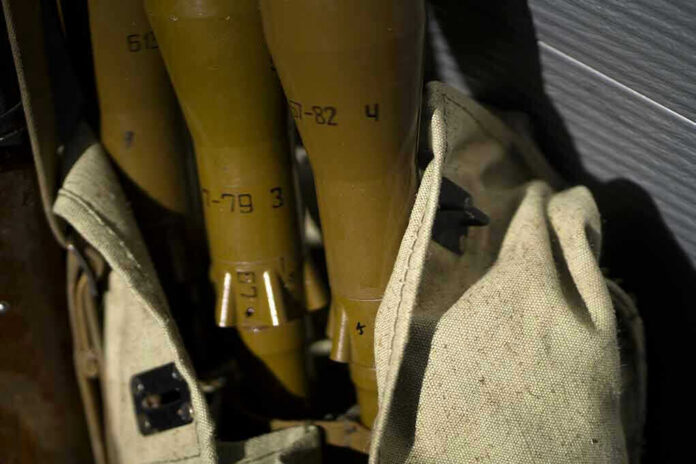
- A later report said police found an active grenade at the scene, a detail that deepens the sense of danger and unfinished investigation.[3]
The Official Story Is Strong, But Still Unfinished
Authorities in Papua said the explosion under a stilt house was strongly suspected to be a bomb or mortar left over from World War II, and that account now anchors most of the reporting.[1] The scene was grim: five dead, nearly 20 injured, nine homes destroyed, and several body parts still awaiting identification.[1] That is enough to explain the immediate shock, but not enough to close the case.
The most important word in the coverage is “suspected.” Police spokesman Cahyo Sukarnito framed the device as likely wartime ordnance, but he did not present a final forensic identification in the publicly available reports.[1] That distinction matters because early disaster reporting often compresses uncertainty into headlines, and this story is no exception. The official account is plausible; the evidence released so far is not the same as a technical confirmation.
Why This Region Keeps Producing Wartime Ghosts
Papua sits inside a wider Pacific history shaped by fierce fighting, heavy bombardment, and long-lived explosive contamination. Research on ammunition ship explosions and wartime disasters in nearby Papua New Guinea underscores how violently the region was saturated during the Second World War, leaving behind ordnance that can surface decades later. In that context, a buried shell under a civilian house is tragic, but not historically surprising.
That history gives the police theory real plausibility, which is why the story spread so quickly across major outlets.[1] At the same time, the reporting still leaves open basic technical questions: what exactly detonated, how it was triggered, and whether the recovered object was fully identified on site.[1][3] The later discovery of an active grenade at the scene suggests the danger may have extended beyond one blast, but it does not by itself resolve the origin story.[3]
What the Public Still Does Not Know
The missing piece is forensic closure. The accessible reports do not include a bomb-disposal analysis, residue testing, metallurgical findings, or a documented chain of custody for the object believed to have exploded.[1] Without that, readers should treat the WWII explanation as the leading official hypothesis, not a verified final answer. That is the difference between a strong lead and a finished investigation.
There is also a practical reason to resist premature certainty. When a disaster kills families, destroys homes, and leaves missing persons behind, rumor moves faster than laboratory work.[1] Early attribution can harden into public fact before specialists finish their work, especially when every witness wants an answer immediately. This case is a reminder that sometimes the oldest weapon in a room is not the bomb itself, but the speed with which a story becomes settled before the evidence does.
Sources:
[1] Web – WWII Bomb Suddenly Explodes in Indonesia, Killing Five and Destroying …
[3] YouTube – WWII-Era Bomb Explodes in Fishing Village, 5 Killed and 19 Injured …
© partiallypolitics.com 2026. All rights reserved.