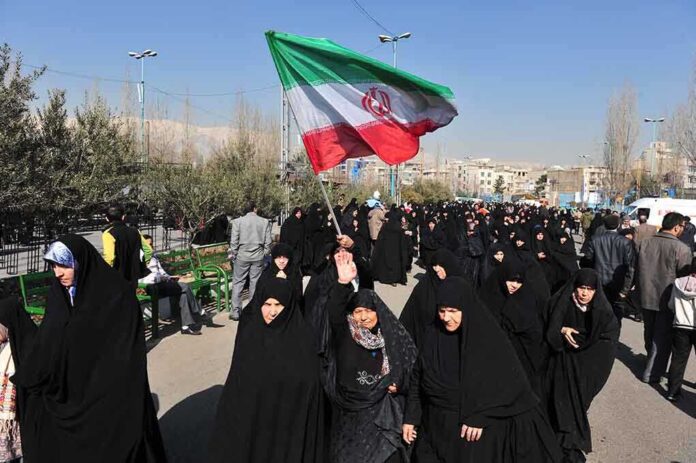
Iranian protesters chant “Neither Gaza nor Lebanon, my life for Iran,” turning guns on their own regime while rejecting foreign wars that drain the nation’s soul.
Story Snapshot
- Protests ignited December 28, 2025, in Tehran’s Grand Bazaar over economic collapse, exploding into nationwide anti-regime fury by January 6, 2026.
- Demonstrators demand Khamenei’s overthrow, chanting rejection of regime’s proxy battles in Gaza and Lebanon amid live fire killing 16-32.
- Security forces arrest nearly 1,000, raid hospitals, deploy tear gas; women and merchants lead strikes in 110 cities across 24 provinces.
- Regime vulnerability exposed as bazaar elites fracture support, social media fuels rapid spread despite crackdowns.
- Escalation risks regime survival, echoing historic uprisings like 2022 Mahsa Amini protests.
Protests Erupt from Economic Despair
Tehran Grand Bazaar merchants launched strikes on December 28, 2025, protesting rampant inflation and shortages crippling daily life. Demonstrations quickly spread to Isfahan, Shiraz, and Mashhad by December 30. Security forces fired tear gas and live rounds in Hamadan and Tehran, signaling early regime panic. Grievances layered economic pain with political rage, as crowds chanted “Death to the dictator.” Nationwide shutdowns followed on December 31, masked as weather precautions across 21 provinces.
Slogans Shift Focus to National Survival
Protesters adopted “Neither Gaza nor Lebanon, my life for Iran” to repudiate the regime’s foreign proxy funding at Iran’s expense. This nationalist turn exposed elite hypocrisy, as bazaar strikes halted gold and currency trades. Khamenei’s January 4 speech hardened the crackdown, abandoning initial restraint urged by the Supreme National Security Council. Demonstrators in Kermanshah and Ilam faced rifle fire and Molotov clashes by January 5, with 179 protests documented in 24 provinces.
Women emerged prominently on January 6, leading sit-ins at the Grand Bazaar turned “war zone” by tear gas dispersals. Funerals devolved into anti-regime rallies, amplifying calls for Khamenei’s fall. HRANA tallied 32 confirmed deaths and nearly 1,000 arrests, including minors, as hospital raids in Ilam sought wounded protesters. Social media bypassed regime controls, accelerating unrest despite organization hurdles.
Regime’s Brutal Response Signals Weakness
IRGC and Basij forces escalated violence post-Khamenei, killing at least 16 by January 3 and raiding medical facilities. Protesters responded with armed defiance, firing rifles in clashes. Regime survival hinges on suppressing this elite bazaar dissent, historically a power base. Economic paralysis from strikes halted fruit and vegetable distribution, straining resources amid foreign commitments like Iraq militias.
Critical Threats analysis reveals suppression failure, with protests entering a coercive phase risking broader escalation. Opposition groups like NCRI document the shift from trade disputes to overthrow demands. Facts align with common sense: regimes prioritizing distant wars over citizens invite rebellion, underscoring conservative values of national sovereignty first.
Historical Echoes and Future Stakes
Iran’s unrest traces to 1979 Revolution cycles, mirroring 2009 Green Movement and 2019 fuel riots claiming 1,500 lives. 2022 Mahsa Amini protests killed over 500, setting precedents for current fury. Bazaar involvement signals deepening fractures; women’s roles evoke prior uprisings. Long-term, sustained momentum could destabilize the IRGC, diverted by proxies.
U.S. State Department voiced concerns over arrests, but protesters explicitly reject foreign meddling narratives peddled by Tehran. Stimson Center notes information outpaces organization, challenging control. On day 10, with 110 cities ablaze, regime cohesion frays—hinting at potential collapse if elites defect.
Short-term chaos yields paralyzed markets and civilian hardship; long-term portends transformation if protests unify. Iranian resilience demands focus: reclaim sovereignty from theocratic overreach, prioritizing people over proxies. Observers watch for tipping points, as history favors the defiant.
Sources:
Iran has been shaken by a series of protests over the past 50 years. Here’s a look at them