Iran’s latest executions matter because the state still calls them law, while critics see a cleaner version of political fear.
Story Snapshot
- Iran has accelerated executions of prisoners tied to protests, opposition links, and espionage claims.
- Human rights monitors say the public record is opaque and often built on forced confessions and secret trials.
- State-linked reporting shows Tehran still presents some executions as lawful punishments under its own rules.
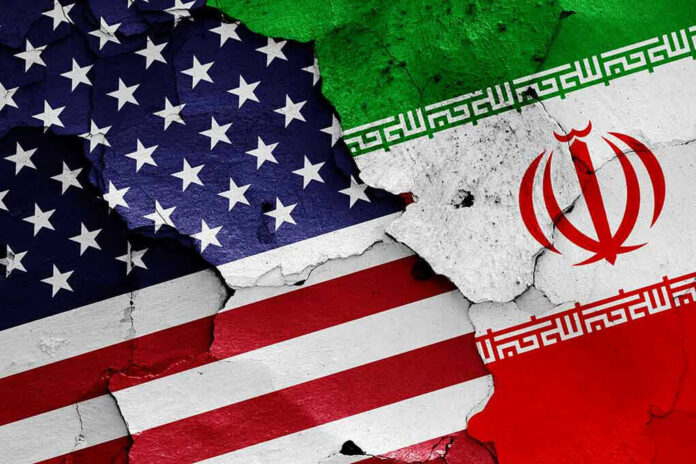
- The timing has raised sharper questions because the crackdown has continued during tense talks with the United States.
What the State Says, and Why It Matters
Iran’s government says these executions are ordinary criminal justice, not politics. In the case of Erfan Shakourzadeh, the judiciary-linked Mizan outlet said he was executed after being convicted of cooperating with United States intelligence and Israel’s Mossad [5]. That matters because Tehran uses these labels to draw a hard line between “security” cases and dissent. But in Iran, that line is often exactly where the fight begins.
Human rights groups say the pattern is much darker. They report that Iran has steadily increased executions, with 975 recorded in 2024 and only a small share announced openly by the state [2][8]. ECPM’s 2024 report said at least 31 people were executed for security-related charges, including espionage claims, and described the trials as sham proceedings before Revolutionary Courts [3]. That does not prove every charge was false. It does show why so many outside observers distrust the official story.
The Political Prisoner Question
The strongest case against Tehran is not just the number of executions. It is the kind of cases being highlighted. Amnesty International said two political dissidents, Behrouz Ehsani and Mehdi Hassani, were executed in secret after a grossly unfair trial, and that they denied the accusations against them [5]. The same reporting said the state gave no real detail in its public notice. For readers trying to separate justice from power, that silence speaks loudly.
Iran Human Rights said the country carried out at least 343 executions in the first four months of 2025 alone, a 75 percent rise from the same period in 2024 [6]. That surge came alongside continued execution of political prisoners and more cases framed as national security threats. Amnesty also said the crackdown after the February 2026 war period included politically motivated executions, torture claims, and forced confessions [22]. The message from rights monitors is blunt: the pace is rising, and the process is getting rougher.
Why the Timing Feels Familiar
The claim that executions were sped up to affect talks with the United States is harder to prove directly. No provided source gives a memo or order saying that. Still, the timing fits a familiar Iranian playbook. When the regime feels pressure, it often moves faster, hides more, and calls the result lawful. The European Parliament, Amnesty International, and other monitors have long described Iran’s death penalty use as a tool to terrorize dissent and preserve control [1][7].
That is why the debate matters beyond this one story. Iran has one of the world’s highest execution rates, and the public record is thin by design [2][6]. When official sources announce only a fraction of killings, every missing file becomes part of the argument. Supporters of Tehran can point to charges like espionage and unrest. Critics point to secrecy, coerced confessions, and courts that look less like judges and more like a conveyor belt.
📍 Free Iran 2026 – Second Day Conference: Onward to a Democratic Republic
📅 June 21, 2026
🎤 Ingrid Betancourt, Former Colombian Presidential Candidate
“Tomorrow, somewhere in Iran, another young prisoner may hear footsteps approaching his cell. He will know what those…
— Iran News Update (@IranNewsUpdate1) June 21, 2026
For conservative readers, the core issue is simple enough: a government that hides its own process deserves skepticism. A state can call something legal and still make a mockery of justice. That is the deeper danger here. If Tehran uses criminal labels to crush political opposition, then the executions are not just punishments. They are signals. And in a region already full of threats, signals can be the most dangerous weapon of all.
Sources:
[1] Web – ‘I Am Innocent’: Iran Expedites Executions of Political Prisoners Amid …
[2] Web – Texts adopted – Increased number of executions in Iran, in particular …
[3] Web – Annual Report on the Death Penalty in Iran 2024
[5] Web – Scores of Political Prisoners Will Be Executed in Iran Without an …
[6] Web – Iran executes another political prisoner on spying charges
[7] Web – Iran Sees 75% Increase in Executions During First Four Months of …
[8] Web – Iran executes 853 people in eight-year high amid repression, ‘war …
[22] Web – Executions and Other Barbarities in Iran’s Judicial System | UANI
© partiallypolitics.com 2026. All rights reserved.