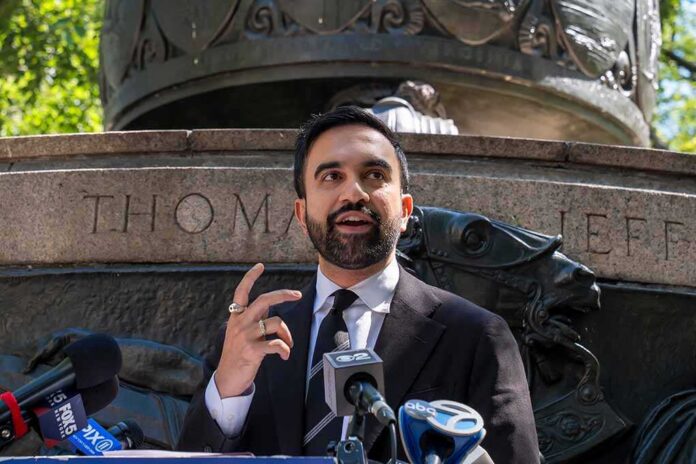
New York City promised to fight antisemitism, but most near-term dollars will flow to nonprofits instead of synagogue security.
Story Highlights
- The city set $1 million for security upgrades at synagogues and houses of worship.
- A larger $6.4 million tranche goes to community groups under Partners Against the Hate.
- Jewish groups say the plan omits Israel-related hate as a driver of attacks.
- City funding also supports Jewish cultural sites, museums, and survivor services.
What The City Announced And Where The Money Goes
City Hall released its first municipal strategy to combat antisemitism. The plan sets $1 million to harden security at synagogues and other houses of worship. It directs $6.4 million to community groups through the Partners Against the Hate program. Officials say these grants fund hate prevention, data tracking, survivor support, and online hate countering. The strategy frames this as a whole-of-government push across prevention, security support, and education.
The mayor’s office also highlighted money for Jewish cultural life. The plan includes support for the Queens Holocaust Memorial Garden and a Center for New Jewish Culture in Brooklyn. These items sit alongside hotline funding and education work. Supporters say this broad mix helps reduce hate and aids victims. The plan’s materials describe security risk assessments and basic upgrades like lights and cameras as part of the first tranche.
Why Critics Say The Balance Misses The Moment
Several Jewish leaders argue the plan underweights direct protection. They point to the $1 million set aside for physical upgrades, which they see as small next to the $6.4 million for nonprofits. They also say the plan avoids naming Israel-related hate as a driver of antisemitism. Jewish Insider reported the strategy “does not address Israel-related hate,” which fuels concern that a key cause is left out of the city’s framework.
Some critics warn that broad grants can drift to advocacy groups rather than front-line safety. They want more money for guards, hardened entries, and cameras at synagogues and schools. A rabbi who reviewed the plan stressed that only $1 million is dedicated to security while far more is routed through community initiatives. That view reflects a “security-first” demand during a period of tension and fear among Jewish New Yorkers.
What We Know, What We Do Not, And Why It Matters
The official documents confirm the top-line numbers for security hardening and nonprofit grants. They describe prevention work like online hate response, data collection, and survivor care. They do not list all grant recipients or scoring criteria. Without those details, the public cannot judge which groups will get the $6.4 million or how results will be measured. That gap fuels doubts on both sides of the debate.
𝐌𝐀𝐌𝐃𝐀𝐍𝐈’𝐒 𝐀𝐍𝐓𝐈𝐒𝐄𝐌𝐈𝐓𝐈𝐒𝐌 𝐏𝐋𝐀𝐍 𝐃𝐎𝐔𝐁𝐋𝐄𝐒 𝐅𝐔𝐍𝐃𝐈𝐍𝐆 𝐓𝐎 𝐀 𝐏𝐑𝐎𝐆𝐑𝐀𝐌 𝐓𝐇𝐀𝐓 𝐏𝐀𝐑𝐓𝐍𝐄𝐑𝐒 𝐖𝐈𝐓𝐇 𝐒𝐀𝐑𝐒𝐎𝐔𝐑’𝐒 𝐎𝐋𝐃 𝐆𝐑𝐎𝐔𝐏
New York City’s mayor just rolled out a $𝟑𝟎 𝐦𝐢𝐥𝐥𝐢𝐨𝐧 strategy to fight antisemitism. Buried… pic.twitter.com/0H6PxpNHS9
— M.A. Rothman (@MichaelARothman) October 6, 2026
This fight fits a familiar pattern. Governments split funds between site security and upstream prevention. Communities under threat often want locks, guards, and cameras now. City leaders often push broader programs they say will reduce hate later. In New York’s case, the city centers a large prevention grant pool and a smaller security line. The split raises real questions about urgency, accountability, and whether the dollars match the risk on the ground.
How Readers Should Read The Numbers
The numbers are not nothing, but they reflect a choice. One path backs direct, visible protection at doors and gates. The other builds systems, training, and services that may help over time. The present plan leans toward the second path. Supporters call this smart and holistic. Critics call it a blind spot, especially if Israel-related hate is not named. Both concerns are fair. The public deserves clear recipient lists, timelines, and measurable goals to test impact.
What Comes Next For Trust And Safety
Trust rises when leaders match funds to real risk and show results. The city can release award lists, scopes of work, and progress reports. It can also explain how it will judge success and adjust. If attacks rise while grants sit with middlemen, the plan will look hollow. If sites get safer and reporting improves, it will earn support. In the end, accountability—not slogans—will decide if this strategy truly protects Jewish New Yorkers.
Sources:
townhall.com, jns.org, edition.cnn.com, nbcnewyork.com, thehill.com
© partiallypolitics.com 2026. All rights reserved.