
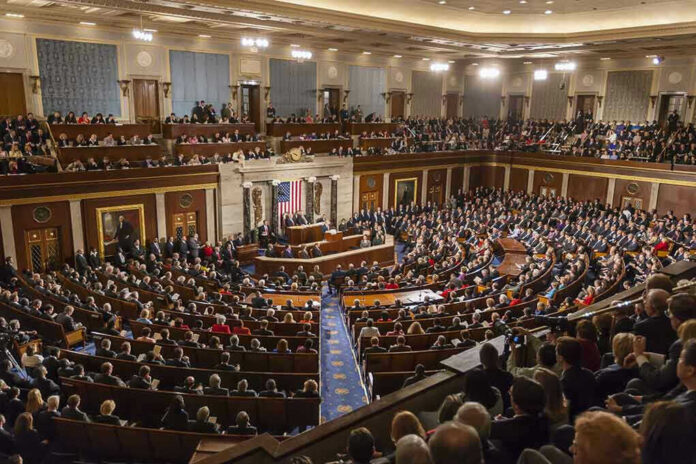
Nine House Republicans just handed Democrats a stunning procedural victory, defying their own Speaker and President Trump to force a vote on extending Obamacare subsidies that expired just days ago.
Story Snapshot
- Nine GOP House members broke ranks to pass a procedural rule 221-205, enabling a vote on three-year ACA subsidy extension
- Speaker Mike Johnson opposed the measure, but moderate Republicans used a discharge petition to bypass his authority
- Twenty-two million Americans lost enhanced premium subsidies on January 1st, causing immediate healthcare cost spikes
- Trump publicly opposed extending subsidies in December, making the GOP defections more politically significant
- Senate passage remains unlikely despite four Republican senators previously supporting similar legislation
The Republican Rebellion That Shocked Leadership
Speaker Mike Johnson watched his carefully constructed party unity crumble as nine of his own members voted with every Democrat to advance legislation he adamantly opposed. The 221-205 vote on January 7th represented more than a procedural defeat—it demonstrated that moderate Republicans will abandon leadership when constituent pressure exceeds party loyalty. Representatives Mike Lawler of New York, Brian Fitzpatrick of Pennsylvania, and seven others calculated that defending their voters’ healthcare costs mattered more than maintaining Speaker Johnson’s agenda control.
The discharge petition mechanism these Republicans employed represents one of Congress’s most confrontational procedural weapons. By gathering 218 signatures—a majority of the House—members can force votes on legislation that leadership refuses to schedule. Johnson’s inability to prevent this maneuver signals weakened authority and foreshadows potential future rebellions on contentious issues where moderate Republicans face electoral pressure in competitive districts.
Twenty-Two Million Americans Face Premium Shock
The enhanced ACA subsidies that expired January 1st weren’t abstract policy details—they represented real financial relief for nearly twenty-two million Americans purchasing health insurance on government marketplaces. These enhanced credits, originally enacted during COVID-19 to expand affordability and eligibility, had become essential for middle-class families and self-employed workers who don’t receive employer-sponsored coverage. Without them, many enrollees immediately faced premium increases of hundreds or even thousands of dollars annually.
The policy stakes explain why moderate Republicans from swing districts felt compelled to break with leadership. Representatives from New York, Pennsylvania, California, and Florida—states with high ACA marketplace enrollment—understood that voting to maintain premium affordability could determine their political survival. Conservative opposition to “Obamacare” remains strong among Republican base voters, but suburban constituents experiencing healthcare sticker shock represent a more immediate electoral threat.
Trump’s Opposition Adds Political Drama
President Trump’s December 18th statement opposing subsidy extensions elevated the stakes for Republican defectors. “I’d like not to be able to do it. I’d like to see us get right into this,” Trump declared, preferring to pursue alternative health reforms rather than extend Obama-era policies. His position reflected traditional Republican opposition to ACA expansion and created a clear loyalty test for GOP members.
The nine Republicans who ignored Trump’s guidance demonstrated that local political pressures can override presidential preferences, even within the president’s own party. This dynamic mirrors earlier healthcare battles where Republicans discovered that dismantling popular benefits carries severe electoral consequences. Trump’s influence remains powerful, but these votes suggest limits when members face immediate constituent backlash over kitchen-table economic issues like healthcare costs.
Senate Arithmetic Complicates Path Forward
Despite House passage appearing likely, Senate reality checks Republican celebration and Democratic optimism. A similar three-year extension failed to reach sixty votes in late 2025, though four Republican senators—Susan Collins, Josh Hawley, Lisa Murkowski, and Dan Sullivan—supported it. Current bipartisan Senate negotiations focus on a narrower two-year compromise that would tighten eligibility requirements and eliminate zero-premium plans while extending some subsidies.
These Senate talks reveal the complex politics surrounding healthcare policy. Republicans demand concessions like stricter abortion funding restrictions and elimination of the most generous subsidy tiers, while Democrats resist changes they view as benefit cuts disguised as compromise. The White House monitoring these negotiations adds another variable, as any eventual deal requires presidential approval that Trump has already signaled reluctance to provide.
Sources:
Axios – House ACA Vote Senate Obamacare Subsidies
ABC News – 9 Republicans Vote with Democrats to Set House Vote
Politico – House Advances Three Year Extension of Obamacare Subsidies