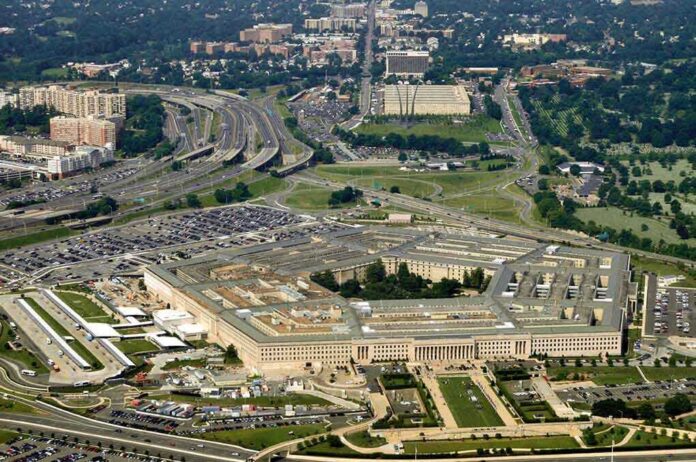
The Pentagon has quietly ordered every state and territory to mobilize thousands of National Guard troops into “quick reaction forces” designed to deploy within 24 hours for domestic missions, fundamentally reshaping America’s approach to federal policing.
Story Overview
- Pentagon directive creates 23,500-member National Guard rapid response force by April 2026
- Each state must establish 500-member units trained in riot control and nonlethal weapons
- Federal control overrides traditional state authority over National Guard deployments
- Initial 200-troop contingents ready by New Year’s Day 2026 for immediate deployment
Federal Override of State Authority
This unprecedented directive fundamentally alters the traditional command structure that has governed the National Guard since its inception. Historically, governors maintained primary control over their state’s Guard units, calling them up for natural disasters, emergencies, and civil unrest within their borders. The Pentagon’s sweeping order effectively federalizes this process, creating a nationwide network of rapid deployment forces answerable to Washington rather than state capitals.
The leaked October 2025 memo reveals training focused specifically on riot control tactics, crowd suppression techniques, and the use of nonlethal weapons. Unlike traditional National Guard duties that emphasize disaster relief and community support, these quick reaction forces are being shaped into domestic security units with distinctly military-style missions on American soil.
Scale and Timeline of Mobilization
The numbers alone reveal the magnitude of this shift. By April 2026, roughly 23,500 specially trained Guard members will be positioned across all 50 states and territories, excluding only Washington D.C. Each state’s 500-member unit represents a significant military presence specifically designated for rapid domestic deployment, creating what amounts to a standing federal force distributed nationwide.
The accelerated timeline suggests urgency that goes beyond routine military planning. Initial specialist units, particularly those trained for chemical and nuclear disaster response, must achieve operational readiness by New Year’s Day 2026. This compressed schedule indicates the Pentagon anticipates potential scenarios requiring immediate federal military intervention on domestic soil within months, not years.
Constitutional and Practical Concerns
Legal scholars and civil liberties advocates rightly point to the blurred lines this creates between military and law enforcement functions. The Posse Comitatus Act traditionally limits military involvement in civilian law enforcement, but National Guard units operating under federal authority occupy a gray area that this directive exploits and expands significantly.
State governors, regardless of political affiliation, should be concerned about losing control over forces they’ve traditionally commanded. When federal priorities conflict with state interests, these quick reaction forces will answer to Washington, not state capitals. This represents a fundamental shift in federalism that extends far beyond emergency preparedness into questions of state sovereignty and local control.
Timing and Political Context
The directive’s timing, following recent years of civil unrest and political polarization, suggests federal authorities expect significant domestic turbulence ahead. Whether driven by election concerns, economic instability, or social tensions, the Pentagon clearly believes traditional law enforcement and existing National Guard response protocols are insufficient for anticipated challenges.
This preparation reflects common-sense planning for maintaining order and protecting communities during crises. However, the scale and federal control aspects raise legitimate questions about whether this represents prudent preparedness or an unnecessary expansion of federal power that could intimidate lawful protest and dissent. The balance between security and liberty requires careful consideration, especially when military forces are positioned for domestic deployment.
Sources:
Trump’s National Guard Plan Edges the U.S. Closer to a Permanent Federal Police Force