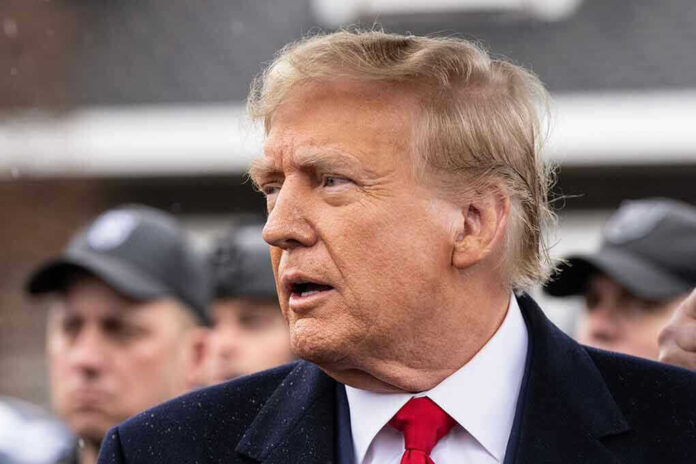
The President of the United States just threatened to deploy federal troops against American citizens protesting immigration enforcement, marking a potentially unprecedented expansion of military power on domestic soil.
Story Snapshot
- Trump threatened to invoke the Insurrection Act after ICE fatally shot U.S. citizen Renee Good during immigration operations
- Pentagon prepared 1,500 troops for potential deployment to Minneapolis without any state request for assistance
- Daily protests erupted following the shooting death and wounding of a Venezuelan national by federal agents
- Minnesota officials rejected federal military aid while Trump branded protesters as “agitators and insurrectionists”
Federal Agents Fire on Citizens, Sparking Mass Resistance
ICE agents conducting “Operation Metro Surge” shot and killed 37-year-old poet and mother Renee Good on January 7, 2026, during federal immigration operations in Minneapolis. The shooting of Good, a U.S. citizen, alongside the leg wounding of Venezuelan national Julio Cesar Sosa-Celis during a subsequent traffic stop, ignited daily protests against the massive ICE deployment of nearly 3,000 agents across the Twin Cities.
The federal surge followed a late-2025 fraud scandal in Minnesota, but the aggressive tactics and use of tear gas by federal forces escalated tensions dramatically. Protesters began targeting ICE agents directly, leading to what Trump characterized as harassment requiring military intervention to protect federal personnel.
Trump Invokes Rarely Used Presidential War Powers
On January 16, 2026, Trump posted on Truth Social threatening to invoke the Insurrection Act if Minnesota officials failed to stop what he termed “agitators and insurrectionists” attacking ICE agents. The 1807 law grants presidents extraordinary power to deploy military forces domestically without state consent, historically used only about 30 times, most recently during the 1992 Los Angeles riots.
What makes this threat remarkable is the absence of any request from state or local officials for federal military assistance. Minnesota’s Democratic leadership actively rejected such aid, creating an unprecedented scenario where federal troops would be deployed against the explicit wishes of local authorities. The Pentagon quietly prepared 1,500 troops for potential deployment, with some reports indicating active-duty soldiers placed on standby in Alaska.
Constitutional Crisis Meets Immigration Enforcement
Baher Azmy, legal director of the Center for Constitutional Rights, called Trump’s threat an “autocratic power grab” that inverts the Insurrection Act’s historical use. Rather than protecting civil rights as it did during the civil rights era, Azmy argues Trump seeks to weaponize federal military power to suppress legitimate protest against questionable federal tactics.
By January 17, Trump softened his rhetoric slightly, stating there was no immediate need for the Act while maintaining readiness to deploy if necessary. However, heated clashes erupted at Minneapolis City Hall between pro-ICE and anti-ICE demonstrators, with conservative influencer Jake Lang organizing counter-rallies. A federal judge imposed limitations on ICE tactics, adding another layer of complexity to the standoff.
Sources:
Fox News: Trump Admin Preparing 1,500 Soldiers for Potential Minnesota Deployment
Wikipedia: Protests against mass deportation during the second Trump administration
CBS Minnesota Live Updates: Minnesota Protests ICE Shooting Law Enforcement