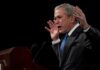
President Trump stunned the nation by savagely attacking his own Supreme Court appointees, Justices Gorsuch and Barrett, moments after they helped sink his global tariff empire.
Story Snapshot
- Supreme Court rules 6-3 against Trump’s IEEPA tariffs on February 20, 2026, deeming them unconstitutional taxing power.
- Trump fires back same day, branding Gorsuch and Barrett “disgraces,” “unpatriotic,” and possibly swayed by foreign interests.
- Announces new 10% global tariff, defying congressional approval in dramatic Brady Room briefing.
- $170 billion refund battle looms for importers; judiciary-executive rift deepens dramatically.
Supreme Court Delivers Tariff Knockout Blow
On February 20, 2026, the Supreme Court issued a 6-3 ruling in Learning Resources, Inc. v. Trump, invalidating President Trump’s broad tariffs imposed under the International Emergency Economic Powers Act. Chief Justice John Roberts authored the principal opinion. Justices Gorsuch and Barrett, Trump’s own picks from 2017 and 2020, joined the majority alongside liberals Sotomayor, Kagan, and Jackson. The court held tariffs demand explicit congressional authorization as taxing measures, not mere import regulation.
Trump’s Fiery Same-Day Retaliation
Hours later, Trump addressed media in the dimly lit Brady Press Briefing Room with colored lights casting dramatic shadows. He targeted Gorsuch and Barrett directly, calling their ruling “an embarrassment to their families” and labeling them “very unpatriotic and disloyal to our Constitution.” Trump claimed they acted as “a disgrace to our nation,” hinting foreign interests swayed them—offering no proof but teasing, “you’re going to find out.” He declared them “barely” invited to his upcoming State of the Union.
Unprecedented Attacks on Own Appointees
Trump’s rhetoric marked a historic low: presidents rarely assail justices they appointed. Gorsuch penned a 46-page concurrence championing the major questions doctrine, demanding clear congressional intent for vast executive actions. Barrett added a brief note challenging his framing yet aligning against the tariffs. Trump dismissed the logic, arguing presidents can embargo trade fully but not tax via tariffs—a common-sense inconsistency the court rejected outright.
Republican tariff skeptics in Congress had already joined Democrats earlier that February to overturn Canada-specific duties, foreshadowing resistance. Foreign partners like Canada, Mexico, China, Brazil, and India expressed relief; some reportedly celebrated in streets.
New Tariff Push Defies the Ruling
Trump announced a fresh 10% global tariff policy, insisting existing authority suffices without new congressional votes. He committed to upholding prior levies via alternative statutes. Importers eye up to $170 billion in refunds, but the court punted procedures to lower courts, sparking years of litigation Trump lamented as a five-year quagmire. Trading partners brace for negotiation leverage via tariff threats.
JUST IN: Trump Nukes Neil Gorsuch and Amy Coney Barrett Following Tariff Ruling
Jordan Conradson Feb. 20, 2026https://t.co/aPO2vwYbt9— Eduardo Barranco (@Eduardo19832958) February 21, 2026
This clash exposes core tensions: executive ambition versus constitutional limits. Trump’s economic nationalism aimed to reshore manufacturing against unfair trade, but the ruling reins in emergency powers even in foreign affairs. Justices upheld judicial independence, a conservative bulwark against overreach—aligning with originalist values despite personal fallout.
Sources:
Politico: Trump’s reaction to Supreme Court tariff ruling
SCOTUSblog: Breakdown of the court’s tariff decision