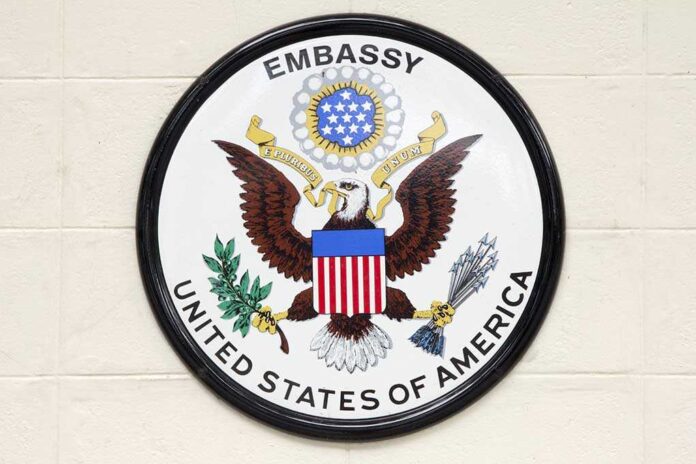
The Trump administration just executed one of the largest diplomatic purges in modern American history, recalling 48 ambassadors from strategic posts across four continents in what critics call a dangerous power vacuum and supporters hail as overdue housecleaning.
Story Snapshot
- Trump recalled 48 U.S. ambassadors from Africa, Asia, Eastern Europe, and South America in December 2025
- Africa bears the heaviest impact with 25 ambassadorial posts affected, followed by Asia with 11 countries
- This marks the second wave of Biden-appointee dismissals, creating extended vacancies at critical diplomatic posts
- Administration defends action as routine presidential prerogative to align foreign policy with “America First” agenda
- Critics warn the vacancies create opportunities for rival powers to expand influence while U.S. diplomatic capacity weakens
The Scope of the Diplomatic Earthquake
The breadth of this recall dwarfs typical personnel changes. Twenty-five African nations plus the African Union representative lose their U.S. ambassadors, while eleven Asian countries face similar disruptions. Eastern European allies including Lithuania, North Macedonia, and Slovakia find themselves without permanent American diplomatic representation. The recall extends to strategically vital nations like Egypt, Nigeria, Somalia, Armenia, Yemen, Oman, Sri Lanka, Nepal, and Mongolia.
Trump recalling 48 ambassadors from Africa, Asia, Eastern Europe and South America. Trumpist Ambassador Gonzalez Stays https://t.co/tWhRYomPx6
— The Zambian Observer (@ZambianObserver) December 22, 2025
State Department officials characterize this as standard presidential authority. A senior official stated that ambassadors serve as personal representatives of the president, making it his right to ensure these positions advance the America First agenda. The recalled diplomats will receive alternative assignments upon returning to Washington, suggesting reassignment rather than outright dismissal from government service.
The Strategic Vacuum Left Behind
Embassies will operate under chargés d’affaires during the transition period, but these lower-ranking officials lack the diplomatic weight and direct presidential access that ambassadors provide. This creates immediate operational challenges for U.S. missions during a period of heightened global competition. The timing proves particularly concerning as rival powers actively seek to expand their influence in regions where America’s diplomatic presence has been weakened.
The administration has yet to nominate replacements for several key allies including Australia, Germany, Qatar, Saudi Arabia, South Korea, and Ukraine. This delay suggests either a deliberate strategy to maintain tight control over selections or challenges in identifying candidates who meet the administration’s ideological requirements. Either scenario leaves critical relationships in diplomatic limbo during volatile international circumstances.
Professional Diplomats Sound the Alarm
The American Foreign Service Association expressed grave concern that these recalls undermine confidence in the professional diplomatic corps. Career diplomats view this systematic replacement as politicizing what has traditionally been a merit-based institution. The scale suggests a deliberate effort to prioritize political loyalty over diplomatic expertise, fundamentally altering the character of American foreign service.
This is a good thing. Some of those ambassadors were renegade political operatives. https://t.co/NuDIhM6NDP
— J Michael Waller (@JMichaelWaller) December 22, 2025
Democratic lawmakers warn that these extended vacancies create dangerous openings for rival powers to expand their influence precisely when American leadership faces its greatest challenges. The concern extends beyond partisan politics to fundamental questions about maintaining American influence in strategically important regions. Professional diplomats fear this approach will affect recruitment and retention of talented individuals who might question whether expertise still matters in career advancement.
The Larger Power Play
This recall represents the second major wave of Biden-appointee dismissals, establishing a clear pattern of systematic personnel replacement. The sequential approach suggests careful planning rather than impulsive decision-making. The administration appears willing to accept short-term diplomatic disruption in exchange for long-term ideological alignment of the foreign service with its priorities.
The president holds broad constitutional authority over ambassadorial appointments, giving this action solid legal foundation despite criticism. However, the scale and timing create legitimate concerns about diplomatic continuity during a period when American leadership faces challenges from rising powers seeking to exploit any perceived weakness or absence. The tension between executive prerogative and institutional stability remains unresolved, with implications extending far beyond this administration.
Sources:
JFeed – Trump Ambassador Recalls
Lithuanian Radio and Television – Trump Administration Recalls Dozens of US Ambassadors
APA News Agency – Trump Administration to Recall Heads of 48 Foreign Diplomatic Missions
Daily Voice – Diplomatic Shake-Up: Trump Administration Orders Mass Recall of Ambassadors
AOL – Trump Recalling 27 Ambassadors from Africa