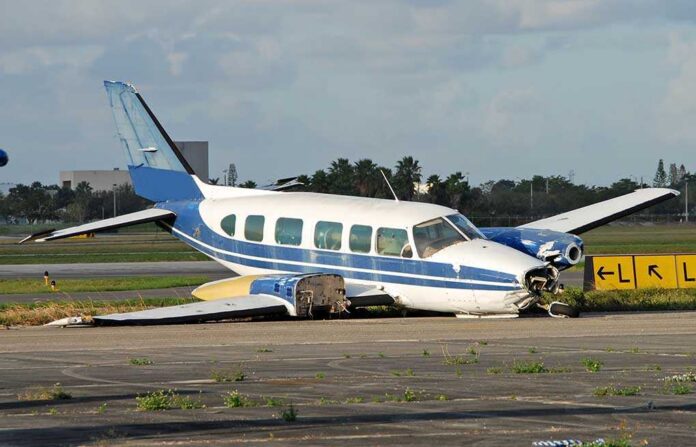
Air traffic control lost contact with a family’s small plane minutes after takeoff from the Bahamas, and the race to find them has not stopped.
Story Snapshot
- The Piper PA-34 with four aboard vanished after leaving Great Harbour Cay for Miami.
- Search teams from the Bahamas and the United States are coordinating sea and air efforts.
- Family members are pleading for help as authorities scan waters west of Andros Island.
- General aviation accidents are rare but persistent, with 2024 the lowest fatal rate since 2009.
What Happened And Where The Search Stands
Bahamian officials said a Piper PA-34 departed Great Harbour Cay late Monday morning with four people aboard and never made it to South Florida. Controllers lost contact about 13 miles west of Andros Island. The Royal Bahamas Defence Force and the United States Coast Guard launched search-and-rescue flights and surface patrols. The mission has focused on waters northwest of Andros and along the route toward Miami Executive Airport, where the aircraft was expected to land.
Relatives told reporters the missing include two grandparents and their two grandchildren. They asked boaters and pilots to scan the area, share any sightings, and contact authorities. The Miami Herald reported the family’s appeals and described the aircraft as a privately operated Piper registered in the United States. That outreach has helped draw volunteer attention to likely drift zones near channels between Andros and the Florida Straits, where currents can scatter debris quickly.
How Authorities Coordinate A Search Over Open Water
The Royal Bahamas Defence Force requested support from the United States Coast Guard soon after the alert. The United States Coast Guard typically deploys fixed-wing aircraft to grid-search large areas and sends cutters to check visual reports. Crews look for oil sheens, seat cushions, or any floating parts that can mark a debris field. Spotting a single item matters because it helps plot drift and backtrack to a likely impact point.
Bahamas investigators and aviation agencies also gather radar tracks, flight plans, and recent maintenance records. If searchers locate wreckage, the National Transportation Safety Board often assists, while Bahamian authorities lead on-scene work in their waters under international rules. The goal is simple and urgent: find survivors first, then secure evidence to learn why the flight failed.
Why This Airspace Tests Pilots And Rescuers
The stretch between the Berry Islands and South Florida can look calm and close on a map. Conditions shift fast over warm water, and visibility can drop in haze or pop-up storms. Navigation is often simple in clear weather, but small aircraft operate at lower altitudes where rain cells and downdrafts hit harder. Over water, even a controlled ditching gives crews little time. Rescue timing is everything, which is why authorities surged assets within hours.
Relative pleads for help locating 4 missing American family members whose plane failed to land in Miami after departing the Bahamas: https://t.co/wmZVbdzlBP
— Natalie Neysa Alund (@nataliealund) September 8, 2026
General aviation safety has improved across the United States. Federal Aviation Administration data show 2024 marked the lowest fatal accident rate since tracking began in 2009. That trend reflects better training, maintenance, and technology. Yet small-plane mishaps still occur, and when they happen over water, searches become tougher and outcomes hinge on fast location and rescue. That mix of progress and risk defines cases like this one and shapes how teams plan and respond.
What Families And The Public Can Do Now
Authorities urge anyone transiting the area by boat or air to report debris sightings to local marine police or the United States Coast Guard. Photos with time and position tags help crews focus search boxes. Families benefit when tips get routed through official lines, not only social media. That keeps leads organized and prevents wild goose chases that drain fuel and time. Patience is hard in a crisis, but clear channels serve the people in danger best.
What Comes Next If Wreckage Is Found
Investigators will secure any recovered parts, log positions, and map the debris field. They will interview air traffic controllers, review weather radar, and check pilot qualifications and recent hours. They will also examine maintenance logs and the aircraft’s recent trips from the family’s vacation home. If a probable cause can be determined, authorities will publish findings and safety recommendations to reduce repeat risks. That loop from tragedy to lessons learned is how aviation gets safer.
Sources:
nypost.com, miamiherald.com, nbcmiami.com, tampabay.com, faa.gov
© partiallypolitics.com 2026. All rights reserved.