
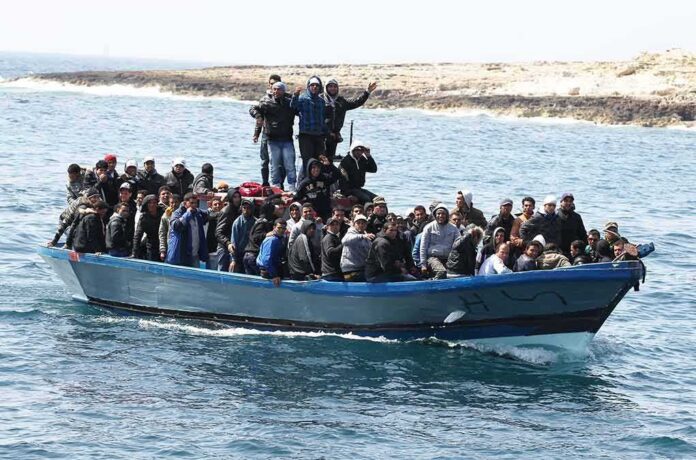
One overloaded boat in the dark left at least 139 people dead and 84 more missing off Djibouti’s coast.
Story Snapshot
- The International Organization for Migration reported 139 dead and 84 missing.
- About 305 people were aboard; roughly 82 were rescued, survivors said.
- The boat left Djibouti for Yemen and capsized near Obock overnight on Oct. 8–9.
- Djibouti authorities kept searching the coast for the missing.
What happened, where, and when
The United Nations migration agency said a Yemen-bound boat carrying hundreds capsized off northern Djibouti, near the coast north of Obock, during the night between Thursday and Friday in early October. The International Organization for Migration put the death toll at 139 after 30 more bodies were recovered, and said 84 people remained missing. The route, timing, and location match survivor accounts and field reports collected by United Nations teams on the ground.
Numbers from the incident align with what survivors reported. About 305 people were on board, according to the International Organization for Migration reporting cited by major outlets. Roughly 82 were rescued alive, 139 were confirmed dead, and 84 were unaccounted for; those figures add to 305. Reports describe the vessel as overcrowded, with men, women, and children among the dead. The crossing is part of a known corridor used by migrants heading toward Yemen and, for many, onward to Gulf states.
Who was on board and who is still missing
Field teams reported that the passengers included families and single adults. The dead included at least 15 children, with women and men among the recovered. Officials in Djibouti continued coastal searches and recovery operations for those missing, as the sea and currents can move debris and bodies along the Gulf of Aden shoreline. The International Organization for Migration said local authorities kept the search active after the first recovery phase and as more remains were found.
Rescuers and humanitarian staff worked around Obock, a common launch point for small boats. Survivors described a nighttime departure and an unstable vessel in rough loading conditions. Reporters on the ground relayed those survivor accounts through international agencies. While formal maritime investigations take time, the mix of a heavy passenger load, an open boat, darkness, and coastal chop creates well-known risks that often lead to capsizing on this route.
Why this route keeps claiming lives
The Horn of Africa to Yemen sea crossing has become one of the deadliest migration corridors. The International Organization for Migration recorded roughly 922 people dead or missing on this route in 2025, almost double the prior year, as more people attempted the journey. Tolls like this week’s fit that pattern. This is not one isolated disaster; it is part of a recurring chain of wrecks driven by demand for passage and a supply of unsafe boats run by smuggling networks.
🇩🇯 At least 139 people, including children, died after an overcrowded migrant boat capsized off Djibouti while heading to Yemen. Dozens remain missing. The eastern migration route continues to exact a devastating human cost. https://t.co/fjw8ggPmbs
— AFRICA NOW (@AfricaNowX) October 12, 2026
Recent history underlines the danger. A separate wreck in March 2026 involved more than 300 people, killing nine and leaving 45 missing, while an August 2025 capsizing reportedly killed more than 60. These events show how thin the safety margin is when hundreds crowd into open fishing boats after dark. The outcome hinges on weight, weather, and luck, with little equipment, no life vests, and almost never a reliable manifest for rescuers to use.
What the numbers do—and do not—say
The figures reflect ongoing recovery, not confusion. Early reports listed 109 dead and 116 missing. As search teams found more bodies, the toll rose to 139 and the missing fell to 84. That shift tracks a standard recovery curve in coastal disasters. The most consistent passenger count is 305, based on International Organization for Migration reporting, though one outlet cited 350. Forensic identification and family reports often refine these numbers over days.
The cause points to overloading and instability, but the core fact is starker: too many people, too little boat, at night. That is a human choice made upstream by organizers who profit when rules are weak. American conservative values put duty, order, and the sanctity of life first. That means backing lawful migration channels, cracking down on smugglers, and supporting coastal states that police their waters. Compassion for the vulnerable and consequences for predators belong together here.
What must change before the next night crossing
Djibouti needs sustained support to patrol launch points, seize unsafe boats, and jail organizers. Regional partners should share intelligence to target cross-border smuggling rings that recruit in Ethiopia and stage in Djibouti. Aid groups can reduce demand by offering safe return, jobs programs, and clear information on risks. United Nations agencies and Gulf states can expand legal work pathways to sap the smuggling market. Every lawful door opened closes one space on a deadly deck.
Sources:
foxnews.com, bbc.com, aljazeera.com, rte.ie, news.un.org, inquirer.com
© partiallypolitics.com 2026. All rights reserved.