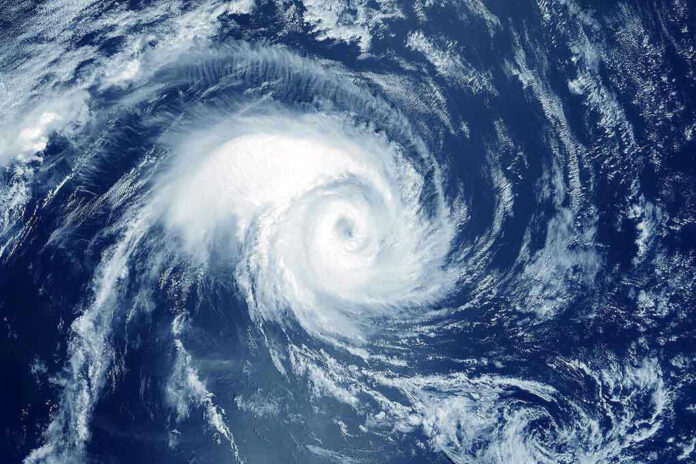
Jamaica just endured what meteorologists are calling impossible—a Category 5 hurricane with 185 mph winds that rewrote the record books and left an entire nation grappling with a catastrophe no one thought they’d live to see.
Story Highlights
- Hurricane Melissa made landfall as Jamaica’s strongest-ever recorded storm with unprecedented 185 mph winds
- Approximately 25,000 tourists remain stranded on the island amid widespread infrastructure collapse
- Catastrophic flooding has created dangerous conditions, including crocodile sightings in residential areas
- The storm surpassed previous hurricanes Gilbert (1988) and Ivan (2004) in both intensity and destruction
When Nature Breaks Its Own Rules
Hurricane Melissa shattered every meteorological precedent when it slammed into New Hope, Jamaica on October 28, 2025. The storm’s sustained winds of 185 mph placed it at the absolute peak of Category 5 intensity—a threshold that pushes the boundaries of what scientists consider possible in Atlantic hurricanes. Within hours, the storm transformed Jamaica’s landscape into an unrecognizable disaster zone of twisted metal, submerged communities, and severed power lines stretching across hundreds of thousands of homes.
The rapid intensification of Melissa caught even seasoned meteorologists off guard. Just 24 hours before landfall, the storm underwent what experts call “explosive intensification” in the warm Caribbean waters, jumping from a manageable Category 3 to a catastrophic Category 5 in a timeframe that defied conventional hurricane behavior patterns.
Tourism Paradise Becomes Survival Challenge
The timing couldn’t have been worse for Jamaica’s crucial tourism sector. Peak season brought approximately 25,000 visitors to the island, who now find themselves trapped in a nightmare scenario of collapsed infrastructure and emergency conditions. Hotels that marketed themselves as tropical retreats have become impromptu disaster shelters, with resort staff working around the clock to maintain basic services while communication systems remain largely severed.
Airport facilities suffered extensive damage, making immediate evacuation impossible for stranded tourists. The Norman Manley International Airport and Sangster International Airport both reported significant structural damage and flooding, effectively cutting off the island’s primary transportation lifelines. Tourism officials estimate it could take weeks before normal flight operations resume, leaving thousands of visitors dependent on emergency supplies and diplomatic intervention.
Unprecedented Dangers in Familiar Places
Officials issued warnings that sound like something from a disaster movie—residents must avoid flooded areas not just because of drowning risks, but because crocodiles have been spotted swimming through what used to be neighborhood streets. The storm surge and catastrophic flooding displaced wildlife from their natural habitats, creating hazards that emergency responders never anticipated in their disaster protocols.
Power outages affecting hundreds of thousands of residents have created a communications blackout that hampers rescue efforts. Emergency services struggle to coordinate response operations when cellular towers lie toppled and power grids remain completely inoperable. The National Disaster Risk Management Agency activated emergency shelters, but capacity limitations force many families to ride out the aftermath in damaged homes or community centers.
Rewriting Caribbean Hurricane History
Hurricane Melissa’s landfall marks a sobering milestone in Caribbean meteorological records. Previous benchmark storms like Hurricane Gilbert in 1988 and Hurricane Ivan in 2004 caused significant damage, but neither approached Melissa’s sustained wind speeds or comprehensive destruction. Climate scientists will likely study this storm for decades, analyzing whether its unprecedented intensity represents an anomaly or signals a new era of supercharged Atlantic hurricanes.
The storm’s path spared Kingston from the absolute worst conditions, though the capital still endures strong tropical storm winds and widespread flooding. However, rural communities and coastal areas bore the full brunt of Melissa’s fury, with some regions experiencing storm surges that penetrated miles inland. Recovery teams face the daunting task of reaching isolated communities where roads have become impassable waterways and communication remains impossible.