
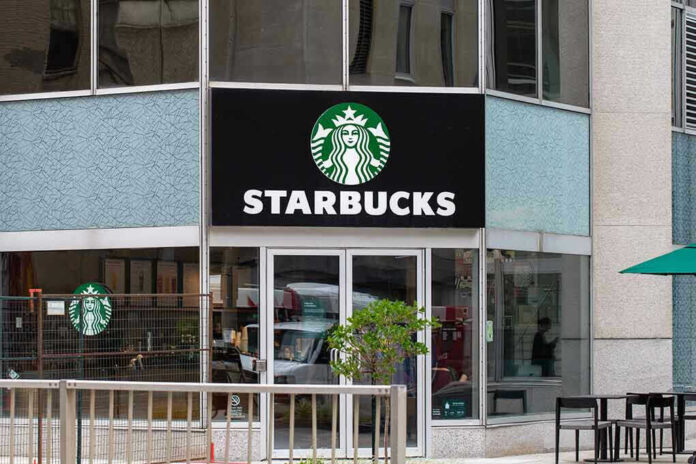
Starbucks struggles to keep its head above water, reporting its sixth consecutive quarter of declining sales despite ongoing efforts to revitalize the chain.
At a Glance
- Starbucks reports a 2% decline in global comparable store sales for Q3 2025.
- The company has experienced declining sales for six consecutive quarters.
- Starbucks has announced a $500 million investment in labor to improve service.
- Despite sales declines, Starbucks exceeded earnings expectations, hinting at effective cost management.
Starbucks’ Continuing Struggles
Starbucks, once the undisputed leader in the coffeehouse sector, is now grappling with a significant challenge: six straight quarters of declining sales. The latest report reveals a 2% drop in global comparable store sales for the third fiscal quarter of 2025. This downturn, unprecedented in recent years for the company, raises questions about the efficacy of its turnaround strategy aimed at revitalizing the brand.
The company has faced a dramatic shift in consumer behavior post-pandemic. Decreased foot traffic and altered work patterns have hit in-store sales hard. Rising operational costs and inflation have also pressured Starbucks’ margins, forcing the company to reevaluate its pricing strategies. Despite these challenges, Starbucks’ ability to exceed earnings expectations suggests effective cost management, but the core issue of declining sales remains unaddressed.
Investing in Labor and Customer Experience
In an effort to combat these challenges, Starbucks announced a significant investment of $500 million in labor. This move aims to enhance customer service and improve employee retention. CEO Laxman Narasimhan has reiterated the company’s commitment to this turnaround effort, emphasizing the importance of investing in the store experience and labor.
Yet, the question remains whether these investments can reverse the sales trend. Employees, who are crucial to the customer experience, are at the heart of this strategy. However, despite the labor investments, the continued sales decline may impact employee morale and job security. Starbucks’ leadership is walking a tightrope between maintaining operational efficiency and ensuring a motivated workforce.
A Tough Road Ahead
The broader retail and food service sectors are also feeling the strain of slower consumer spending, with other major brands like Procter & Gamble echoing similar challenges. Starbucks’ prolonged underperformance could potentially erode its brand equity, market share, and investor confidence. The company must successfully navigate these choppy waters to prevent further decline.
Experts are divided on Starbucks’ prospects. While some analysts view the operational improvements and labor investments as positive signs, skeptics question whether these measures alone can reverse the downward sales trend. The effectiveness of Starbucks’ turnaround plan is crucial, and its success will likely determine the company’s future trajectory.
The Bigger Picture
Starbucks’ situation highlights broader economic challenges, serving as a bellwether for consumer discretionary spending. The implications of its performance extend beyond its own walls, affecting suppliers, partners, and even the communities where its stores operate. Store closures or reduced hours could significantly impact areas where Starbucks is a major employer.
From an economic, social, and political perspective, Starbucks’ labor investments intersect with ongoing debates about wages and working conditions in the service sector. This intersection could influence future industry standards and practices, prompting competitors to reassess their strategies regarding pricing, labor, and customer engagement.