
President Trump just labeled fentanyl a weapon of mass destruction, turning America’s deadliest drug into a military battlefield.
Story Snapshot
- Trump signed an executive order in mid-December 2025 classifying illicit fentanyl as a WMD, claiming it kills more Americans than bombs.
- The order frames fentanyl as a chemical weapon trafficked by adversaries to target U.S. citizens, demanding national security responses.
- Experts call it symbolic politics with no evidence of terrorist use, questioning inflated death toll claims of 200,000-300,000 annually.
- This escalates militarized drug ops, like boat strikes near Venezuela, amid cuts to treatment programs.
Executive Order Signing Event
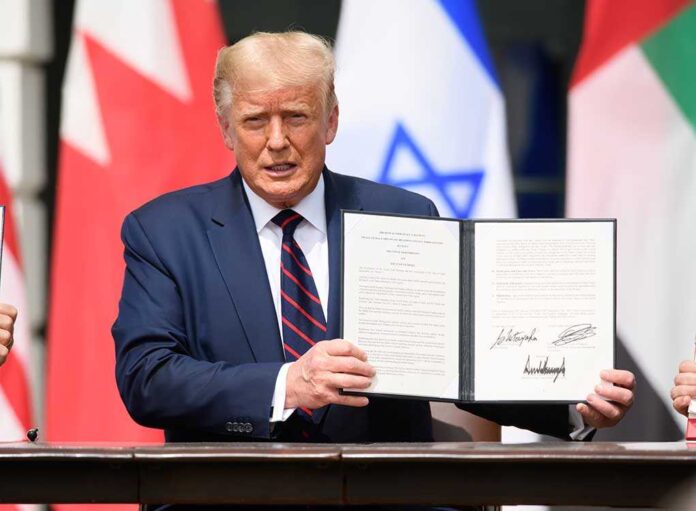
President Donald Trump signed the executive order in the Oval Office on a Monday in mid-December 2025. He pinned medals on service members before declaring illicit fentanyl a weapon of mass destruction. Trump stated no bomb matches its devastation and cited 200,000-300,000 annual American deaths, figures experts deem wildly inflated, as actual overdose numbers in tens of thousands.
The order asserts fentanyl acts closer to a chemical weapon than a narcotic. It warns of potential weaponization for large-scale terror attacks by organized adversaries. Trump directed federal agencies to treat illicit fentanyl as a national-security threat, prioritizing investigations and prosecutions of traffickers.
Fentanyl’s Deadly Profile
Fentanyl, a synthetic opioid from the 1960s, delivers pain relief at 50 times heroin’s potency and 100 times morphine’s. Illicit versions fuel North America’s overdose crisis, shifting from prescription pills to street heroin laced with this killer. Annual U.S. deaths surged into hundreds of thousands over a decade, devastating families and communities.
Trump’s rhetoric positions cartels and foreign adversaries as deliberate killers flooding borders with fentanyl. This aligns with American conservative values demanding accountability for murderers hiding behind drugs. Common sense dictates treating mass killers as wartime enemies, not mere criminals.
Military Escalation in Drug War
Earlier in 2025, Trump’s administration launched boat strikes near Venezuela targeting narco-terrorists. Officials like Attorney General Pam Bondi claimed massive lives saved from seizures, though experts disputed those numbers. These ops primarily hit cocaine routes to Europe, not fentanyl paths, yet bolster the WMD narrative.
The designation unlocks military, intelligence, and sanctions tools typically reserved for nuclear or chemical threats. It justifies intensified border crackdowns and Latin American operations. Critics see regime-change motives in Venezuela strikes, echoing past War on Terror expansions.
Conservatives applaud this hardline stance protecting citizens from invaders. Facts show cartels operate as armies; reclassifying their weapon fits reality over politically correct health framing.
Expert Critiques and Symbolism
Drug policy scholar Jonathan Caulkins argues no terrorists or militaries weaponize fentanyl. He notes cigarettes kill more Americans yearly, questioning WMD logic. Former adviser Regina LaBelle calls it optics, appearing tough without substance, despite grieving families’ demands.
Public-health advocates favor treatment over militarization. Yet Trump’s cuts to addiction programs and Medicaid underscore enforcement priority. This order, first of its kind, risks diluting WMD meaning but rallies support for security measures.
Sources:
Trump Designates Fentanyl as a ‘Weapon of Mass Destruction’ in Escalation
Fentanyl a Weapon of Mass Destruction? Experts Question Trump Order