Atlanta’s World Cup cleanup is now showing the old tension between big-event pride and the people who get pushed aside.
Quick Take
- Atlanta cleared a homeless encampment near Grady Memorial Hospital as part of its Downtown Rising effort ahead of the World Cup.
- City-backed homelessness leaders said outreach had been underway for months, with some residents already placed in housing.
- Officials framed the move as a safety step, not a public relations stunt.
- Critics see a familiar pattern: host cities tidy the view before major events, then leave the harder housing problem in place.
What Atlanta Removed and Why
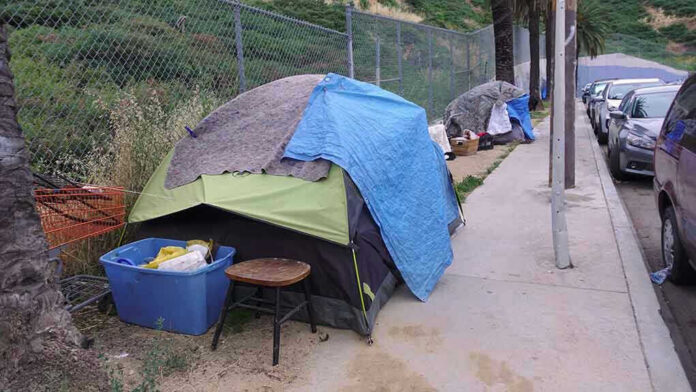
Atlanta city crews cleared a large homeless encampment near Bell Street and Grady Memorial Hospital in the days before the World Cup. The removal was part of the city’s Downtown Rising push, which aims to place hundreds of unhoused people into housing and shelters before the tournament begins.
Cathryn Vassell, chief executive officer of Partners for Home, said the city had worked for months with people in the camp. She said the clearance was “less about optics” and more about safety for people in and around the area. The city said outreach teams had already helped move some residents into permanent housing or shelter.
A Cleanup With a Bigger Clock Running
This was not a random sweep. Atlanta tied the Bell Street removal to Downtown Rising, the first phase of a wider homelessness plan launched to make street homelessness rare, brief, and non-recurring. Reporting also says the city has set a goal of housing 400 people before the World Cup, and officials say they are moving toward that target.
The timing matters because the World Cup puts Atlanta under a global spotlight. Reuters reported that Mayor Andre Dickens has made homelessness a priority and launched a large city program two years ago. That context helps explain why the city is spending so much energy on visible street conditions near the stadium corridor and downtown routes.
The Hard Part Is What Happens After the Tents Come Down
The most sensitive issue is not whether the city can clear an encampment. It is whether those people end up in stable housing or just in another location with less visibility. The Atlanta reporting says outreach workers compiled a list of people living under the bridge, and several had already moved into housing before the cleanup. That is the part that separates a housing effort from a simple sweep.
That difference also drives the debate around every mega-event. Atlanta has a long memory here. During the 1996 Olympics, police were accused of arresting homeless people by the thousands, and the city removed large numbers of unhoused residents from central areas. That history is why any modern cleanup near a major event gets read through a suspicious lens, even when officials promise help.
Why the Story Keeps Repeating
Atlanta’s move fits a broader pattern seen in other host cities. Public health and housing groups say forced removals can harm unsheltered people, especially when cities discard belongings or break up medical routines. National homelessness advocates also say cities should give warning and avoid throwing away property, because tents, medication, and other items can be essential to survival. Those warnings are not abstract. They speak to the daily damage done when a camp disappears overnight.
🔴 Atlanta discards homeless people's belongings near World Cup venue
City employees threw out tents, medication, identification documents and other possessions of about 15 unhoused people at Freedom Park on July 1, less than a mile from a World Cup watch party venue. The sweep… pic.twitter.com/t2eX5VdIlY
— NewsTongue (@NewsTongueX) July 12, 2026
Supporters of Atlanta’s approach will say order matters, and that is not a foolish view. A city hosting the World Cup has a duty to keep streets safe, open, and usable. But common sense also says a cleanup only counts as a solution if it leads somewhere better. If the city truly moved people into housing, that is progress. If not, it is just the same problem moved one block farther away.
Sources:
independent.co.uk, ajc.com, atlantaciviccircle.org, reuters.com, instagram.com, reddit.com, ncbi.nlm.nih.gov
© partiallypolitics.com 2026. All rights reserved.