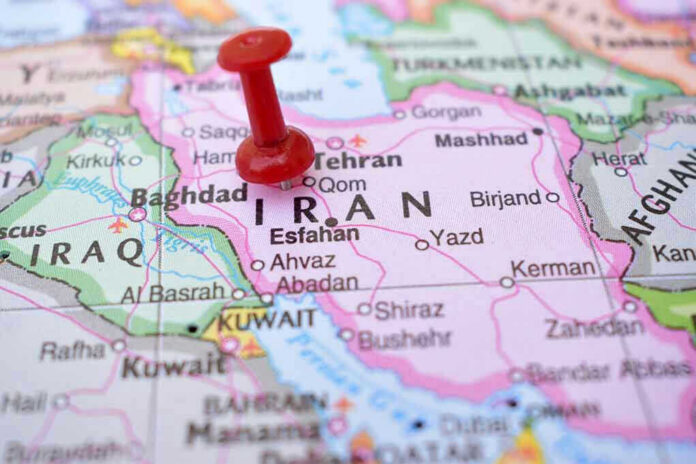
A senior New York City official secretly scheduled a sit-down with Iran’s United Nations ambassador — and it took the Trump State Department to shut it down.
Story Snapshot
- Commissioner Ana María Archila of the NYC Mayor’s Office for International Affairs set a formal meeting with Iran’s UN Ambassador Amir-Saeid Iravani for July 7, 2026.
- Two other senior city officials were also on the calendar invite, suggesting this was not a solo act.
- Mayor Zohran Mamdani was reportedly not told about the meeting before it was scheduled.
- The State Department intervened, Archila was reprimanded, and the Mayor’s office declared the meeting “did not and will not take place.”
A Calendar Invite That Set Off Alarms in Washington
Screenshots of a calendar invitation, reviewed by City Journal, showed Commissioner Archila had booked a meeting at 2 United Nations Plaza with Iran’s UN Ambassador Iravani at 11 a.m. on July 7. Two other senior officials from the Mayor’s Office for International Affairs were also listed on the invite. That detail matters. This was not a rogue staffer going off-script. Multiple senior officials were looped in, which points to something more organized than a simple scheduling mistake.
NYers didn’t elect City Hall to cozy up to Iran.
A top Mamdani official reportedly tried to arrange a meeting with Iran’s UN ambassador while the U.S. is in active conflict with that regime. That is outrageous and far outside the proper role of NYC government. 1/
— Frank Morano (@frankmorano) July 10, 2026
A State Department official confirmed awareness of the planned meeting before it was canceled. That confirmation is important. It means this was not some quiet backroom arrangement that slipped through undetected. Federal officials knew it was coming — and they moved to stop it. The State Department clarified what counts as acceptable conduct, and the meeting was called off. Archila was reprimanded and directed to cancel.
The Mayor Says He Did Not Know — And That Raises Its Own Questions
According to City Journal’s sources, Mayor Mamdani was not told about the meeting before it was scheduled. If true, that is a serious problem. A commissioner in the city’s own international affairs office was arranging a formal sit-down with a representative of a foreign government — one currently at odds with the United States — without the mayor’s knowledge or approval. That is not a minor process error. That is a breakdown in basic chain of command.
Mamdani has made no secret of his views on U.S. foreign policy toward Iran. He publicly blasted the Trump administration’s strikes on Iran as “catastrophic” and “illegal.” He has met with United Nations Secretary-General António Guterres at UN headquarters. None of that is inherently improper. But it does establish a pattern of aggressive international engagement that apparently filtered down to his staff — with or without his direct sign-off.
Why the Federal Government Had Every Right to Step In
Some will argue this was federal overreach into local affairs. That argument does not hold up well under scrutiny. Foreign policy belongs to the executive branch of the federal government — full stop. The Logan Act, a federal law dating back to 1799, prohibits unauthorized private citizens from negotiating with foreign governments in disputes involving the United States. City commissioners are not diplomats. They do not have the legal authority to conduct foreign policy, no matter how globally minded their mayor may be.
The broader context makes the State Department’s concern even more reasonable. President Trump declared the interim agreement with Iran finished after fresh strikes were launched. The U.S. military confirmed retaliatory strikes against Iran following Iranian attacks on commercial ships near the Strait of Hormuz. Sitting down with Iran’s UN ambassador at this specific moment — without federal clearance — was not just procedurally wrong. It was strategically reckless.
The Administration’s Own Denial Tells the Story
The Mayor’s Office for International Affairs released a blunt statement: “This meeting did not and will not take place.” That denial is the clearest signal of all. If city leadership believed this meeting was legitimate, proper, and within their authority, they would have defended it. Instead, they buried it. The reprimand of Archila and the flat denial suggest the administration understood, once the lights came on, that this crossed a line.
🚨 BREAKING: State Department SHUTS DOWN secret NYC-Iran meeting!
A top official in the NYC Mayor’s Office for International Affairs tried to meet with the Iranian Ambassador to the UN — WITHOUT telling Mayor Adams or anyone else.
When the State Department found out, they… pic.twitter.com/1cm113yEnt
— Reverend Jordan Wells (@WellsJorda89710) July 10, 2026
New Yorkers deserve to know how a formal meeting with the ambassador of a hostile foreign government ended up on a city commissioner’s calendar without the mayor’s knowledge. The full calendar records, internal emails, and the specific chain of approvals — or lack thereof — should be made public. Until then, the administration’s denial only answers half the question. The other half is who thought this was a good idea, and why.
Sources:
thegatewaypundit.com, city-journal.org, politico.com, facebook.com, pbs.org
© partiallypolitics.com 2026. All rights reserved.