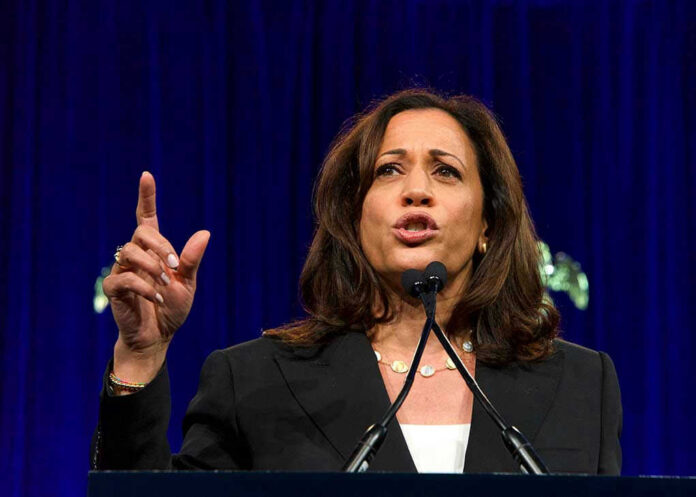
Kamala Harris is walking into 2028 with a choice that could define the Democratic Party for a generation: tame the socialist surge or ride it and risk breaking the country’s political center in half.
Story Snapshot
- Democratic socialists just toppled sitting members of Congress in New York City primaries.
- Democratic Socialists of America is openly planning a 2028 presidential run on a hard-left platform.
- Party voters are shifting toward ideological purity, even if it hurts general election odds.
- Kamala Harris must decide whether to co‑opt or confront a movement that sees her as the establishment.
Socialist primary wins turn from local tremor to national test
New York City gave everyone a preview of what Kamala Harris could face in 2028. Democratic socialist-backed candidates did not just perform well; they beat sitting Democrats in Congress in primaries that usually go to quiet, low-drama incumbents. Mayor Zohran Mamdani, himself elected on a democratic socialist platform, endorsed a slate of candidates that went three-for-three, including victories over Dan Goldman and other establishment figures. These were not symbolic city council races. These wins created real federal lawmakers.
Reports describe young voters, well-educated urban professionals, and activist networks powering those wins. Turnout was low, but the people who did show up were motivated and organized. They embraced democratic socialism as a net positive, not a dirty word, with Gallup polling showing about two-thirds of Democrats now view socialism favorably. For national Democrats, that matters. In deep-blue districts, the primary is the election. When socialists win there, they become the party’s face on cable news and social media, whether Kamala Harris likes it or not.
DSA builds a 2028 machine while the party hesitates
Democratic Socialists of America has grown from a small fringe group of a few thousand members into a six-figure national organization in just over a decade. At its Chicago convention, more than 1,000 delegates backed a platform that includes harsh criticism of Israel and explicit solidarity with the Palestinian cause. They also openly discussed fielding a presidential candidate in 2028, using the New York victories as proof their model works. That is not a random protest run. It is a deliberate plan to challenge the party’s center of gravity.
Left-wing strategists are blunt about their method. Writers in Jacobin and organizers in allied groups argue socialists should run inside Democratic primaries as a faction, not form a third party. They describe a “dirty break” strategy: use the Democratic ballot line to build power with working-class voters while preparing for a longer-term shift in the system. From a conservative lens, this is classic entryism. It treats the Democratic Party as a vehicle to move the country toward European-style social democracy, with bigger government, more redistribution, and a foreign policy far friendlier to activist causes than to traditional American strength.
Kamala Harris caught between purity politics and electability math
That brings us to Kamala Harris and the 2028 gamble. Polling and commentary from both left and right show a growing chunk of primary voters care more about ideological purity than about how a candidate plays in November. That trend helps democratic socialists who promise Medicare for All, sweeping student debt cancellation, and aggressive climate policy without much concern for budget limits or swing voters. It hurts the classic “Obama-style” coalition that mixes city activists with suburban moderates and working families who mostly want stability.
Conservative analysts warn that Democrats are walking into a “disastrous, very dangerous” moment where the loudest voices in deep-blue enclaves set the agenda for the whole party. Some mainstream outlets frame the New York sweep as a “warning shot,” not a full takeover, pointing out that socialists still struggle in battleground and suburban districts. But that does not solve Kamala Harris’s problem. As the likely 2028 standard-bearer, she must face primary debates, platform fights, and convention drama shaped by a left wing that sees compromise as betrayal and views moderates as obstacles, not allies.
Is this a takeover or a contained insurgency?
Side A of the argument claims socialists are on the verge of taking over the Democratic Party and that Harris lacks the skill to contain them. The facts support a real surge: socialists have knocked off incumbents, grown their membership sharply, and are openly planning a presidential run. Yet hard evidence of Harris personally mishandling this faction is thin. There are no leaked memos, detailed strategy documents, or recorded clashes that prove she tried and failed to manage them. That part of the story is more opinion than documented fact.
Building on that momentum, the DSA and allied organizations — Sanders, Alexandria Ocasio-Cortez, Ro Khanna, the Working Families Party, Our Revolution, and Justice Democrats — have accumulated a striking series of primary victories in 2026. In New York City, DSA-backed candidates…
— Antoine D (@AD1968F) June 29, 2026
Side B offers a narrower, but important, counterpoint. It shows this is a strategic insurgency within the party, not an organic uprising of blocked reforms or random rage. Analyses of recent elections find socialist-backed candidates win heavily in deep-blue urban districts but remain a small slice of total Democratic seats. Establishment leaders like Hakeem Jeffries and Chuck Schumer publicly downplay the idea of a takeover and talk instead about limits and “warning shots,” not a revolution. The numbers back them up: DSA reports about 133 races and only 14 wins so far, which is real influence but not total control.
The conservative lens: why 2028 matters beyond the left
From an American conservative view, the stakes are clear. If Kamala Harris hugs the socialist wing to keep peace inside the party, she risks cementing a platform that normalizes government expansion, class-warfare rhetoric, and hostility to traditional American alliances. That may energize young activists, but it alienates millions of voters who still care about balanced budgets, strong policing, and a foreign policy that backs allies instead of activist movements. It also hands Republicans an easy message: Democrats equal socialism, socialism equals chaos.
If she chooses instead to push back, defend the center, and draw clear lines against the hardest-left demands, she faces short-term pain. Primary fights get ugly. Online activists brand her a sellout. Some safe seats may flip from moderate Democrats to socialists. But history shows parties survive loud fringes when strong leaders draw boundaries and stick to them. Kamala Harris’s 2028 gamble is simple to describe and hard to execute: either she manages the socialist surge and keeps Democrats competitive nationwide, or she becomes the first nominee to ride a purity wave right into a general election wall.
Sources:
youtube.com, washingtonstand.com, komonews.com, wcti12.com, commondreams.org, heartland.org, jacobin.com, tempestmag.org, cookpolitical.com, facebook.com
© partiallypolitics.com 2026. All rights reserved.