
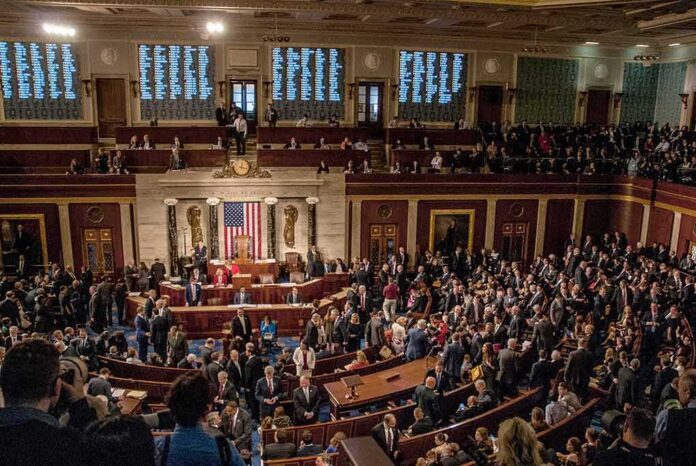
House Democratic leaders are quietly telling allies they will not rush to impeach President Trump, even if they win back the gavel.
Story Snapshot
- Top Democrats now say investigations and subpoenas come before any impeachment talk.
- Liberal members and activists still push for a “Day One” impeachment vote against Trump.
- Leaders fear a failed impeachment would backfire and help Trump in 2028.
- The fight reveals a deep split over power, principles, and how to beat Trumpism.
Democrats signal impeachment will not be their first move
Senior House Democrats and aides are sketching out a plan for 2027 that sounds less like a political riot and more like a long criminal case file. They are lining up hearings, subpoenas, and document requests that target President Trump’s business network, donors, and contractors instead of promising an impeachment vote on day one if they retake the House. One aide put it bluntly to reporters: “We’re not going into this to impeach.” That is a striking change in tone.
This shift does not come from sudden affection for President Trump. It comes from math and scars. House Democrats lived through two Trump impeachments and two Senate acquittals. They know impeachment without conviction turns into a campaign ad for the president and a fundraising bonanza for his allies. Many also watched earlier efforts to float impeachment resolutions splinter their own ranks and muddy their message with voters who care more about inflation than floor theater.
Inside the clash between the base and the brass
The activist base hears “wait” as “never,” and some loud voices want the opposite strategy. A bloc of Democrats aligned with the resistance wing has spent months pushing colleagues to prepare articles of impeachment that could be introduced on the first day of a new Congress. These members argue that Trump’s past conduct, from earlier foreign policy decisions to clashes with Congress, already created what they call a standing case for removal, and that anything less than immediate action betrays their promises to progressive voters.
Party leaders, by contrast, read a different set of tea leaves. They remember when talk of impeachment surged in the past, only to fade once whip counts exposed how many Democrats quietly feared backlash in swing districts. They also see polling that shows independent voters care more about grocery bills, crime, and border security than another Washington food fight. From a conservative, common-sense lens, that instinct tracks: voters send lawmakers to guard their wallets and safety, not stage symbolic fights they know the Senate will kill.
Why investigations come first in the congressional playbook
Congress rarely starts at the top rung of the ladder. In modern history, the House has impeached a president only a handful of times, and usually after months of step by step work. Investigations, hearings, and subpoenas build a factual record. That record can move public opinion, force court rulings, and expose any real abuse of power. Only then, if the evidence hits a serious threshold, do impeachment articles become more than a press release with a prayer.
The last time Democrats controlled the House during a Trump term, they followed this script. Committees sent letters, issued subpoenas, and held public hearings before finally voting to impeach over the Ukraine matter in 2019. That sequence is the living example many current leaders cite when they talk about an “investigations first” strategy now. They see impeachment not as a starting gun but as the end of an evidentiary road that must run through sworn testimony and actual documents.
Strategic caution or political cover?
Critics on the left say the new stance smells like fear, not wisdom. They claim leaders hide behind process to avoid angering donors, consultants, and moderate voters. Some point to past cycles, when Democrats first warned against impeachment, then later raced to embrace it once base pressure and fresh events made caution look weak. They warn that if Democrats talk tough on oversight but never pull the trigger, Trump will read it as, and brag about, their lack of nerve.
Mark Levin calls it “Stalinist tactics.”
Strip away the rhetoric for a moment and look at what Democrats are reportedly preparing to do if they retake the House:
Investigations. Hearings. Subpoenas. Demands for corporate and financial records. Scrutiny of Trump, his family,… pic.twitter.com/b9oIfQ7KXQ
— Olena Rohoza (@OlenaRohoza) August 10, 2026
From a conservative perspective rooted in common sense, the leadership’s caution looks more like overdue realism. The Constitution gives the House the power to impeach, but it gives the Senate the power to convict. If Democrats cannot name the Republican senators ready to remove a sitting president, then impeachment becomes political theater, not constitutional duty. Worse, it distracts Congress from basic work on spending, border laws, and crime that many Americans see as urgent and ignored.
What this means for Trump, and for voters
For President Trump, a House run by Democrats that chooses hearings over impeachment may be both a relief and a fresh headache. Oversight with teeth can dig into his business ties, his allies, and his donors in ways that annoy and embarrass without ever triggering a Senate trial. Trump and his team will almost certainly brand every subpoena as “witch hunt three point oh,” but that argument grows thinner if leaders do not sprint toward removal on day one.
For voters, the real question is whether Democrats will use their power to improve daily life or to settle old scores. If they focus on corruption, spending, and basic good government, they might actually land hits that matter beyond Washington. If they slip back into impeachment fever with no chance of conviction, they will hand Trump another story to tell at rallies: that his enemies care more about undoing elections than fixing the border or the economy. That is a story many tired Americans are already primed to believe.
Sources:
townhall.com, reuters.com, cnn.com, nytimes.com, youtube.com, washingtonpost.com, en.wikipedia.org, doggett.house.gov
© partiallypolitics.com 2026. All rights reserved.