Federal records and local rulings undercut Rep. Alexandria Ocasio-Cortez’s “modern-day lynchings” claim the moment it hit social media.
Story Snapshot
- AOC said there were “10 reported hangings of Black people” and called them “modern-day lynchings.”
- Ayanna Pressley led 59 lawmakers urging the Department of Justice and Federal Bureau of Investigation to investigate the cases.
- Most publicly known cases in the recent cluster were ruled suicides or showed no evidence of foul play, with only a few still open.
- Advocacy reports cite a larger pattern since 2000, but many claims rest on suspicion, not forensic proof.
What AOC And Pressley Claimed, In Plain Terms
Rep. Ayanna Pressley announced a letter signed by 59 colleagues pressing the Department of Justice and the Federal Bureau of Investigation to investigate “numerous incidents of Black people found hanging,” linking them to the legacy of lynching. The letter called for independent autopsies, audits of local probes, and a formal report to Congress. The move framed the deaths as suspicious and implied local officials had rushed to judgment. Pressley’s office posted the letter and talking points.
Let's look into AOC's claim here…cuz this is called a LIE BY OMISSION by AOC:
10 reported hangings of black people…
Juliana Nzita: Ruled a SUICIDE
To’Nea Miller: Ruled a SUICIDE
Justice James: Ruled a SUICIDE
Kyle Bassinga: Ruled a SUICIDE
Jerard Jackson: Preliminarily…— Steve McRae 😈A-Holy Pope of Agnosticism😇🇺🇸 (@SteveMcRae_) September 11, 2026
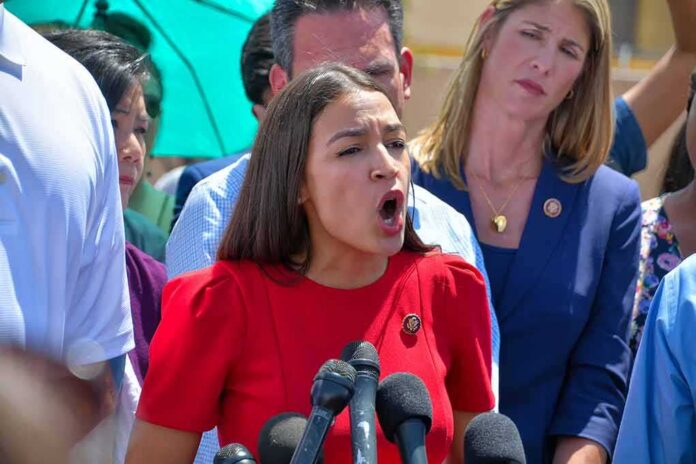
Rep. Alexandria Ocasio-Cortez then amplified the claim online. She said there had already been 10 such hangings this year and labeled them “modern-day lynchings.” That wording told people these were racially motivated murders, not just deaths that deserved a second look. The problem came fast: her sweeping label lacked case-by-case proof in the public record. Even many sympathetic summaries did not show the hard evidence that a lynching label requires.
What The Case Files And Rulings Show So Far
Published reviews of recent hanging deaths found a different picture. A USA Herald roundup reported authorities classified nine of 11 reviewed cases as suicides, apparent suicides, or without evidence of foul play, with two still open as of early September. That tally does not prove every ruling is perfect. It does show how far the broad “lynching wave” claim stretches beyond what investigators have confirmed so far. A claim that big must clear a high bar.
Named cases also push against the “wave” frame. Robert Fuller’s death in Los Angeles County was ruled a suicide after investigation by the sheriff’s department. Other named cases such as Dominique Alexander and Amani Kildea were also ruled suicides by officials. These outcomes may be painful and contested, but they count as specific findings by named authorities who reviewed evidence. A mass claim should match the record, or explain the gap with new facts.
Advocacy Reports Raise Patterns, But Proof Still Must Be Forensic
Civil-rights group JULIAN released a report saying more than 70 suspected modern-day lynchings occurred in seven Southern states since 2000. That report urges more independent reviews and warns about misclassification as suicide. Its claims have been echoed by several outlets. The catch is method. A persuasive pattern needs named cases, accessible files, consistent criteria, and verifiable evidence of homicide and racial motive across many incidents. Suspicion alone is not enough.
Pressley’s letter asks for exactly that kind of rigor: independent autopsies, reviews of local work, and a report to Congress. That is fair oversight. But calling deaths “lynchings” before those steps happen jumps ahead of the evidence. Americans remember the horror of real lynching. They also value due process. The way to earn trust is to gather forensic proof, not to declare conclusions first and request the evidence later.
How To Keep Faith With Facts And With Families
Families deserve transparent answers. That means full autopsies, scene photos, toxicology, and open interviews with medical examiners. It means checking timelines, ligatures, body position, and phone and location data. It means letting federal agents review when local agencies invite help or hit a wall. If any case shows signs of homicide, or of a hate crime, prosecute hard. But if a case is a suicide, say so clearly and with compassion, and show the evidence path.
Public leaders should separate three things. First, the duty to investigate suspicious deaths without fear or favor. Second, the high standard for calling something a lynching, which requires proof of homicide, often multiple actors, and a racial motive. Third, the rhetoric used before facts are in. On this record, AOC’s “modern-day lynchings” claim outpaced the evidence. Common sense and conservative principle align here: follow the facts, not the fever.
Sources:
redstate.com, nypost.com, x.com, emeraldbook.org, axios.com
© partiallypolitics.com 2026. All rights reserved.