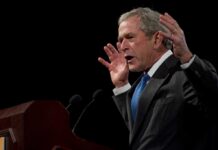
Dallas Mayor Eric Johnson told a packed Republican convention that he left the Democrats because public safety, low taxes, and order matter more than party labels.
Story Snapshot
- Johnson said he joined Republicans for public safety, economic freedom, and respect for taxpayers.
- He switched parties in 2023, making Dallas the largest U.S. city led by a Republican mayor.
- He criticized policies he linked to “defund the police” and tent encampments.
- His move fits a wider pattern of political rebranding by local leaders in polarized times.
Johnson’s Case: Safety, Taxes, And Growth
Dallas Mayor Eric Johnson told the Republican midterm convention that he switched parties because Republican goals matched his record. He listed public safety, economic freedom, respect for taxpayers, and pro-business growth as the core reasons. He said he left a party he described as tied to defunding police and to tent encampments that create disorder. He framed the choice as a mayor’s duty to keep streets safe, keep taxes predictable, and invite jobs. He argued cities thrive when leaders back police and reward work.
Johnson connected these themes to Dallas’s pitch to finance and tech firms. He described a city that wants capital investment, steady rules, and clean streets. He said a strong police force is not a culture war issue but a basic service. He tied “economic freedom” to faster permitting, lower tax burdens, and city hall that says yes to new jobs. He used sharp contrasts, but kept it local: reduce crime, cut red tape, and block chaos from becoming policy.
What Changed: From Democratic Roots To Republican Standard-Bearer
Johnson served for years as a Democrat in the Texas House and won the Dallas mayor’s seat in 2019. In September 2023, he announced he was becoming a Republican and would vote in Republican primaries. That decision turned Dallas into the largest city in the country with a Republican mayor. The switch drew swift reactions across Texas politics, including praise from conservatives and criticism from Democrats who argued the city remains blue.
His public story has been steady since the switch. He casts law-and-order, tax restraint, and business growth as common sense, not ideology. He says many urban voters want safe parks, open shops, and jobs close to home. He argues that slogans like “defund the police” hurt the very neighborhoods city leaders must serve. He places his brand in the lane of mayors who view fiscal discipline and policing as the bedrock of opportunity, and he says that lane now belongs to Republicans.
How The Speech Lands In Today’s Urban Politics
Johnson’s appeal taps a broader trend. Local officials often recalibrate when party brands drift from their governing message. Research on party switching shows that politicians sometimes realign when a new label better matches their record or when the old one sends the wrong signal to donors and voters in a polarized climate. That does not make every switch cynical. It shows how party labels now carry sharper cues on crime, taxes, and business growth than many nonpartisan city offices do.
Eric Johnson just spoke at the Republican Convention in Dallas.
He’s the current mayor of Dallas and one of the few Republican mayors of a major city in the country.
He’s done a great job and gave a very good speech.
But here’s something most don’t know.
(Brave search)
“A…
— JoeLange (@JoeLange) September 11, 2026
His message also aligns with a practical test most residents apply: Does my city feel safe, clean, and open for business? Many conservative readers will see his stance as overdue. Crime victims, taxpayers, and shop owners should not be political props. They need leaders who put order before ideology and budgets before slogans. That lens makes his case stronger. If your streets are safe and your economy is growing, families win. If not, nothing else in city politics works for long.
Sources:
thegatewaypundit.com, keranews.org, abc3340.com, youtube.com
© partiallypolitics.com 2026. All rights reserved.