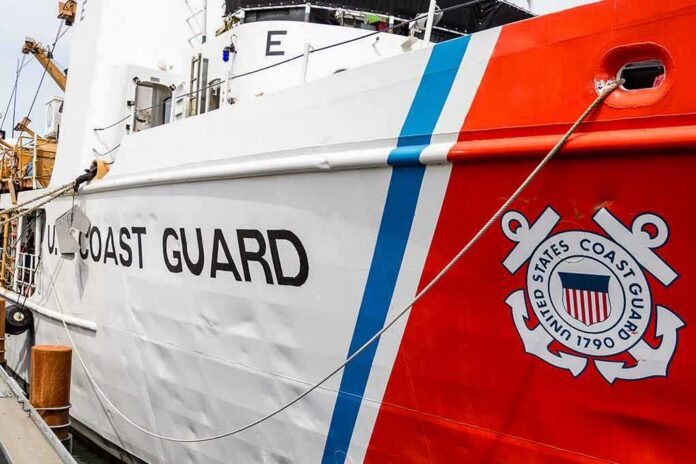
A Coast Guard pilot lost an engine mid-flight over Washington, D.C., then landed a plane carrying the Homeland Security secretary so smoothly that passengers barely noticed anything went wrong.
Quick Take
- Homeland Security Secretary Markwayne Mullin was aboard a Coast Guard C-37A that lost its right engine before landing at Ronald Reagan Washington National Airport.
- The pilot declared an emergency, reported 14 people on board and 2.5 hours of fuel remaining, then requested an immediate landing.
- Airport fire and rescue crews checked the aircraft after it landed safely, and everyone on board walked away unharmed.
- Mullin praised the crew’s calm handling, and the pilots reportedly told him it was their first single-engine landing.
Engine Failure Forces Split-Second Decision Over the Capital
The trouble started in the air near Washington. The pilot radioed the control tower with a message that left no room for confusion: the right engine was gone, and the crew needed to land right away. “We just lost our right engine and would like to declare an emergency and immediate landing at DCA,” the pilot said, according to audio captured at the time. The pilot also reported 14 people on board and about two and a half hours of fuel left in the tanks.
That kind of radio call sets off a chain reaction on the ground. Air traffic controllers clear the runway, emergency crews scramble into position, and everyone braces for the worst. None of that happened here. The Coast Guard C-37A, a military version of the Gulfstream V used to fly senior officials, touched down without incident at Reagan National.
A Landing Airport Crews Called Routine, Despite the Circumstances
Once the plane rolled to a stop, airport personnel didn’t take any chances. Fire and rescue teams from the Metropolitan Washington Airports Authority swarmed the aircraft for a full inspection before letting it move again. One report quoted airport officials saying the plane “landed safely, was thoroughly checked by Airports Authority Fire and Rescue personnel then proceeded off the runway”. That kind of by-the-book response is exactly what protocol demands after any engine loss, regardless of how clean the landing looks from outside.
All 14 people aboard, including Mullin, came away unharmed. That single fact matters more than any other detail in this story. A commercial jet losing an engine mid-flight is rare enough to make headlines on its own. A safe outcome with zero injuries is the best possible ending to a story that could have gone very differently.
Mullin’s Own Words Capture the Crew’s Composure Under Pressure
Mullin didn’t wait long to share his side of the story. He posted a message crediting the pilots directly for keeping the cabin calm during a genuinely dangerous moment. “The United States Coast Guard pilots made the single engine landing feel routine. No panic, just straight professionalism,” he wrote. Coming from a Cabinet secretary who just lived through an engine failure firsthand, that praise carries real weight.
He didn’t stop there. Mullin said the pilots told him something afterward that put the whole event in sharper focus. “After we landed, the pilots told me that was a first for them! We could not have been in better hands,” he wrote. Even veteran military aviators don’t land on a single engine every day, which makes the outcome even more impressive.
Plane carrying DHS secretary makes emergency landing at DCA after engine failure. https://t.co/weZETPNRS7
— ELLIOT IN THE MORNING (@EITMonline) September 3, 2026
Why the Coast Guard’s Aging Fleet Deserves a Closer Look
This incident lands in the middle of a bigger conversation about Coast Guard aviation readiness. The Government Accountability Office found the fleet missed its 71 percent availability target every year from 2018 through 2022. The Department of Homeland Security has separately pushed to replace one of its command-and-control jets, describing it as more than 20 years old and facing serious avionics and communication obsolescence.
None of that means this particular engine failure was tied to age or maintenance history. That causal chain isn’t established in what’s been reported so far. But it does explain why DHS has been asking Congress for newer aircraft, and why an incident like this one naturally raises questions about fleet investment going forward. Taxpayers footing the bill for these planes deserve a fleet that keeps pace with the missions it flies.
A Safe Ending That Still Deserves a Full Accounting
Every serious aviation incident involving federal aircraft typically gets reviewed by the Federal Aviation Administration and the National Transportation Safety Board, with the safety board usually leading the investigation. That process takes time, and formal findings often arrive well after the initial headlines fade. For now, the facts on record are straightforward: an engine failed, a crew responded with skill, and everyone landed safely. That’s a story worth telling plainly, without waiting for a verdict on what caused the failure in the first place.
Sources:
feedpress.me, kfoxtv.com, wcvb.com, koco.com, news9.com, fox17.com, nypost.com, facebook.com
© partiallypolitics.com 2026. All rights reserved.