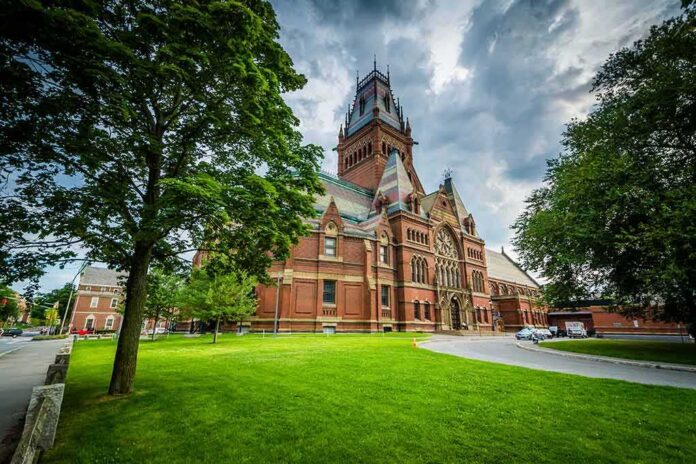
Two masked figures set off an explosion inside Harvard Medical School’s Goldenson Building at 3 a.m. and vanished into the night—leaving no injuries, no real damage, but a thunderclap of questions about the vulnerability of America’s most sacred research institutions.
Story Snapshot
- The explosion at Harvard Medical School was intentional, with suspects still unidentified and at large.
- No one was hurt and the building sustained no structural damage, but the act has rattled the academic community.
- The FBI and local law enforcement are deeply involved, signaling the gravity of the incident in a national context.
- The event spotlights the tension between open campus environments and the growing need for heightened security.
Explosion in the Heart of Academic Excellence
At 2:55 a.m. on November 1, 2025, the fire alarm blared through the Goldenson Building, a nerve center of biomedical research at Harvard Medical School. A Harvard police officer responded with the urgency you’d expect in a facility where every hour hums with the potential for medical breakthroughs. As the officer arrived, two masked individuals darted out, ignoring shouts to stop. Moments later, the discovery: an explosion in a fourth-floor hallway. No casualties. No obvious damage. But a message, loud and intentional, had been delivered.
The Goldenson Building, typically a fortress of discovery, was already under restoration—fewer staff, more blind spots, and perhaps more opportunity for those with ill intent. In this climate, any breach, especially one involving explosives, is a thunderclap. The Boston Fire Department and FBI quickly determined the explosion was no accident. A sweep found no additional devices, but the academic calm was shattered. Within 36 hours, surveillance images of the fleeing suspects were released, and the building was cleared for reopening by Monday. The story, however, was just beginning to unfold.
Criminal Intent in a Symbolic Setting
The deliberate nature of the act has set off alarms well beyond Harvard’s ivy-covered walls. Research institutions are meant to be sanctuaries for inquiry, not stages for criminal theatrics. Yet, the symbolism here is unmistakable. No injuries, no real structural carnage—just a surgical strike at the nerve of academic security and public confidence. Law enforcement, from the Harvard University Police Department to the FBI’s Boston Field Office, converged on the scene, treating the event as a clear criminal act with possible wider implications.
The suspects, still unidentified, are the subject of an aggressive manhunt. Their motives remain a cipher. Was the act a warning, a test, or an attempt at intimidation? Some security analysts suggest the lack of injuries points to a symbolic gesture rather than a failed mass casualty attempt. For Harvard Medical School’s leadership, the challenge is twofold: reassure a rattled community and preserve the continuity of research that, at its best, changes lives on a global scale.
The Impact Reverberates Beyond Harvard
In the short term, the explosion has triggered heightened security measures and a palpable sense of anxiety among students, faculty, and local residents. Research was briefly disrupted, but the real disruption was psychological. The Longwood Medical Area—usually a beehive of medical progress—became a crime scene, its routines punctuated by forensic teams and news cameras. The incident has prompted discussion in boardrooms and faculty lounges alike: How secure can an open campus ever be?
Longer term, the explosion is expected to force a re-evaluation of campus security protocols, not just at Harvard but across academia. The cost of security upgrades will be weighed against the imperative of academic openness. The event has also given rise to fresh debates about the balance between intellectual freedom and the need for vigilance in an era of unpredictable threats. For the broader research community, this incident may serve as both a warning and a catalyst for change.
Expert Perspectives: Balancing Openness and Security
Security professionals see the Harvard explosion as a rare but instructive warning. The consensus: intentional acts of this kind are extremely uncommon in academic settings, but when they occur, they demand a rethink of everything from access controls to surveillance. Academic leaders caution against overreaction but acknowledge that the symbolic impact cannot be ignored. Some experts argue the nature of the blast—minimal harm, high visibility—suggests a calculated effort to expose vulnerabilities rather than inflict maximum damage.
The community remains shaken but determined. Law enforcement’s collaboration with university officials has become a model of crisis response. The search for suspects continues, and the lessons being drawn will likely shape the future of campus safety policies. As the story unfolds, one question endures: Has the line between the open university and fortress academia blurred for good?
Sources:
WBUR: Weekend explosion at Harvard Medical School appears to have been intentional