Maryland’s Democratic governor escalated his feud with President Trump by calling potential troop orders “unlawful,” prompting Trump to warn that smearing the military is “not a smart thing to do.”
Story Snapshot
- Gov. Wes Moore labeled possible Trump-directed troop use “unlawful,” invoking military obedience rules [5].
- President Trump blasted Moore for “attacking” the military amid a broader clash over crime and governance [1][3].
- Moore positioned himself as a veteran and Maryland National Guard commander while disputing Trump’s approach [5].
- Public back-and-forth spans crime, immigration, and infrastructure, intensifying partisan narratives [1][2].
Feud Over Crime, Authority, and Respect for the Ranks
CBS Baltimore documented a running clash between President Donald Trump and Maryland Governor Wes Moore on crime, immigration, and even infrastructure stewardship, setting the stage for sharper conflict over federal authority and troop use [1]. On broadcast segments, Trump criticized Moore’s record and threatened tougher federal action while highlighting failures such as the Potomac sewage mess [3]. The sustained dispute has allowed each side to frame the other as reckless—either on public safety and management or on constitutional limits and chain of command [1][3].
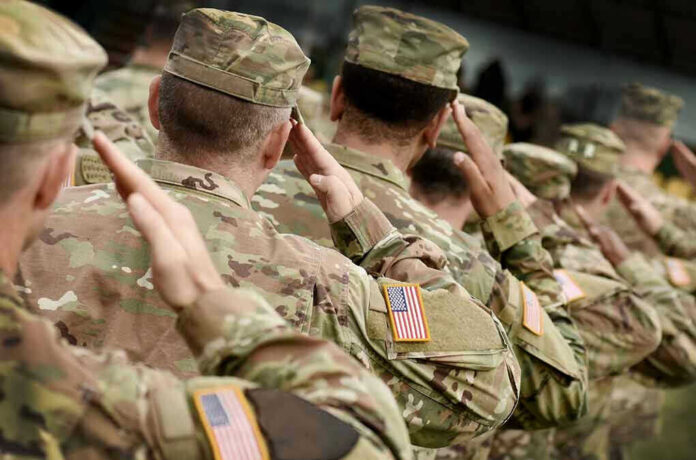
Governor Moore argued on air that service members must reject “unlawful orders,” casting Trump’s posture as outside constitutional bounds and stressing that troops are not political props [5]. Moore’s language invoked the long-standing principle that the military follows lawful commands, not partisan imperatives, while presenting himself as a veteran and commander in chief of the Maryland National Guard. Trump countered by saying Moore’s rhetoric amounts to an attack on the United States military, including the Air Force, and warned such statements undermine morale and readiness [1][3].
What Moore Said Versus How It Landed
Video from Moore’s appearance shows him asserting that talk of using American cities as “training grounds” violates the Constitution and United States law, and that troops can refuse illegal directives [5]. That framing targets civilian decision-making, not rank-and-file troops, but it carries sharp terms like “unlawful orders” that easily feed headlines. In a heated media environment, Trump and supporters can portray those phrases as disparaging the armed forces themselves, even though Moore repeatedly referenced respect for service members and their families [5].
Television coverage of Moore’s responses to Trump’s attacks emphasized the crime debate and the governor’s claim that he wants federal help directed toward law enforcement resources, not troop presence on Maryland streets [4]. That policy distinction—funding and targeted support rather than uniformed deployments—became entwined with the argument over legality. Trump’s messaging, often delivered in fast-moving social media volleys and interviews, amplified the confrontation, translating Moore’s constitutional critique into what Trump called an insult to those in uniform [1][3][4].
Constitutional Boundaries, Civilian Control, and Practical Security
On the constitutional question, Moore’s comments align with the military’s duty to obey lawful orders, a standard taught across the services and embedded in American civil-military norms [5]. The friction arises over what is “lawful” in any proposed domestic use of troops and how state-federal coordination should work when crime surges. Trump’s camp frames federal assertiveness as necessary to protect citizens in struggling cities, while Moore’s camp says blunt deployment talk skirts legal limits and risks politicizing the ranks [1][4][5].
President Donald Trump said Maryland Gov. Wes Moore is delaying a planned renovation of "dilapidated" golf courses at Joint Base Andrews, arguing the project would benefit military personnel and wounded veterans. https://t.co/kX2QobrXEb
— FOX Baltimore (@FOXBaltimore) June 6, 2026
For conservatives, two principles matter: defending the troops from political smears and insisting on tough, effective public safety policies. Trump’s warning responds to the first, arguing that painting prospective orders as categorically “unlawful” demeans service members who follow the chain of command. Moore’s pushback addresses the second, claiming targeted law enforcement aid beats troop deployments. Given incomplete public transcripts and paraphrases, the precise trigger for the “Air Force” phrasing remains unclear, but the broader stakes—lawfulness, safety, and respect—are unmistakable [1][3][5].
Sources:
[1] Web – NEW: Trump SLAMS Maryland Governor Wes Moore for “Attacking the United …
[2] Web – Tensions rise between President Trump and Maryland Gov. Wes …
[3] Web – Pres. Trump calls out ‘foul mouthed’ Gov. of Md., feud grows, revives …
[4] YouTube – Trump blasts Maryland Gov. Moore over Potomac sewage spill
[5] YouTube – Gov. Wes Moore responds to Trump’s attacks against him
© partiallypolitics.com 2026. All rights reserved.