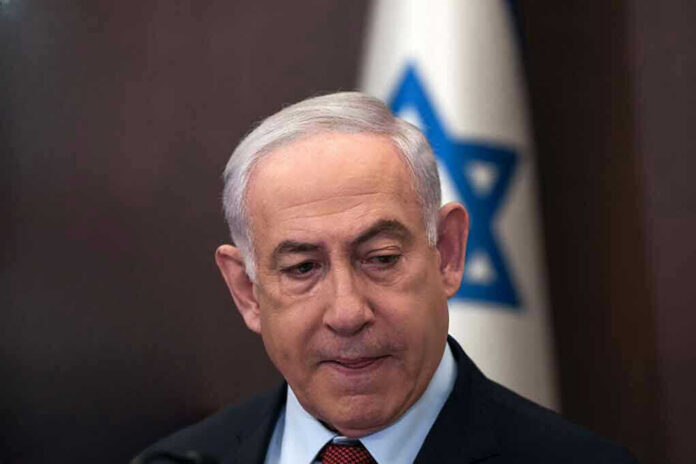
Fox News Radio host Brian Kilmeade asked Israeli Prime Minister Benjamin Netanyahu a question that cuts to the heart of the Iran war debate: after more than 8,000 U.S. military strikes on Iranian targets, why is the Iranian government still standing?
Story Snapshot
- Kilmeade pressed Netanyahu directly on why massive U.S. and Israeli strikes have not toppled the Iranian government
- U.S. Admiral Brad Cooper confirmed American forces struck more than 8,000 Iranian military targets, including 130 vessels
- Iran’s ballistic missile launch rate dropped 92% from day one of the war, but the regime remains intact
- Netanyahu warned Iran was already building new underground bunkers to protect its nuclear and missile programs from future strikes
- Kilmeade raised alarms that a proposed deal could hand Iran up to $300 billion in cash with no escrow protections
The Question Nobody in Washington Wants to Answer
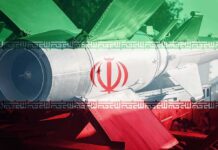
Kilmeade’s question was blunt and fair. The U.S. military struck more than 8,000 Iranian military targets according to Admiral Brad Cooper, including launchers, production sites, naval vessels, and air defense systems. Iran’s ballistic missile launch rate collapsed 92% from the opening day of the conflict. Its drone launch rate fell by the same margin. On paper, that looks like a crushing military victory. So why does the government in Tehran still function?
Fox's Brian Kilmeade Presses Netanyahu on Iran War: 'Why Is That Government Still Standing?' https://t.co/I6eB8mI9QK
— Mediaite (@Mediaite) July 6, 2026
The answer is uncomfortable but not surprising to anyone who studies authoritarian regimes. History shows that military destruction and political collapse are two very different things. Bombing a country’s weapons depots does not automatically burn down its bureaucracy, silence its secret police, or convince its population to revolt. Iran’s Islamic Revolutionary Guard Corps — the regime’s enforcement arm — was built specifically to survive external pressure. It has been doing exactly that for over four decades.
What the Strikes Actually Accomplished
The damage is real and significant. The Armed Conflict Location and Event Data Project recorded hundreds of strikes across at least 26 of Iran’s 31 provinces. The campaign destroyed roughly 200 air defense systems in the opening hours, giving U.S. and Israeli aircraft control of Iranian airspace from the western border to central Tehran within a single day. Iran started the war with an estimated 2,500 long-range ballistic missiles. Hundreds have since been launched, destroyed, or eliminated in storage facilities.
Netanyahu told Kilmeade the strikes eliminated Iran’s ability to produce nuclear weapons and ballistic missiles, removing what he called two existential threats to Israel. He framed the campaign not as endless war but as a gateway to a more stable Middle East. That is a serious argument, and the military data gives it real weight. But Netanyahu also admitted Iran immediately began digging new underground bunkers to make its programs immune to future strikes. That admission quietly answered Kilmeade’s question.
Iran’s Real Strategy Is Not to Win — It Is to Survive
Iran never expected to defeat the United States in a straight military fight. Its strategy, as analysts at West Point’s Modern War Institute noted, was to make the war harder to contain. Tehran struck energy infrastructure across all six Gulf Cooperation Council countries — Bahrain, Kuwait, Oman, Qatar, Saudi Arabia, and the United Arab Emirates — for the first time in history. It targeted civilian airports and luxury districts. It attacked U.S. military bases. The goal was to spread pain wide enough to force diplomacy.
That strategy has a cost. Iran’s economy is bleeding. Its missile stockpile is depleted. Its top military leadership, including Supreme Leader Ali Khamenei, was killed in the opening strikes. But the regime’s survival machinery — the Revolutionary Guard, the internal security forces, the ideological apparatus — was designed to outlast exactly this kind of pounding. Kilmeade’s instinct that something does not add up is correct. His guests’ claims that the regime is nearly a failed state may also be correct. Both things can be true at once.
The Deal Question That Should Worry Everyone
Kilmeade’s sharpest challenge was not about the war itself. It was about what comes after. He raised the concern that a proposed deal could release up to $300 billion to Iran without escrow accounts, meaning cash would flow directly and immediately to Revolutionary Guard coffers. Guest Rich, appearing on Kilmeade’s show, argued the deal captures real military gains and opens the Strait of Hormuz. Kilmeade pushed back, questioning whether the deal effectively recognizes Iranian governance over that critical waterway.
That tension is worth watching closely. Netanyahu denied any rift with President Trump and said both leaders remain aligned on preventing Iran from getting a nuclear weapon. But Netanyahu’s own admission that Iran is already rebuilding underground suggests the military clock and the diplomatic clock are running at very different speeds. Kilmeade is right to keep pressing. A deal that hands cash to a regime that is simultaneously digging deeper bunkers is not a peace agreement. It is a reloading pause.
Sources:
mediaite.com, youtube.com, instagram.com, facebook.com, podcasts.apple.com, foxnews.com, yahoo.com, acleddata.com, brookings.edu, en.wikipedia.org, mwi.westpoint.edu, digital-commons.usnwc.edu, seerist.com, reddit.com
© partiallypolitics.com 2026. All rights reserved.