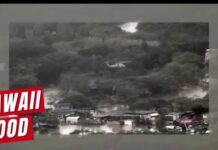
A thunderous blast at one of America’s largest oil refineries shook homes miles away, yet somehow every single worker walked out alive.
Story Snapshot
- Explosion rocked Valero’s Port Arthur Refinery on March 23, 2026, at 7:22 p.m., producing massive black smoke plumes visible across southeast Texas
- All 770 employees accounted for with zero injuries despite the blast’s intensity shaking nearby homes and triggering shelter-in-place orders
- Industrial heater failure suspected as cause in a facility processing 435,000 barrels daily, forcing highway closures and air quality monitoring
- Valero stock dipped over 1% as fire suppression efforts continued into the following morning with residents still sheltering
When Industrial Giants Stumble in America’s Energy Heartland
Valero’s Port Arthur Refinery sits 90 miles east of Houston in Jefferson County, a sprawling industrial complex that churns through 435,000 barrels of crude oil every single day. The facility employs roughly 770 workers who navigate a maze of pipes, pressure vessels, and furnaces processing volatile hydrocarbons under extreme conditions. This particular refinery operates in Texas’s petrochemical corridor along the Gulf Coast, where the concentration of refineries and chemical plants creates an industrial landscape unlike anywhere else in America. The sheer scale of operations makes these facilities indispensable to national energy security, yet that same scale magnifies the consequences when something goes catastrophically wrong.
The explosion originated from a single processing unit, with Jefferson County Sheriff Zena Stephens pointing to an industrial heater as the likely culprit. These heaters operate under tremendous thermal stress, heating crude oil to temperatures that would vaporize water instantly. Equipment failure in such environments doesn’t announce itself with warning bells. One moment operations hum along normally, the next moment a compromised heater unleashes stored energy in a fraction of a second. The blast’s force rattled windows and foundations in homes surrounding the facility, a visceral reminder that 56,000 Port Arthur residents live alongside industrial operations capable of releasing enormous destructive power.
The Shelter-in-Place Calculus That Kept Everyone Indoors
Port Arthur Mayor Charlotte Moses appeared on Facebook shortly after the explosion, her message direct and reassuring: explosion confirmed, everyone accounted for, firefighters working fast. City officials immediately ordered residents from Stillwell Boulevard West down to Highway 73, plus Sabine Pass and Pleasure Island, to shelter in place. This wasn’t panic, it was protocol. Thick black smoke billowing from a refinery fire carries unknowns that air monitoring teams need time to assess. The Texas Commission on Environmental Quality deployed monitoring equipment while hazmat teams worked alongside firefighters to contain flames shooting from the compromised unit.
Jefferson County closed State Highways 82 and 87, cutting off major arteries to prevent exposure and give emergency responders clear access. Shelter-in-place orders spare communities the chaos of mass evacuations while protecting residents from potential airborne contaminants. The plumes of black smoke made the threat visible to anyone with eyes, but what residents couldn’t see were the response coordination efforts unfolding behind the scenes. Valero’s emergency team worked with local fire departments, TCEQ, and county officials to establish incident command, monitor air quality in real-time, and maintain communication channels that kept the public informed without triggering unnecessary alarm.
Why Zero Casualties Deserves More Attention Than the Fire Itself
The most remarkable aspect of this incident isn’t the explosion or the dramatic smoke plumes captured on video. It’s that 770 workers at a facility processing highly flammable materials under extreme pressure all made it home that night. Industrial accidents at refineries have historically produced devastating casualty counts. Equipment failures at high-capacity facilities can cascade through interconnected systems faster than workers can react. Yet Valero’s safety protocols, emergency shutdown systems, and worker training apparently functioned exactly as designed when crisis erupted at 7:22 p.m. on March 23.
Valero issued a statement confirming all personnel were accounted for and emphasizing that safety remained their top priority while coordinating with local authorities. The company’s stock price dropped 1.03% to $237.39, a modest market reaction suggesting investors viewed this as a contained incident rather than a harbinger of systemic problems. For context, previous refinery explosions have triggered evacuations, injuries requiring hospitalization, and prolonged facility shutdowns that ripple through regional fuel supplies. The contrast between the explosion’s visual drama and its actual human impact demonstrates that emergency preparedness infrastructure in America’s energy sector works when properly implemented and maintained.
The Uncomfortable Questions About Aging Infrastructure
Industrial heaters don’t fail randomly. They succumb to metal fatigue, corrosion, thermal cycling stress, or maintenance lapses that accumulate over years of operation. Valero’s Three Rivers refinery experienced a fire in 2024, part of a pattern across Texas refineries where aging equipment meets the relentless demands of 24/7 operations. The 2019 Philadelphia Energy Solutions explosion injured workers and forced evacuations. The 2022 Chevron Richmond incident triggered shelter-in-place orders similar to Port Arthur’s. These aren’t isolated flukes but recurring stress tests of infrastructure built decades ago and pushed to maximum capacity to meet America’s energy demands.
Massive Explosion and Fire Breaks Out at Texas Oil Refinery
https://t.co/ic8qu1SfWZ— Townhall Updates (@TownhallUpdates) March 24, 2026
The refinery sits in a hurricane-vulnerable region where extreme weather compounds operational challenges. Port Arthur’s economy depends heavily on petrochemical operations, creating political dynamics where regulatory enforcement must balance safety against economic vitality. Texas’s energy sector wields considerable influence, enabling rapid emergency response coordination but potentially complicating aggressive regulatory intervention. The explosion will likely prompt internal inspections at peer refineries checking heater conditions, yet systemic infrastructure upgrades require capital investments that companies weigh against production disruptions and shareholder returns. Americans want cheap gasoline and energy independence, but those goals require refineries operating at the edge of their design limits.
What Happens Next for Port Arthur and Valero
As of March 24 morning, fire suppression efforts continued with the blaze contained to the compromised unit. Air quality monitoring remained active pending clearance to lift shelter-in-place restrictions. TCEQ’s deployment of monitoring equipment will produce data determining whether hazardous materials escaped containment, information critical to both public health and Valero’s liability exposure. The company faces potential regulatory scrutiny, maintenance costs to repair or replace the damaged unit, and production losses while the facility operates below capacity. For Port Arthur residents, the explosion adds to cumulative anxiety about living adjacent to industrial operations where catastrophic failure remains perpetually possible.
The broader fuel supply impact appears minimal given the refinery’s scale and redundancy in Gulf Coast production capacity. No widespread gasoline price spikes materialized in immediate aftermath reporting. However, extended downtime at a 435,000-barrel-per-day facility could tighten regional supplies if repairs stretch beyond weeks into months. Valero’s response speed and transparency, Mayor Moses’s calm communication, and the zero-casualty outcome all demonstrate competent crisis management that likely prevented panic and secondary chaos. The real test comes in investigation findings about what failed, why it failed, and whether similar vulnerabilities exist across America’s refinery network. Port Arthur got lucky this time. Luck isn’t a sustainable safety strategy.