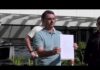

A legendary coach survived decades mentoring Oakland’s toughest youth, only to fall to gunfire inside a college fieldhouse that prided itself on safety and second chances—leaving a city, and a nation, asking why tragedy struck where hope was supposed to win.
Story Snapshot
- John Beam, famed Laney College coach and Netflix’s “Last Chance U” star, was fatally shot on campus in gun-regulated California.
- The suspect, Cedric Irving Jr., was arrested within hours, with a weapon recovered, yet his motive remains unclear.
- Beam’s death has reignited fierce debate over campus safety and gun control in America’s strictest state.
- Oakland’s community reels, honoring Beam’s legacy and demanding answers amid rising violence.
Campus Tragedy Shatters Perception of Safety
John Beam’s shooting inside Laney College’s Fieldhouse on November 14, 2025, sent shockwaves across Oakland and the entire country. The incident unfolded in broad daylight, in a building where Beam dedicated decades to mentoring young athletes and transforming lives. Beam, immortalized by Netflix’s “Last Chance U,” seemed the least likely victim in a setting where many believed California’s strict gun laws would prevent such violence. His murder has punctured assumptions about safety on college campuses, especially in regions with robust firearms regulation.
Oakland Police responded swiftly, launching a manhunt and making an arrest at a nearby BART station the very next morning. Cedric Irving Jr., a 27-year-old with prior ties to the campus but not as one of Beam’s proteges, was taken into custody. Police recovered a weapon and quickly announced their case to the public. Yet, the fact that a targeted killing could occur in a high-security environment, in a state with some of America’s toughest gun laws, immediately fueled public anger and political debate.
Beam’s Legacy and the Anatomy of Community Grief
For over forty years, John Beam was the heartbeat of Oakland’s sports community, known for rescuing at-risk youth from the streets and guiding them to success on and off the field. His sudden death has left students, alumni, and colleagues reeling. Vigils sprang up within hours, with outpourings of grief underscoring just how deeply Beam’s mentorship was woven into the city’s fabric. Beam’s family, devastated, released a statement expressing heartbreak while calling for privacy during an overwhelming time.
The shock rippled far beyond Oakland. Politicians and sports figures across the nation voiced condolences, while the local mayor, Barbara Lee, pointed to Beam’s murder as part of an ongoing epidemic of gun violence. The incident has forced a reckoning, not only about campus security but about whether legislation and enforcement alone can ever be enough. Beam’s unique ability to steer young men away from violence made his end by gunfire especially bitter for those who saw him as evidence that one person can change a city’s destiny.
Gun-Control Paradox: Policy and Reality Collide
California’s gun laws are among the strictest nationwide, requiring background checks, waiting periods, and bans on assault weapons. Oakland, however, still battles a homicide rate far higher than the national average. The shooting at Laney College is not the city’s first brush with violence on school grounds—past incidents at UC Berkeley and an Oakland high school remain fresh in public memory—but Beam’s stature and the college’s reputation for safety make this case singularly alarming. The paradox is glaring: how does such violence persist despite layers of legal protection?
Debate has reignited on both sides. Gun control advocates argue Beam’s death highlights the need for even tighter restrictions and improved enforcement, while others contend that California’s regulatory model is failing to address root causes—namely, criminal access to firearms and gaps in mental health intervention. Law enforcement stresses the need for better intelligence and proactive engagement with at-risk individuals, while educators now face mounting pressure to overhaul campus safety protocols without turning colleges into fortresses.
Aftermath: Searching for Answers and a Path Forward
Cedric Irving Jr. awaits arraignment as investigators puzzle over motive and method. Community members hold vigils and tributes, while Laney College increases security and offers counseling to those affected. Policy makers are already signaling a review of both legislation and on-the-ground safety measures. Some propose more rigorous campus access controls; others call for broader societal investment in violence prevention and youth mentorship—ironically, the very mission Beam championed.
As the city mourns, the gulf widens between the promise of protection and the reality of persistent violence. The loss of John Beam has exposed both the strengths and limits of policy, and the ongoing struggle to secure public spaces. His legacy may yet inspire the reforms and community unity needed to prevent future tragedy, but for now, Oakland and the wider world are left searching for answers, and a way to honor the man who spent his life giving others a second chance.