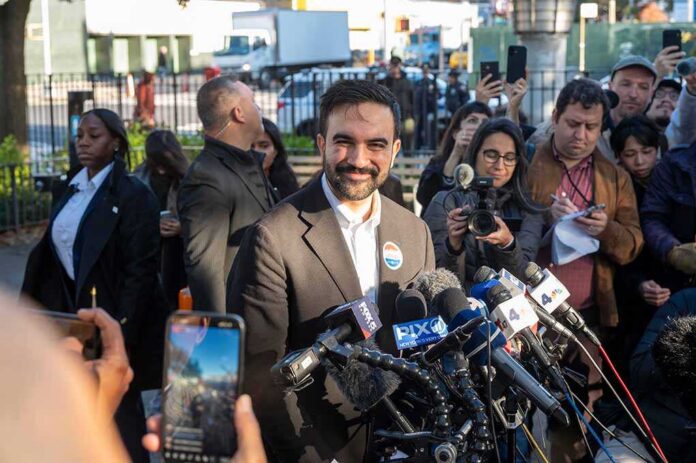
New York City is moving public dollars to keep puberty blockers and cross-sex hormones available to minors even as national policy moves the other way.
Story Snapshot
- City procurement spells out puberty blockers and hormone therapy for minors when medically necessary.
- Contracts aim to replace youth services private hospitals curtailed after federal pressure.
- Total plan stems from a larger $15 million city initiative launched in June 2026.
- Vendors are named, timelines set, and parental-consent law is referenced.
What City Hall Put In Writing
The Department of Health posted a procurement notice saying services include puberty blockers and hormone therapy for minor patients when medically necessary under prevailing standards of care. The notice adds providers must be licensed in New York and follow state parental-consent laws, placing the program inside existing rules. The contracts are proposed to run from early 2027 through mid-2029, with a possible renewal, showing a standard, time-bounded approach rather than an open-ended subsidy.
The city identified nonprofit partners, including Callen-Lorde Community Health Center and another named organization, signaling that this is more than a press release—officials are building a delivery network. That reduces guesswork about who will do the work and where young patients would go. The paperwork matters here. Critics can argue over wisdom, but the city offered chapter-and-verse on scope, licensure, consent, and contract windows. That meets a basic good-government test on transparency.
Why New York Is Doing This Now
City leaders pitched the plan as an access fix after major hospitals narrowed or ended services for teens following federal actions under President Trump that changed the funding climate. New York’s June 2026 announcement rolled out $15 million to expand and protect access to gender-related care, including support for youth. The procurement drawing almost $9 million is a down payment on that earlier pledge, connecting the public promise to a contract pipeline and a service map.
The national picture shifted fast. Dozens of states moved to limit care for minors, and federal actions tightened funding channels, affecting low-income patients most. Hospitals that rely on federal reimbursements adjusted risk, and some paused youth programs. City leaders responded with municipal funding to keep a path open in New York. That tug-of-war—restriction met by local backfill—now defines the policy terrain.
What The Dollars Buy—and What They Don’t Settle
The paperwork covers evaluation, prescriptions, and administration for minors who meet medical necessity standards, delivered by licensed clinicians with parental consent under state law. The city frames this as healthcare, not ideology, by anchoring clinical calls to prevailing standards. That framing aligns with a limited-government idea that decisions should happen close to patients, families, and doctors, not distant agencies. It also tracks a public-safety lens: if care is going to happen, keep it inside regulated clinics.
Open questions remain because the public file is a notice, not the final executed contracts. Exact screening steps, dispute handling between parents, and long-term outcome tracking are not in the posted materials. That gap does not erase the program’s existence, but it does invite oversight. A common-sense next step is for the city to publish its clinical protocols and annual de-identified results. Taxpayers deserve to see safety metrics, eligibility pathways, and parental-consent audits in black and white.
The Pushback And How To Weigh It
Commentary voices argue these treatments for minors are experimental and can cause irreversible harms, and they applaud hospitals that stopped services under federal pressure. Those are value claims and policy preferences rather than contradictions of the city’s posted facts. The procurement says minors would only receive medication when medically necessary, with licensed providers and parental consent, which is a narrower lane than the rhetoric suggests. Disagreeing on policy does not negate the contents of the city’s plan.
New York City plans to spend $8.9 million on contracts for “gender-affirming care” for minors under Mayor Zohran Mamdani.
The contracts would fund puberty blockers and hormone therapy for patients under 18, as part of Mamdani’s broader $15 million initiative for transgender… pic.twitter.com/y6UxtXEjNM
— Daily Signal (@DailySignal) October 7, 2026
The hard part for readers is sifting emotion from evidence. Here, the evidence shows New York using a standard contracting path to preserve in-city access after hospitals curtailed services due to federal shifts. The mayor’s office previewed the move months earlier with a $15 million plan. The notice details timelines and vendors. The wise test going forward is accountability: publish outcomes, enforce consent rules, and keep care decisions between families and qualified doctors under state law.
Sources:
nypost.com, nyc.gov, gothamist.com, us.headtopics.com, ny1.com, kff.org
© partiallypolitics.com 2026. All rights reserved.