The Israeli Defense Forces have eliminated the Hamas commander behind one of the October 7 attacks that shocked the world, but does anyone really believe this relentless cycle of violence and appeasement is coming to an end?
At a Glance
- IDF confirms airstrike killed Taha Abu Ayadeh, Hamas commander responsible for the Kibbutz Magen gas station attack.
- Ayadeh was a key player in the brutal October 7, 2023, assault that targeted Israeli civilians and infrastructure.
- The operation is part of Israel’s ongoing campaign to dismantle Hamas leadership after the unprecedented attacks.
- Experts warn that targeted killings may disrupt Hamas but could fuel further violence and humanitarian suffering.
IDF Eliminates Hamas Commander Behind Gas Station Massacre
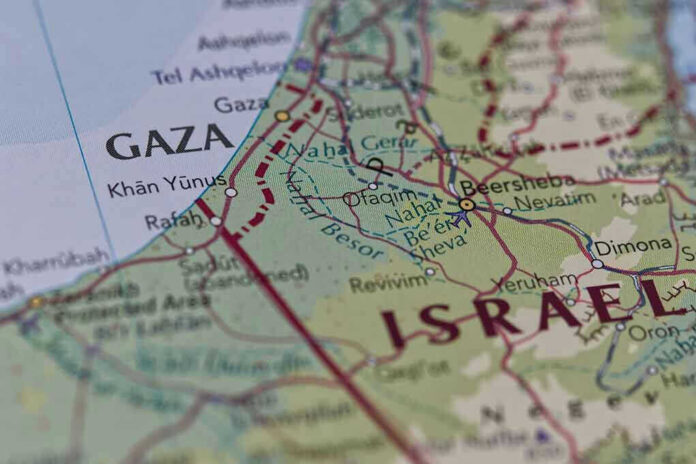
Israeli military officials announced the elimination of Taha Abu Ayadeh, the Hamas commander identified as the ringleader behind the October 7 assault on the Kibbutz Magen gas station. Ayadeh, a platoon commander in Hamas’s elite Nukhba force, met his end in an Israeli airstrike in Khan Younis, Gaza, on July 1, 2025. The IDF made the news public a week later, confirming that this high-value target was directly responsible for leading the group of militants who stormed the gas station, opening fire and forcing Israeli civilians to hide for hours during the chaos.
The IDF’s announcement comes as part of a broader, and some say long-overdue, campaign to root out the leadership that orchestrated the bloodbath of October 7. Let’s not forget: this wasn’t just another border skirmish. Hamas’s coordinated assault, codenamed “Operation Al-Aqsa Flood,” was a full-blown invasion that left over a thousand Israelis dead, dozens kidnapped, and entire communities in ruins. The gas station attack, documented in harrowing footage released last November, became one of the many grim symbols of the day’s savagery. The IDF’s message is clear—no one involved in that atrocity will be allowed to hide behind Gaza’s chaos forever.
Background: From Black Saturday to Relentless Retribution
The October 7 attacks marked a pivotal, and for many, a sickening new low in the Israeli-Palestinian conflict. Hamas and other armed groups launched thousands of rockets and sent fighters straight into Israeli border towns, targeting civilians, police, and military posts alike. Communities like Kibbutz Magen found themselves under siege, with residents fleeing for their lives and hiding in fear while Hamas militants rampaged through their neighborhoods. The IDF responded with overwhelming force, launching a months-long campaign to strike at the heart of Hamas’s command structure and infrastructure. Taha Abu Ayadeh’s death is the latest chapter in this effort, but nobody’s pretending the job is finished.
The international community, meanwhile, has provided its usual chorus of condemnation—with legal experts labeling the October 7 attacks as possible genocide, and human rights groups documenting atrocities on both sides. Yet, as always, the talking heads and bureaucrats wring their hands while civilians on both sides pay the price. The IDF, for its part, has made it clear that targeted strikes against those responsible for October 7 will continue, no matter how long it takes or how loudly the usual suspects protest.
The Human and Political Toll: Civilians, Security, and the Never-Ending Cycle
The immediate impact of Ayadeh’s death is tactical: Hamas’s Nukhba elite force has lost a key commander, which, according to security analysts, could disrupt the group’s ability to launch new attacks—at least temporarily. For Israeli border communities, the sense of justice is real, but so is the ongoing fear. Residents of areas like Kibbutz Magen remain at risk, living under the threat of reprisals and the endless specter of rocket fire. Gaza’s civilians, meanwhile, endure the fallout of yet another airstrike campaign, with no end to the suffering in sight.
On the political front, Israel’s determination to eliminate Hamas’s leadership has become a defining element of its national security strategy. The IDF’s precision strikes are designed to send a message: there will be no safe haven for those who orchestrate terror against Israeli citizens. But the long-term picture is as grim as ever. Targeted killings may weaken Hamas, but they also risk fueling cycles of revenge and radicalization. Both Israeli and Palestinian leaders remain locked in a stalemate, with international mediation doing little more than reshuffling the same tired deck of failed solutions and toothless resolutions.
Expert Analysis: What Comes Next After Another Commander Falls?
Legal scholars and genocide experts have not minced words about the October 7 attacks, calling them among the most brutal in modern memory and arguing that the intent and scale of violence amount to war crimes. Security professionals point to the IDF’s targeted killings as a necessary, if blunt, tool in the fight against terrorism. Still, even the most hawkish analysts admit that no amount of military muscle can erase the deep-rooted tensions fueling this conflict—especially when international institutions seem more interested in scoring rhetorical points than in delivering real results.
Human rights groups continue to highlight the devastating impact on civilians, warning that every new airstrike risks turning more ordinary Palestinians into future recruits for extremist groups. Yet for Israelis who lived through October 7, the argument is simple: justice must be served, and security must come first. As for the rest of the world, maybe it’s time to stop pretending that “both sides” deserve equal blame when one side’s stated goal is the eradication of its neighbor. Until the world recognizes the difference between defending your people and unleashing terror on innocents, these headlines will just keep coming.