partiallypolitics.com — Residents of north Seattle are building their own barricades in the streets because pimps with guns have turned their neighborhood into a war zone — and the city spent years looking the other way.
Story Snapshot
- Rival pimps are fighting armed turf wars along Aurora Avenue in north Seattle, with shootouts caught on surveillance camera.
- Frustrated residents have physically erected metal barricades on side streets to block prostitution-related traffic from spilling into their neighborhoods.
- The Seattle City Council passed an 8-1 vote on legislation targeting commercial sexual exploitation, but residents say the violence continues nightly.
- Washington state lawmakers are considering elevating the crime of patronizing a prostitute from a misdemeanor to a felony in response to the escalating danger.
Surveillance Cameras Caught What City Hall Ignored for Years
Security footage from January showed two suspected pimps shooting at each other from moving vehicles as they raced down Aurora Avenue North in broad defiance of any law enforcement deterrent. [2] The footage, which spread rapidly across local news broadcasts, gave Seattle residents something they had long lacked: undeniable visual proof of what they had been reporting to city leaders for months. When the video hits, suddenly politicians find their urgency.
Aurora Avenue has long carried a reputation for prostitution, drugs, and street crime, but residents and business owners say the character of the problem changed sharply when organized criminal networks moved in. One business owner told FOX 13 Seattle that these groups arrived with sex-trafficked women, sex-trafficked girls, and the guns and gun violence that come with organized crime. [1] That is not a nuisance complaint. That is a community describing a hostile takeover of its streets by criminal enterprises.
Residents Stopped Waiting for Help and Started Blocking Their Own Streets
When government fails visibly enough, people improvise. North Seattle neighbors began erecting physical barricades on side streets to cut off the traffic patterns that prostitution rings were exploiting to operate near residential blocks. [4] Think about what that means practically: homeowners dragging metal barriers into public roads because they no longer trust that a patrol car will come in time. That is not a quirky community response. That is a population signaling institutional collapse.
Neighbors told local media they feel under siege in their own homes, describing nightly gunfire as a routine backdrop to their lives. [4] One resident described the situation as collateral damage — a term normally reserved for military conflict zones. The fact that ordinary Seattle families are borrowing that language to describe their own neighborhood says everything about how far conditions deteriorated before the city acted.
The City’s Response: Legislation Passed, Skepticism Warranted
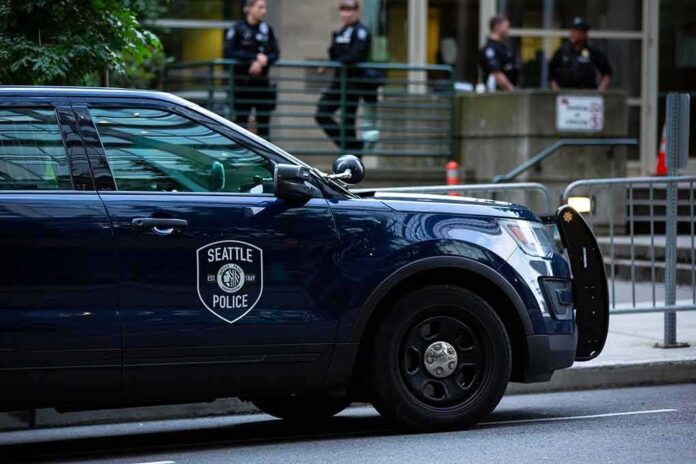
The Seattle City Council passed Councilmember Cathy Moore’s legislation targeting commercial sexual exploitation by an 8-1 vote in September 2024. [5] Moore represented District 5, which includes Aurora Avenue, and framed the bill as a direct answer to the pimp turf war plaguing her constituents. The mayor’s office also stated that the Seattle Police Department deployed increased emphasis patrols and a gun violence reduction unit along Aurora during late-night and early-morning hours. [1] On paper, that sounds like a response. Whether it matches the scale of the problem is a separate question.
What to know:
➡️ Seattle residents erected barricades to curb traffic and violence from prostitution rings.
➡️ Metal planters block side streets connecting to Aurora Avenue North after recent shootings.
➡️ Residents have engaged with city officials for over three years…— The Washington Times (@WashTimes) May 26, 2026
Washington state lawmakers pushed further, considering a bill that would elevate the crime of patronizing a prostitute from a misdemeanor to a felony. [7] That proposal reflects a hard-nosed recognition that demand-side consequences have been laughably weak for years. When buying access to a trafficking victim carries the same legal weight as a parking violation, criminal networks correctly calculate that the risk is manageable. Raising the charge to a felony changes that math in a meaningful way, and the fact that this idea is only now being seriously debated tells you how slowly the political class moves when the victims are in someone else’s zip code.
What Aurora Avenue Exposes About Progressive Policing Failures
Urban policing research does confirm one inconvenient truth for city leaders: crackdowns without comprehensive strategy often displace street markets rather than eliminate them, shifting the complaint from one neighborhood to another. [4] That dynamic is real and worth accounting for in any enforcement plan. But displacement risk is not an argument for inaction — it is an argument for smarter, sustained enforcement paired with prosecution of the organized criminal networks driving the violence. Seattle residents are not asking for perfection. They are asking not to hear gunshots outside their bedroom windows.
The Aurora Avenue crisis is a case study in what happens when a city treats visible street crime as a social-services problem first and a public-safety emergency second. Organized pimps with firearms are not a population that responds to outreach workers. They respond to consequences — arrests, prosecutions, and sentences that make the business model unprofitable. Seattle’s residents figured that out on their own. The question is whether their elected officials have finally caught up.
Sources:
[1] YouTube – Prostitution turf war terrorizes Seattle blocks | Jason Mattera …
[2] Web – Seattle looks to crack down on violence caused by sex crime turf war
[4] YouTube – Seattle shootout may be linked to ‘turf war between pimps …
[5] Web – Aurora Avenue neighbors press Seattle leaders over nightly gunfire …
[7] YouTube – Turf war between pimps leads to dramatic shootout on Aurora Avenue
© partiallypolitics.com 2026. All rights reserved.