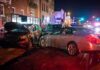
One quiet Friday rush hour, two southbound commuter trains near Bedford turned a routine ride into a scene passengers say felt “like a bomb explosion.”
Story Snapshot
- Two London-bound East Midlands Railway trains collided near Bedford, killing the driver and injuring about 89 people.
- Passengers describe a sudden blast of dust, screams, and “bloodied faces” as carriages twisted and people were thrown from seats.
- Ambulance teams report 11 very seriously injured, 22 seriously hurt, and 56 with minor injuries after the rear-end impact.
- The crash is rare in a rail system that is statistically very safe, but it exposes how fast a familiar commute can fail.
When an ordinary commute turns into a battlefield
The two East Midlands Railway trains left Corby and Nottingham on time, both heading south to London St Pancras on a line millions ride without a second thought each year.[1] British Transport Police say calls began coming in around 5:15 p.m., classic commuter rush, as one southbound train slammed into the rear of another near Bedford.[3] Within minutes, the line was shut, a “major incident” was declared, and what had been a normal Friday became national news.[1]
Emergency services later laid out the blunt math: one person dead, 89 injured.[1] The East of England Ambulance Service broke that down in unusually stark detail for an early report: 11 passengers with very serious injuries, 22 seriously injured, and 56 with minor wounds.[1] A rail union leader confirmed what many feared from early whispers at the scene: the person who died was the driver of one of the trains, killed doing a job most of us take for granted every working day.[2]
Inside the carriages as the impact hit
Passengers describe no long warning, no drawn-out panic, just a split second where normal life stopped. Dr Peter Knapp had just settled into his seat when he felt what he called “a sudden explosion of mist,” followed by screams as people were hurled forward.[4] He says it came “out of nowhere,” then the carriage filled with dust and shock.[2] He ended that ride with leg and back injuries, lucky to be able to walk away and tell anyone what it felt like.[2]
Another passenger told television crews he saw “faces all bloodied” and people “in a very bad way” as they tried to stand after the collision.[4] Some spoke of broken legs, others of strangers bracing each other while they waited for help with glass on the floor and seats twisted out of place.[2] These are not technical details; they are the human cost, the part polite statements from officials never fully capture. They also match the casualty figures emergency teams reported later that night.[1]
How the rescue unfolded on the ground
By the time many passengers had even processed what happened, blue lights were already converging on the tracks south of Bedford. British Transport Police, Bedfordshire Police, firefighters, and ambulance crews surged into what officers called a “major incident,” deploying air ambulances and a hazardous response team from the East of England Ambulance Service.[1][2] Helicopters overhead and the constant wail of sirens left no doubt this was not a minor bump between trains.
Police say more than 80 people were taken to hospitals, and 28 were still in hospital the next day, nine in critical condition.[5] Those numbers fit the first triage breakdown released by ambulance commanders: dozens with very serious and serious injuries who needed rapid transport off the tracks.[1] For injured passengers, the technical labels did not matter. What mattered was whether the next stretcher, the next medic, or the next tourniquet reached their carriage in time.
Why this kind of crash rattles people so deeply
Britain’s rail network is, by any hard number, one of the safest ways to travel. Long-term data show fatal train collisions and derailments per train-kilometre have fallen by more than 70 percent since 1990.[17][21] Most years now pass without a single fatal mainline train collision, which is why Bedford, like the Talerddig crash in Wales before it, stands out so sharply.[16][20] These are the rare edge cases where many layers of engineering and procedure no longer protect everyone onboard.
#BREAKING : Eyewitness Describes Bedford Train Crash as 'Like a Bomb Explosion'
Eyewitness Peter Knapp, who was traveling in the front carriage of one of the trains involved in the collision near Bedford, described the impact as feeling "like I'd been in a bomb explosion." He… pic.twitter.com/S3qfaNd9l0
— upuknews (@upuknews1) June 19, 2026
Investigators know these events usually trace back to a small set of failure modes: signals passed at danger, braking or adhesion problems, routing and control errors.[17][21] That is why the Rail Accident Investigation Branch and British Transport Police moved fast to secure data recorders, signal logs, and driver communications from both trains. At this early stage, officials have been careful not to blame a driver or a gadget before the evidence is read, and that caution is not weakness; it is how serious systems avoid witch hunts and fix real faults.[5]
What the Bedford crash says about risk, responsibility, and trust
One honest lesson from Bedford is that a system can be both very safe on average and still fail in shocking ways on a given Friday at 5:15. Conservative common sense says you do not junk an entire rail network over one crash, but you also do not shrug and say “these things happen.” You ask whether signaling worked as designed, whether trains had the best braking and crash protection, and whether procedures kept two fast, heavy trains too close together.[19][8]
Another lesson is about truth in those first confusing hours. Social media and some broadcasters rushed out lines about “mass casualties” and “bomb-like explosions,” long before any investigator saw a data log. That kind of hype sells panic fast, but it does not serve passengers or families who just want facts. Responsible reporting sticks close to what police, ambulance leaders, and named witnesses actually say, then waits for the Rail Accident Investigation Branch to explain the why. The people still riding these trains tomorrow deserve nothing less.
Sources:
[1] YouTube – Passengers recount UK train crash which killed one, injured dozens
[2] Web – Bedford train crash latest: Nine people in critical condition after …
[3] Web – Bedford Train Accident: Lot Of People Had Broken Legs – NDTV
[4] Web – Two Passenger Trains in Deadly Collision in Britain – ny times
[5] YouTube – ‘A number of people injured’ in train collision near Bedford
[8] Web – British Transport Police issue a major update following two trains …
[16] Web – Brett Byatt, who was a passenger on one of the trains in the Bedford …
[17] Web – List of rail accidents in the United Kingdom – Wikipedia
[19] Web – Mind the gap: 11 years of train-related injuries at the Royal London …
[20] Web – Crashworthiness – Rail Engineer
[21] Web – How common are train crashes in Wales? – BBC
© partiallypolitics.com 2026. All rights reserved.