
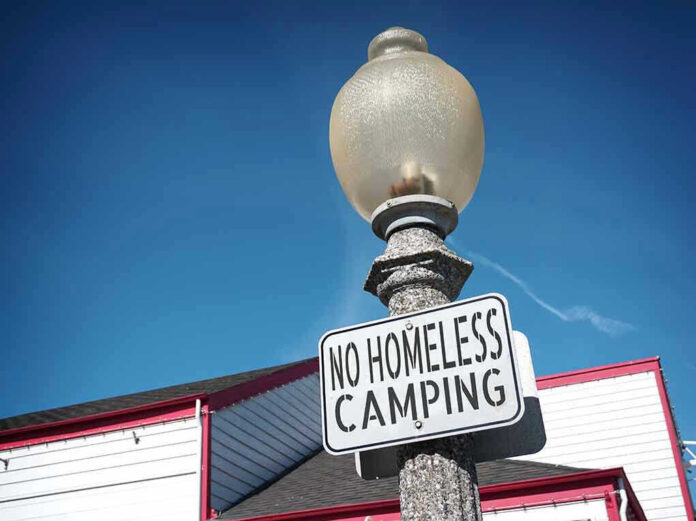
When RVs become homes, and homes become targets, what happens next in San Francisco is a story worth watching.
At a Glance
- San Francisco has passed a law banning RVs as homes on city streets.
- The ban is part of Mayor Lurie’s “Breaking the Cycle” initiative to manage homelessness.
- Advocacy groups argue the ban will lead to displacement and more street homelessness.
- Limited resources are available for those displaced by the RV ban.
San Francisco’s RV Ban: A New Chapter in an Ongoing Saga
San Francisco, the city known for its iconic bridge and tech giants, is now grabbing headlines for a different reason—its decision to ban people from living in RVs on city streets. It’s a move that’s part of Mayor Daniel Lurie’s “Breaking the Cycle” initiative, aiming to tidy up public spaces and address homelessness. But as the saying goes, “The road to hell is paved with good intentions,” and this road may be paved with evicted RVs.
As of July 16, 2025, the San Francisco Board of Supervisors approved Ordinance 250655, restricting parking to a mere two hours for large vehicles, including RVs. If you think that’s as quick as a cup of coffee and a donut, you’re not wrong. This decision was made amidst a chorus of complaints from residents and businesses about blocked sidewalks and safety concerns. But for many, the RV is not just a vehicle—it’s a last bastion of shelter in a city where housing costs have skyrocketed faster than a tech stock IPO.
The Stakeholders: A Tale of Two Cities
This new legislation has everyone from Mayor Lurie to advocacy groups, and RV residents to business owners, talking. Mayor Lurie, who has made it his mission to restore public order, believes the ban will help connect RV dwellers to housing and services. However, the Coalition on Homelessness and other advocacy groups vehemently oppose the ban, warning it will lead to displacement and further destabilization for those already on the brink.
The city has allocated $13 million to fund rapid rehousing subsidies and a vehicle buyback program. But here’s the kicker: there are only 65 rapid rehousing subsidies available for an estimated 1,400 people living in vehicles. It’s like trying to fit a square peg in a round hole—impossible without a lot of effort and a bit of damage along the way.
Immediate and Long-term Impacts: More Questions than Answers
In the short term, the ban risks displacing hundreds of RV residents, many of whom are working-class, immigrants, or families with children. This could lead to an increased demand for already scarce shelter beds, pushing more individuals into visible street homelessness. The enforcement of this ban could also lead to legal challenges, as it may be seen as criminalizing poverty rather than solving it.
Looking further ahead, the ban may deepen hardships for low-income communities while reshaping city policy. The decision could spark a ripple effect, influencing other cities grappling with similar issues of vehicular homelessness. San Francisco’s approach could serve as a cautionary tale or a blueprint for others, depending on its success—or lack thereof.