The real story of Venezuela’s twin earthquakes is not just tectonic plates shifting, but a broken state colliding with a massive foreign rescue operation in a race where minutes meant lives.
Story Snapshot
- Local citizens, not the state, carried much of the first 72 hours of search and rescue.[3]
- U.S. forces and aid agencies mounted one of the largest regional relief efforts in years.[13]
- Venezuelan institutions entered the disaster already hollowed out by years of crisis.[1]
- Media control and shaky numbers left the true death toll and damage clouded in doubt.[2]
A shattered country meets a shattering quake
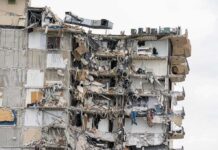
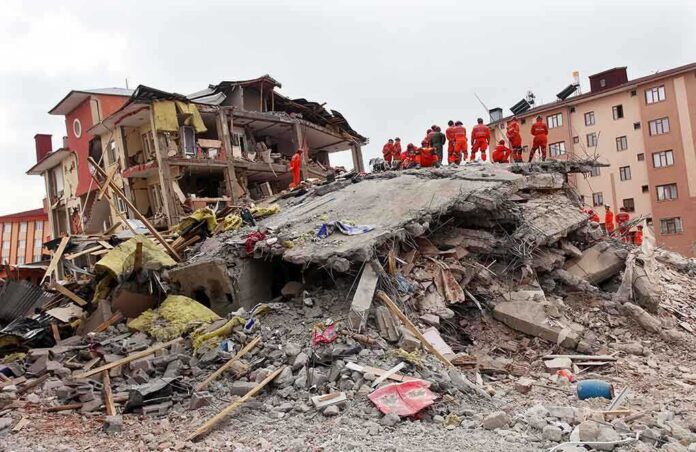
The earthquakes did not hit a normal country on a bad day. They hit a society already in free fall, where the economy had shrunk by more than three quarters over the past decade and millions had fled collapsing services and rising insecurity. Years of hyperinflation, corruption, and decay had turned what used to be Latin America’s showcase into a place where even basic medicine, fuel, and clean water were never a sure thing. When the ground moved, the system snapped. Whole neighborhoods in Caracas and coastal cities saw buildings crumple, roads break, and power grids fail, while satellite data later suggested more than 58,000 structures were damaged or gone.[1][3]
On paper, every modern state is supposed to be the backbone of disaster response. Research on emergency policy says government agencies, police, and firefighting units should lead rescue, restore services, and coordinate all other players. On the streets of Venezuela, those first hours told a different story. Survivors and neighbors dug with bare hands, car jacks, and rebar. According to reports from Caracas, government rescue capacity was described as very low, with citizens taking the lead because official teams were either missing, late, or under-equipped. In a conservative reading of basic duty, that is the clearest failure: when people scream under concrete, the state is supposed to show up fast and in force.[3][19]
Where was the state when the clock mattered most?
Eyewitness accounts painted a picture that no press release could soften. Police and soldiers were slow to arrive in several hard-hit areas. Some residents accused them of looting, blocking roads, and demanding permits from doctors and volunteer rescuers instead of clearing paths to trapped families. A retired Venezuelan general said the armed forces had trucks, generators, and water systems ready but did not deploy them quickly. Independent aid centers that sprang up were reportedly shut down or strangled by paperwork and access rules. None of this has yet been backed by court files or official logs, but the pattern fits a weak, politicized state more focused on control than service.[3][4]
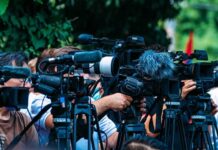
Government officials insist they were not asleep. Acting President Delcy Rodríguez cited thousands of officers on duty and announced official death and missing counts, claiming active monitoring and response. Yet those same figures were widely seen as an undercount, with reporters and aid workers expecting the toll to climb far higher as rubble clearance crawled forward. American conservative instincts about big government line up with that skepticism: a regime that censors media and crushes dissent is the last one you trust as the single source of truth in a fog-of-war disaster. When cameras are controlled and independent journalists fear jail, numbers become politics, not just math.[1][2][7][10]
A massive foreign lifeline and hard limits on the ground
While Venezuelan institutions stumbled, the United States moved fast. The Trump administration authorized a large-scale response, sending a Disaster Assistance Response Team of more than 250 specialists and three elite urban search-and-rescue teams from Fairfax County, Los Angeles County, and Miami-Dade. U.S. Southern Command deployed aircraft, airfield assessment teams, and naval assets offshore to turn damaged airports and ports back into usable lifelines. Washington also mobilized about $150 million in humanitarian aid through partners like World Vision and the World Food Program, making this one of its biggest relief operations in the region in recent years.[11][13][15][17]
5/14 🇧🇷 S.AMERICA — Venezuela's death toll from last week's twin earthquakes has risen above 1,700, with roughly 50,000 people still listed as missing as efforts in La Guaira shift from rescue to recovery. The magnitude 7.2 and 7.5 quakes struck near Caracas, collapsing hundreds…
— The Syndicate (@SyndicateRSS) June 30, 2026
American teams coordinated directly with Venezuelan authorities, with a U.S. general on the ground in Caracas and active talks between President Trump and the interim leadership. That level of coordination counters any notion that the country was abandoned. The bottleneck, though, was inside Venezuela. Runways were cracked, ports damaged, fuel scarce, and bureaucracy thick. Foreign crews reached many devastated zones only after nearly two days, long enough for thousands of trapped victims to pass the narrow survival window under rubble. When a state weakens its own infrastructure for years, even the best allies cannot simply fly over the rot.[5][10][11][13][15]
Politics, propaganda, and the fight over blame
The battle now is not just for survivors but for the narrative that will shape what comes next. International media and groups like International Crisis Group stress that Venezuela’s civil defense system was hollowed out long before the quake, with too few ambulances, broken fire gear, and thin training. That view fits broader research on the country’s slide into authoritarianism, where institutions exist on paper but are gutted in practice. From a common-sense conservative angle, this is the predictable result when a ruling clique treats the state as a political weapon instead of a service tool.[3][7]
Side B of the argument — that the government did its best under brutal circumstances — leans heavily on images of joint briefings, uniformed officers at command posts, and official statistics on deployed personnel. What it does not yet provide are hard, primary records that disprove the claims of roadblocks, looting, or militia-style intimidation of volunteers. In a country with tight media control and a long record of punishing critics, that gap matters. Without independent engineering studies, budget audits, and unit logs, citizens are asked to take on faith what experience tells them to question. For a people who watched their economy, hospitals, and power grid collapse long before the earth shook, that is a very hard sell.[10][11]
Sources:
[1] Web – Here’s What’s Holding Up Venezuelan Earthquake Recovery Efforts
[2] YouTube – Venezuela Struggles with Earthquake Rescue Efforts as Death Toll …
[3] Web – Venezuela earthquake death toll passes 1700 | AP News
[4] Web – How Venezuela’s earthquakes test U.S.-backed government – NPR
[5] Web – For Venezuelans, these first 72 hours after the earthquakes have …
[7] Web – Rescue crews are digging through mountains of rubble … – Facebook
[10] Web – Responding to Venezuela Earthquakes – State Department
[11] Web – Trump Administration Mobilizes Robust Response to Tragic …
[13] Web – Statement on U.S. military support to Venezuela earthquake relief
[15] Web – As directed by the Department of War, U.S. Southern Command is …
[17] Web – Venezuela earthquakes LIVE: UN rapidly deploys aid and rescue …
[19] Web – Venezuela: Human rights must guide earthquake response amid …
© partiallypolitics.com 2026. All rights reserved.