America is quietly testing whether the people guarding your next flight should answer to Washington or to a private company’s bottom line.
Story Snapshot
- New TSA Gold+ program shifts airport screening jobs and equipment to private contractors under federal oversight
- First test airports include Tampa, Des Moines, and Charleston, with transitions starting in 2027
- The TSA union warns privatization threatens public safety, accountability, and post‑9/11 security gains
- Supporters say Gold+ boosts resilience, avoids shutdown chaos, and keeps rules and standards the same
Airports testing how far private security can go
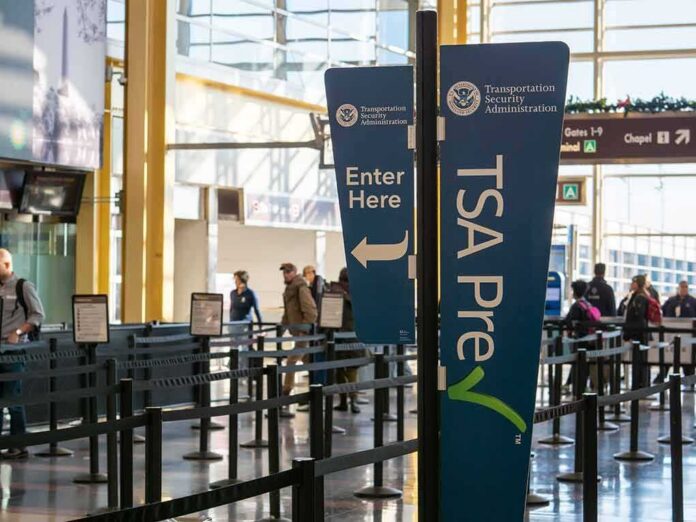
Tampa International Airport is becoming a live experiment in how far the country will push private security into one of its most sensitive spaces: the checkpoint where you, your kids, and your business laptop get screened for bombs and guns. Starting May 31, 2027, Tampa plans to hand daily screening to a private contractor, while the Transportation Security Administration keeps the rulebook and the badge of oversight.
Under TSA Gold+, the contractor will hire and manage screeners and own the very machines that scan your body and your bags. That goes beyond older privatization models, where the government still bought and controlled the equipment. The first wave includes Tampa and Des Moines, with Charleston reported as planning to join. For travelers, the liquids rules, ID checks, and TSA PreCheck lanes are supposed to look almost identical to what they see today.
The union says safety and accountability are on the line
The American Federation of Government Employees, which represents about 47,000 Transportation Security Administration officers, is not treating Gold+ as a minor staffing tweak. In a public statement, union leaders warned the program would “jeopardize public safety” by removing federal Transportation Security Administration workers from front‑line screening. They argue that once private companies control both the workforce and the screening technology, Washington loses direct operational control of the most sensitive security tools.
The union’s concern is not only about paychecks. Leaders say contractor employees will earn less, lose federal benefits, and no longer have the same protections or clear lines of accountability that come with direct government service. To them, this is not just business efficiency; it is a slow walk back from the post‑9/11 decision to put the federal government squarely in charge of airport security. That argument lines up with a core conservative instinct: when you weaken responsibility, you weaken performance and trust.
TSA frames Gold+ as modernization and shutdown insurance
The Transportation Security Administration describes Gold+ in very different terms. The agency calls it the “next evolution” of its Screening Partnership Program, which already uses private screeners at about 20 airports while keeping standards and oversight federal. Gold+ adds control of screening technology and promises more flexible, high‑tech checkpoints that are “tailored” to each airport’s layout and needs.
Airport leaders have a strong practical reason for listening. Tampa’s leadership points directly to recent government shutdown chaos, when thousands of Transportation Security Administration officers faced delayed pay and screening lines stretched. With private employees and privately owned equipment, checkpoints would keep running even if Congress stalls. That argument resonates with many conservatives: government should set clear rules, but basic operations should not depend on Washington’s budget drama.
What changes for travelers, and what stays the same
For the average flyer, Gold+ is built to feel almost boring on the surface. You still show your ID. You still pull out your laptop. You still live under the same banned‑items list and the same explosives detection standards. TSA PreCheck still works. The difference is who signs the paychecks and who owns the machines behind the conveyor belt.
Tampa International Airport will transition to private security screeners under the TSA Gold Plus program next May, making it one of the first major airports in the country to adopt the expanded program.🔽https://t.co/G6oxjzyPyn pic.twitter.com/2ViwdsHsf4
— ABC7 Sarasota (@mysuncoast) July 21, 2026
Critics worry that what looks the same on the outside could drift over time. Private firms answer to contracts and profit, not to voters. If screening ever becomes a cost center instead of a sacred duty, the fear is that training, staffing levels, or maintenance might get trimmed to protect margins. Supporters respond that TSA keeps the authority to audit, revoke approval, and enforce standards, but they have not yet produced independent safety data showing Gold+ sites match or beat federal‑run airports on threat detection.
The bigger conservative question: who should guard the gate?
That lack of hard performance evidence is the real gap in this debate. The public record so far is full of glossy words like “modernization,” “resilience,” and “innovation,” but thin on measurable results. No inspector general report, no Government Accountability Office study, no side‑by‑side comparison has yet shown whether private‑run Gold+ checkpoints catch more threats, move lines faster, or do better when something goes wrong.
From a conservative, common‑sense angle, the test should be simple. If private vendors under firm federal rules deliver equal or better safety, shorter lines, and fewer shutdown shocks, they earn their role. If privatization mostly means lower pay, weaker accountability, and no proven security gain, then the Gold+ label is just a marketing coat of paint over a risky experiment. Tampa, Des Moines, and Charleston are about to give the country its first real data point. Your next trip may be part of that test whether you like it or not.
Sources:
reason.com, timesnownews.com, npr.org, fox9.com, youtube.com, federalnewsnetwork.com, aviationweek.com, people.com, linkedin.com
© partiallypolitics.com 2026. All rights reserved.