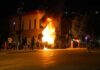
A 14-year-old boy was slashed in the hand inside a Brooklyn synagogue, and police say a 22-year-old suspect is in custody.
Story Snapshot
- NYPD says a teen congregant suffered a hand wound during services in Borough Park.
- Officers detained a 22-year-old man at the scene; investigators are interviewing witnesses.
- The incident lands amid an elevated backdrop of antisemitic threats and assaults in New York.
- Community leaders are pressing for visible security and swift, transparent charging decisions.
Police say a teen congregant was slashed; a 22-year-old is in custody
New York City police responded to a reported assault at Congregation Kedushas Yosef Verdan in Borough Park around 7:30 p.m., where a 14-year-old boy was slashed in the hand, according to local reporting that cites police. Officers took a 22-year-old man into custody at the synagogue. Detectives began interviews on site to piece together what led up to the attack and to determine if additional charges fit the facts.
Officials have not released the names of the teen or the suspect. Police described the weapon only as a cutting instrument. Medics treated the teen’s hand and transported him for further care. Investigators will review any camera footage from nearby blocks and from inside the building. Those steps often guide both assault charges and, if warranted, added counts tied to motive or location-based protections.
Context: a pattern of synagogue-adjacent attacks fuels urgency
Recent incidents near or inside Jewish houses of worship have pushed New York into a steady security posture. Anti-Defamation League data show 1,160 reported antisemitic incidents in New York in 2025. That figure reflects a yearly drop but still signals a heavy load for police and prosecutors. The group also reported more physical assaults even as overall incidents eased, underscoring why congregations keep watch and invest in trained security.
Prosecutors and police weigh the facts first, then the motive. That is how the system should work. When evidence supports a hate-crime count, the public deserves to see it applied. When it does not, courts should not stretch the law to fit a headline. That balance both protects the community and keeps faith with equal justice under law. New Yorkers expect safety without gamesmanship. They also expect real consequences for assaults that target people at prayer.
What investigators will likely examine next
Detectives will seek witness accounts about any words said before, during, or after the slashing. They will examine the suspect’s actions leading up to entry and any previous contact with the synagogue. They will also look for prior incidents or calls involving the same person. Location matters in charging decisions. An assault in a house of worship can trigger enhanced penalties when evidence shows bias or interference with religious exercise, subject to the facts and the law.
Prosecutors will decide charges after lab results, interviews, and video reviews. The teen’s medical report will document wound depth and any nerve or tendon damage, which can affect charge level. If the case points to bias, the Brooklyn District Attorney can add hate-crime enhancements. If it does not, assault and weapon charges remain on the table. Either path should move quickly, so the community sees that violence in sacred spaces meets a firm response.
Community response and common-sense security steps
Synagogues across Brooklyn will likely tighten entry checks and post trained volunteers at doors during services. Many already use controlled access, cameras, and staggered dismissal to reduce soft-target risk. Those steps are simple, cheap, and effective. Police patrols around evening services help too, especially when people leave in groups. Clear lines to precinct community affairs units make it easier to flag threats fast and get eyes on a problem corner before it turns dangerous.
Teen Injured in Brooklyn Synagogue Stabbinghttps://t.co/MideD39BIT
— PJ Media (@PJMedia_com) September 15, 2026
City leaders should match words with action. That means steady patrol presence at peak hours, fast-track grants for security hardware, and quick feedback to clergy after any incident. Families want plain answers and visible deterrence, not vague reassurances. The standard should be straightforward: protect the right to worship in peace, enforce the law without fear or favor, and show would-be attackers that consequences are swift and certain.
Sources:
© partiallypolitics.com 2026. All rights reserved.