The White House moved to post government warning signs outside America’s flagship history museum, turning a quiet sidewalk into a national stage.
Story Snapshot
- President Trump ordered temporary warning signs outside the National Museum of American History.
- The order tied the signs to a White House report alleging ideological bias.
- Interior planned about a dozen signs at a reported cost of $84,000, not yet final.
- Smithsonian leadership rejected the report’s characterization as unfair.
The Order, The Signs, and The Stakes
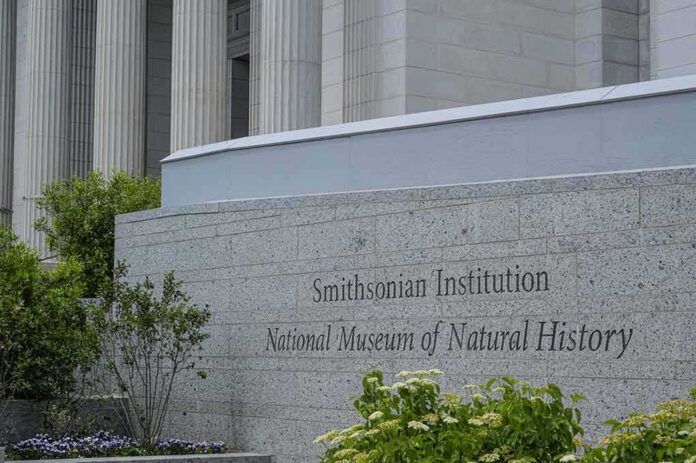
The July 24 executive order directed the Department of the Interior to install warning signs outside the National Museum of American History in Washington, D.C. The order said the signs should alert visitors to “ideological capture” and direct them to other resources. Reporting described proposed language as blunt, even combative, including a line suggesting the exhibits were prepared by people who do not want you to love your country. The action thrust routine museumgoing into a constitutional-scale argument.
The White House linked the signs to a Domestic Policy Council report that accused the museum of “thinly veiled anti-Americanism” and “extreme political activism”. Coverage said the report targeted content on race, gender, immigration, and environmental change. The administration’s case framed these choices as ideology posing as history. Supporters saw a needed correction to elite gatekeeping. Critics saw political theater, and a warning label on history itself.
What The Government Planned To Do, And What It Would Cost
Implementation details surfaced in letters describing a build-out by the National Park Service, which maintains the National Mall. Reporting said Interior planned roughly a dozen signs around the museum’s entrances, with an estimated price tag of $84,000, while noting the designs were not yet final. Placement outside the doors matters. It meets visitors before curators do, and it reframes the museum’s authority as contested before the first exhibit label.
The signs were described as temporary. Temporary can still be powerful. A government-branded warning on a public sidewalk shapes first impressions, media frames, and donor nerves. It also pressures museum boards. Conservative readers should weigh whether modest cost for high visibility delivers leverage. It likely does. But the message on the sign matters more than the metal in the frame. If it sounds like campaign copy, it risks backfiring with the middle.
The Smithsonian Pushes Back, But The Core Clash Endures
Smithsonian Secretary Lonnie G. Bunch III rejected the White House report as “not a fair characterization” of the museum’s work, while acknowledging there is always room to improve. That response pressed two points at once: we hear you, but your report overreaches. The White House, by contrast, argued the museum leadership no longer presents American history as a shared national inheritance, but as a tool for social change. Two visions, one building, and millions of taxpayers in the middle.
Reuters reported that the report even recommended a sign declaring the exhibits were prepared by people who do not want you to love your country. That line plays on loyalty and common sense. Americans expect critique in museums, but not contempt. If curators seem to tilt toward despair, trust drops. If government seems to police interpretation, trust drops too. The smarter conservative test is simpler: Do exhibits tell hard truths without teaching kids to dislike their country?
What To Watch Next: Law, Optics, And American Memory
The legal question sits in the background. The Smithsonian’s unique structure gives its leadership real independence, even as federal agencies touch its funding and logistics. That makes sidewalk signs a clever pressure point rather than a direct rewrite of labels. The communications question sits up front. Will the final text read like a citizen’s alert to seek more sources, or like a partisan broadside? The former opens minds. The latter hardens camps.
etter from Interior Secretary Doug Burgum revealed new details about warning signs the White House will install near the American-history museum.”
The Next Change Trump Has Planned for the Smithsonianhttps://t.co/evZrjArDpR
— A_Gabriel (@AGabrielresists) September 16, 2026
Three metrics will tell you where this goes. First, the words on the signs. Second, whether Interior releases the full evidentiary report that links specific panels to stated errors. Third, whether the museum offers visible corrections or context updates in response. If the White House produces exhibit-by-exhibit evidence, the public will lean in. If the Smithsonian shows fast, transparent fixes where needed, trust will rise. If both stall, the sidewalk wins and the galleries lose.
Sources:
washingtonpost.com, theatlantic.com, cnn.com, newsweek.com
© partiallypolitics.com 2026. All rights reserved.