A police camera captured a statehouse candidate crying and praying after a five-car crash, and the sound you hear first is her admitting she drank wine.
Story Snapshot
- Police say Krista Perez hit multiple parked cars in Tacoma late at night.
- Court records say officers smelled alcohol and noted confusion at the scene.
- Perez admitted to drinking wine and later cried and prayed in the patrol car.
- Prosecutors filed a driving under the influence charge with a refusal enhancement.
The Collision, The Admission, The Charge
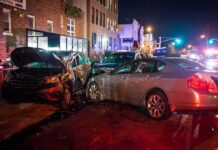
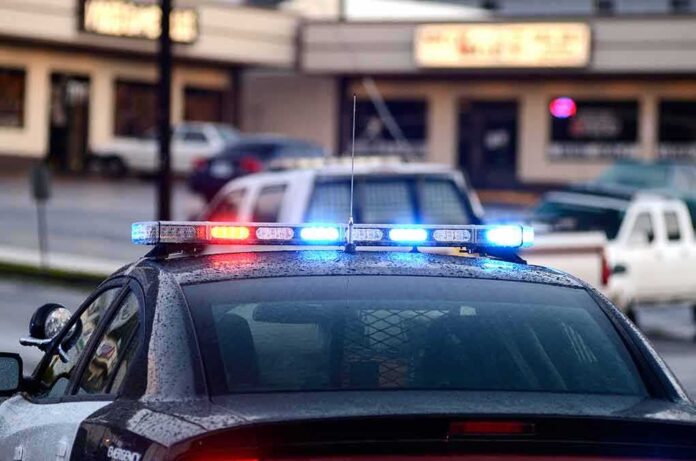
Officers in Tacoma responded after midnight to a crash that involved a pickup and four parked cars on South G Street. Reports say the driver was Krista Perez, a Democratic candidate for the Washington House. Court records cited by local media describe Perez as confused and smelling strongly of alcohol when officers met her at the scene. Police arrested her on suspicion of driving under the influence. Tacoma prosecutors then filed a driving under the influence charge two days later.
Body camera video, later shared by media, shows Perez in the back of a patrol car crying, praying, and asking to go home. In the footage and related reports, she admits to drinking wine earlier that day. She declines some field tests and later fails to provide a complete breath sample after several tries, which prosecutors flagged as a refusal enhancement to the charge. The city case proceeded in Tacoma Municipal Court, according to local coverage of court filings.
What Police Documented Versus What She Said
Police and prosecutors point to four things: the crash, the odor of alcohol, on-scene indicators like confusion, and her admission to drinking. They also cite the incomplete breath sample attempts as grounds for a refusal enhancement. Perez, on camera, says she does not feel impaired and rates herself a four on a ten-point scale of sobriety. She complains of arm pain and appears disoriented. Her statements do not erase the on-scene facts, but they do preview a likely defense angle seen in other cases.
The court record summaries do not include a blood alcohol result in the early coverage. That gap does not cancel the charging facts; officers can arrest on probable cause built on driving behavior, odor, and observations. Still, the lack of an early chemical number will matter later in court and in public debate, where one hard metric often becomes the headline. Voters, meanwhile, weigh the video against the collision report and the filed charge.
The Reliability Fight Over Field Sobriety And Refusals
Standardized field sobriety tests sit in a long-running scientific tug-of-war. Government-backed research supports their use, but even those studies show accuracy rates far short of perfect, and courts limit how those results can prove a specific blood alcohol level. Legal and academic critics point to false positives, rater differences, and design flaws that can trip up sober or injured drivers. That debate looms here because the public record highlights refusal and partial testing, not a clear chemical score.
A Democrat running for the Washington Legislature told police she drank wine, then asked to go home before taking a sobriety test. Exclusive body cam shows Krista Perez sobbing and praying in the back of a patrol car after her Tacoma DUI arrest. Watch the video. pic.twitter.com/cc7rwvJEpF
— Jason Rantz on Seattle Red (@jasonrantz) September 16, 2026
From a common-sense, safety-first view, the core facts carry weight: a late-night multi-car crash, an admission to drinking, and on-scene signs police are trained to flag. That is enough for most people to say, slow down and call a ride. From a due-process view, the chemical test question lingers. American conservative values hold two truths at once: personal responsibility on the road, and proof that meets the standard in court. The system should deliver both.
What Voters Should Watch Next
Two tracks now run in parallel. The legal track will set the facts that count most: any later lab results, case motions, and rulings on what evidence comes in. The public track will judge judgment. A statehouse seat is a trust. People want to know if a candidate owns mistakes, makes it right with anyone harmed, and changes behavior fast. Silence to a crash victim or hedging to the public lands poorly with anyone who has paid higher insurance after getting rear-ended.
The tape will not fade soon. Campaigns usually try to bury bad nights under new ads and talking points. That rarely works when the public can hear the words straight from the back seat of a patrol car. The better path is candor, apology, and concrete steps: treatment if needed, restitution, and a clear pause from driving until the court says otherwise. That is not spin. That is how adults rebuild trust after a wreck that never needed to happen.
Sources:
thenewstribune.com, foxnews.com, seattletimes.com, slavigo.com, knkx.org, dw.courts.wa.gov
© partiallypolitics.com 2026. All rights reserved.