
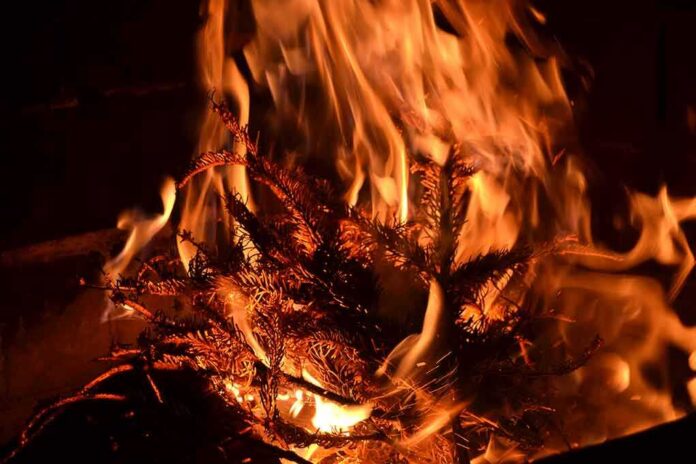
A 143-year-old town hall in France burned to its bones in a single night, its belfry crashing down as flames swallowed two-thirds of the building.
Quick Take
- Rioters set fire to the Limoges town hall on October 17, 2026, during nationwide cost-of-living protests in France.
- The local prefect says the roof collapsed onto lower floors and most of the exterior is gone.
- The mayor confirmed the building’s belfry collapsed and called the damage “very, very heavy.”
- Witnesses say masked individuals torched a police car, broke windows, and entered before the fire started.
A Civic Landmark Reduced To Ruins In Hours
The Limoges town hall stood for 143 years as a symbol of the city’s civic life, built in 1883. On October 17, 2026, that history went up in smoke. Haute-Vienne prefect Maurice Barate told the French press agency AFP the roof had collapsed onto lower floors everywhere except the west wing. He said two-thirds of the exterior had “already disappeared”.
Barate did not mince words about what the loss means. He called it a “catastrophe for heritage,” a phrase that captures what happens when a building survives two world wars only to fall in a single night of unrest. Mayor Guillaume Guérin echoed that grief during a press conference the same evening, describing a fire that kept spreading even as crews fought it.
What Witnesses Described Before The Flames Spread
Guérin told reporters the fire was “continuing to advance” as he spoke, and confirmed the town hall’s belfry had already come down. He called the building “very, very heavily damaged,” a blunt assessment from the man who runs the city. His comments lined up with what the prefect described just hours apart, two officials watching the same structure fall apart from different vantage points.
AFP-based reporting, drawing on witness accounts, said masked individuals set a police car on fire outside the building before breaking windows and getting inside. Once inside, witnesses say, they set the blaze that eventually brought down the roof and belfry. No suspects have been named publicly, and no charging documents are part of the current record, so individual responsibility remains an open question for French investigators.
Part Of A Larger Night Of Unrest Across France
Limoges was not an isolated flashpoint. Reports describe clashes, fires, and looting breaking out in multiple French cities the same night, tied to protests over inflation and the cost of living. That broader backdrop matters because it explains why police resources were stretched thin and why a crowd could overwhelm a municipal building before firefighters contained the damage.
Why Town Halls Keep Becoming Targets In French Unrest
French protest history shows a pattern of civic buildings taking the brunt of unrest. The 2005 riots burned roughly 10,000 vehicles and destroyed 250 public buildings, with insured losses near 200 million euros. A more recent review of French riots over two decades counted 2,508 damaged buildings, including 105 town halls. Limoges fits a pattern that long predates this year’s protests.
That pattern does not excuse what happened on October 17. A town hall is not an abstract government symbol to the people who work there, get married there, or walk past its bell tower every day. Burning it down punishes an entire city, not a policy. Treating public buildings as fair game in a protest crosses a line that has nothing to do with the legitimacy of anyone’s economic grievances.
What Comes Next For Limoges
No municipal damage assessment, insurance estimate, or restoration plan has been made public yet. City officials have not said whether the building can be rebuilt or whether 143 years of civic history are gone for good. What is clear, from the prefect’s own words, is that this was not minor smoke damage. It was a structural collapse that erased most of a landmark in a single night.
BREAKING NEWS: The clock of the Limoges town hall tower in France, a building from 1876 and designated as a historical monument in 1975, has collapsed after being set on fire as part of the protests. Unrest in France.@France24_ar @HEBobiwine @BBCWorld @IRanMediaco pic.twitter.com/KXGqyyhEEm
— TheNativeSon_+256 (@PerezKakuru) October 18, 2026
French authorities will now face the harder task of identifying who entered that building and lit the fire, separate from the broader political debate over the protests themselves. Those are two different questions, and conflating them helps no one, least of all the people of Limoges who lost a piece of their city’s history.
Sources:
euronews.com, yahoo.com, europeanpulse.com, sbs.com.au, shs.hal.science, blogs.timesofisrael.com
© partiallypolitics.com 2026. All rights reserved.