The federal government did not just track big donors; it swept up names, addresses, and even MAGA hat buyers tied to Republican politics, according to Senate findings.
Story Snapshot
- A Senate memo says at least 639,000 Republicans had data pulled by investigators.
- Records included names, addresses, emails, jobs, donation and credit-card details.
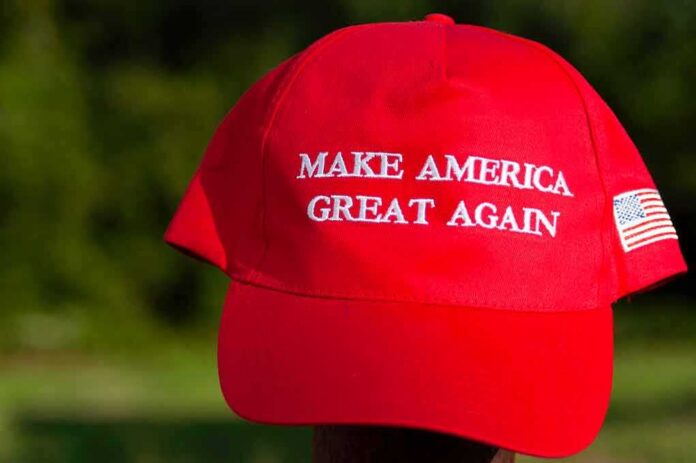
- Purchases of red MAGA hats and shipping addresses appeared in subpoena returns.
- Jack Smith says subpoenas targeted evidence on 2020 certification efforts, not supporters.
What Senate Investigators Say Was Collected
Senate Judiciary Chairman Chuck Grassley reported that subpoena returns to the Special Counsel’s Office and the Department of Justice contained data tied to at least 639,000 Republican donors, voters, and supporters, reaching back to 2005. The described files went far beyond headcounts. They listed names, dates of birth, physical and email addresses, voter status, occupations, employers, donation amounts, and credit-card information. Media summaries add that spreadsheets held low-dollar donors and detailed rows of findings, not just major figures.
One detail grabbed the public’s attention. Grassley said the returns included “individual buyers, their purchases and their shipping addresses” for red MAGA hats. Reports stated that 2024 campaign-product data also appeared, covering hats, shirts, mugs, and more. That suggests ordinary customers landed in investigative files, even if they never sent a big check or worked in politics. Critics say this casts a wide net over protected political association, which risks chilling speech and normal civic support.
How Investigators Defended Their Scope
Jack Smith told senators that his office issued subpoenas to investigate crimes tied to efforts to disrupt the 2020 election certification. He said the records were sought for their relevance in that time window and to corroborate communications about delaying the count, not to target supporters by affiliation. Smith also said the Department of Justice’s Public Integrity Section reviewed and approved the requests as materially relevant to the probe. He argued the work followed department policy and was not political.
That defense aligns with standard practice in complex cases. Prosecutors often request broad business records, payment histories, and communications to map events. The open question is where a proper search ends and a political profile begins. The Senate account raises that line-drawing problem. The publicly described record does not show who selected each dataset, how analysts used it, or how many unique people appeared after deduplication. The legality of each subpoena depends on those missing details.
Why The First Amendment Alarm Bells Are Ringing
Forced disclosure of political association can chill speech even if the government keeps the data secret. The Supreme Court has warned that donor and supporter lists demand narrow tailoring. In Americans for Prosperity Foundation v. Bonta, the Court struck down a blanket donor-disclosure rule that burdened association without tight need. More recently, a unanimous Court said a state attorney general’s demand for nonprofit donor identities inflicted a real First Amendment injury and could be challenged at once. Those rulings set a high bar for mass collection.
Jack Smith Obtained Data on at Least 639,000 Republican Donors, Voters and Supporters, Senate Finds
— Tim Gradous (@tgradous) October 15, 2026
Apply that lens here and the concern grows. If records reach from 2005 to recent merchandise buyers, and if some donors gave as little as one dollar, the net likely captured many people with no tie to any alleged crime beyond politics or shopping. Common sense and conservative values would demand proof of tight relevance, strict minimization, and clear limits on use. Without that, even lawful tools can morph into lists of like-minded citizens held on government servers. That is not a risk to shrug off.
Sources:
washingtontimes.com, grassley.senate.gov, deseret.com, legalinsurrection.com, twitchy.com, wltreport.com, abcnews.com, nytimes.com, reuters.com, judiciary.senate.gov, kelleydrye.com
© partiallypolitics.com 2026. All rights reserved.